
Two Days in Munich
A balanced 48-hour plan for Munich — day one in the Old Town with the Glockenspiel, the market and the Residenz; day two for the English Garden, a museum and Schloss Nymphenburg — with realistic timings, beer gardens and weather fallbacks.

Photo: Hanlin Sun / Unsplash

- ✓Two days is the sweet spot for a first visit: day one covers the Old Town, day two adds the parks, a museum and a palace — enough to feel you've seen the real city.
- ✓Day one is almost entirely on foot inside the old ring; day two uses a tram or U-Bahn for the palace and, optionally, the museums.
- ✓Each day is built on the same frame: sights and a market in the morning, one big indoor sight after lunch, and a park or beer garden to round it off.
- ✓Mind the Sunday closures — shops shut, but museums, churches, parks and beer gardens stay open, so weight a Sunday toward those.
- ✓Opening hours, ticket needs and tram routes shift year to year; verify anything time-sensitive on the official sites before locking a tight schedule.
Why two days is the sweet spot
If you have a single day in Munich you see the Old Town and love it; if you have two, the city properly opens up. Two days is the plan we'd give most first-time visitors, because it adds exactly the things a single day can't fit — the English Garden end to end, a world-class museum, and a tram ride out to a royal palace — while still leaving room to enjoy the city rather than just tick it off. You finish a two-day trip feeling you've seen the real Munich: the medieval core, the parks and the rivers, the art and the royal grandeur, and the beer halls and gardens that tie it all together.
The plan splits cleanly. Day one is the compact, walkable Old Town: the great square and its chiming clock, a rooftop view, the famous food market, the churches and the Residenz, capped by a beer hall. Day two breaks out of the centre to the green and grand parts: the English Garden and the Eisbach surfers, a museum chosen to taste, and Schloss Nymphenburg with its canal and gardens, ending in a chestnut-shaded beer garden. The two days complement rather than repeat each other, and you can swap pieces between them freely.
As with all our plans, treat this as a spine, not a script. The timings are realistic and the order is sensible, but Munich rewards wandering, and a side street or a long market lunch pulling you off-plan is the trip working as it should. One structural fact shapes both days: shops close on Sundays and public holidays, but the museums, churches, parks and beer gardens here stay open — so if either of your days is a Sunday, lean it toward those and don't expect lively shopping streets. Verify hours and ticket requirements before you set out, because they change.
- Day 1: the Old Town — Marienplatz, Alter Peter, the Viktualienmarkt, the churches, the Residenz, a beer hall.
- Day 2: parks and palace — the English Garden, the Eisbach wave, a museum, Nymphenburg, a beer garden.
- Mostly on foot; day two adds a tram or U-Bahn ride to Nymphenburg (and optionally the museums).
- Get an MVV day ticket for day two — it beats singles once you ride a few times.
- On a Sunday, weight the day toward museums, churches, parks and gardens; the shops are closed.

Day 1, morning · Marienplatz, Alter Peter and the Viktualienmarkt
Begin day one where Munich began, in the centre of the Old Town. Aim to reach Marienplatz a little before eleven for the Glockenspiel in the New Town Hall tower — 43 bells and 32 near-life-size figures re-enacting a ducal wedding and the coopers' Schäfflertanz, running daily at 11:00 and noon year-round, with an extra afternoon show (usually around 17:00) in the warmer months and a brief evening sequence around 21:00. Arrive a few minutes early for a clear sightline, and take in the square itself: the gilded Marian Column at its centre, raised in thanks for the city's survival of the Thirty Years' War.
When the chimes finish, cross to St. Peter's — Alter Peter — and climb the tight spiral staircase (no lift) to the viewing gallery for the best rooftop view in the centre, straight down onto Marienplatz and across to the Frauenkirche's domes; on a clear Föhn day, the Alps appear on the horizon. Then drop a minute south to the Viktualienmarkt, Munich's open-air food market, for a stand-up lunch among the stalls — a Brezn and a Weißwurst, or a warm Leberkässemmel — with the market's rotating little beer garden if the weather's kind. That single morning loop packs the city's great square, its best view and its famous market into barely a kilometre.


Day 1, afternoon · The churches and the Residenz
After lunch, fold in the Old Town's two great churches — both free, both quick. The Asamkirche, a few minutes down Sendlinger Straße, is a tiny late-Baroque jewel-box the Asam brothers built in the 1730s: a plain facade hiding an interior that erupts in gold, stucco and a ceiling fresco that seems to dissolve the roof. The Frauenkirche, the twin-domed cathedral that is the symbol of the skyline, is the grander counterpoint — vast, bright and plain inside, with the legendary 'Devil's Footstep' just within the entrance. Do one or both, threading the pedestrian lanes between them for good window-shopping and people-watching.
Spend the heart of the afternoon at the Residenz, the Wittelsbachs' enormous city palace, hidden behind a plain street facade a short walk north-east. Inside are more than a hundred rooms — the barrel-vaulted Renaissance Antiquarium, a shell-encrusted grotto courtyard, gilded state apartments — plus, as separate tickets, the Treasury of crowns and reliquaries and the perfect rococo Cuvilliés Theatre. Give it a focused ninety minutes to two hours; it's the Old Town's great set-piece and, conveniently, its best wet-weather sight. With two days you can afford to go a little deeper here than a one-day visitor would.


Day 1, evening · Odeonsplatz, the Hofgarten and a beer hall
Leaving the Residenz, the streets open onto Odeonsplatz with its butter-yellow Theatinerkirche and the Feldherrnhalle loggia — the grand threshold of the royal city. Step through the gate beside it into the Hofgarten, the formal court garden behind the palace, for the most elegant pause of the day among arcades and clipped hedges. It's a deliberate breath of calm before the evening turns convivial.
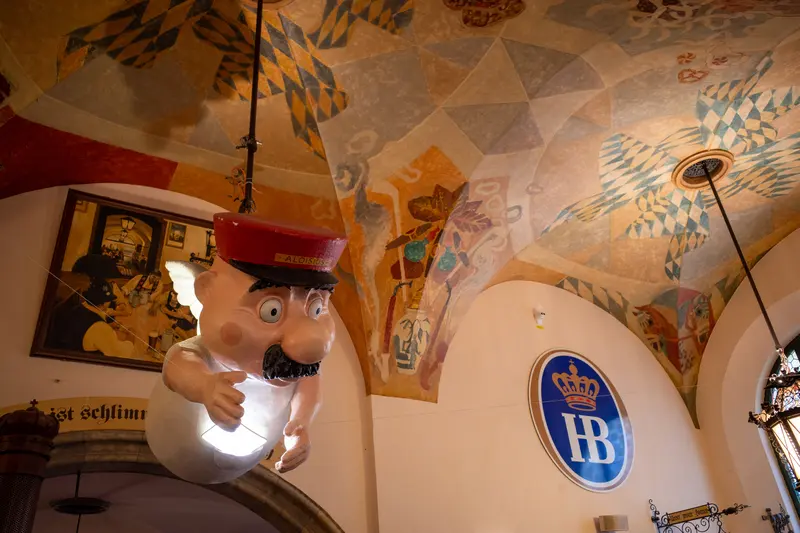
End day one in a beer hall, the warm and communal Munich way to land a day on your feet. The Hofbräuhaus, a short walk east of Marienplatz, is the famous one — long shared tables, litre Maß glasses, brass-band evenings and the full Bavarian spread — and worth one loud night even if it's a cliché; quieter, equally good alternatives hide in the surrounding streets. In warm months you might swap it for a beer garden under the chestnuts instead. Either way, day one closes a couple of minutes from where it began.


Day 2, morning · The English Garden and the Eisbach wave
Day two breaks out of the medieval core into Munich's green half, and it starts at the southern tip of the English Garden — at 375 hectares, bigger than New York's Central Park. Right at the edge, where the Eisbach channel rushes out from under a bridge, surfers ride a permanent standing wave year-round; it's one of the city's genuine surprises and a great, free spectacle to begin a day on. Watch a few rides, then walk up into the park itself.
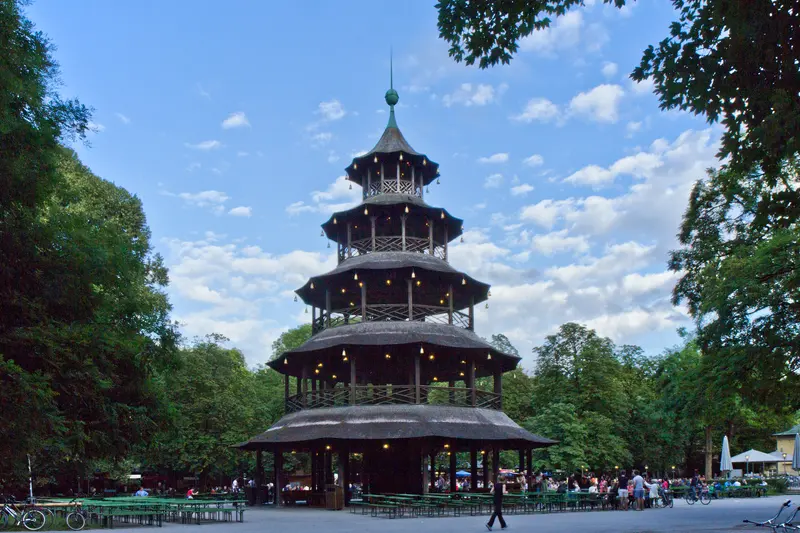
Give the morning to the park at a wandering pace. Climb the small hill to the Monopteros, a Greek-style temple with a long view back over the Old Town spires, and follow the lawns and streams north. The English Garden is for ambling rather than ticking — joggers, sunbathers in season, dogs, and the wide open green that makes Munich so liveable. Time your route to arrive at the Chinese Tower beer garden, the park's famous chestnut-shaded garden, for an early lunch or a mid-morning pause: a Maß, a Brezn, perhaps a roast half-chicken, under the trees and often a brass band. This is the relaxed, outdoor heart of day two.

Day 2, midday · A museum, chosen to taste
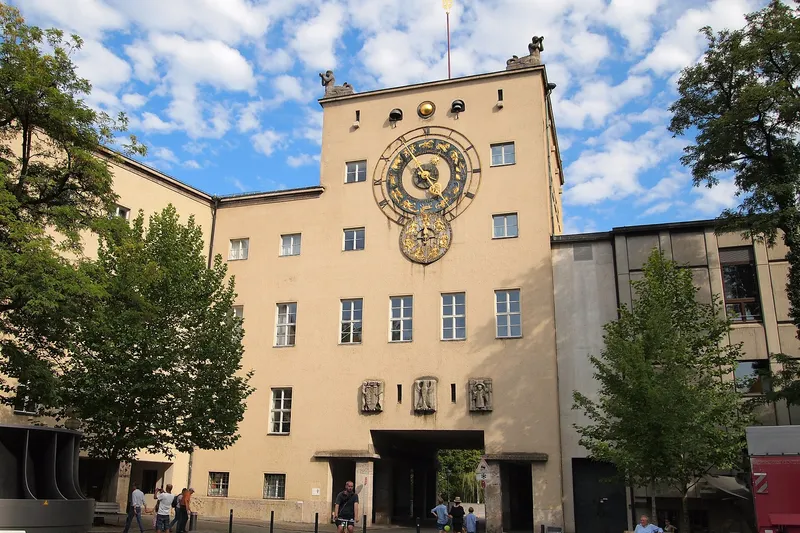
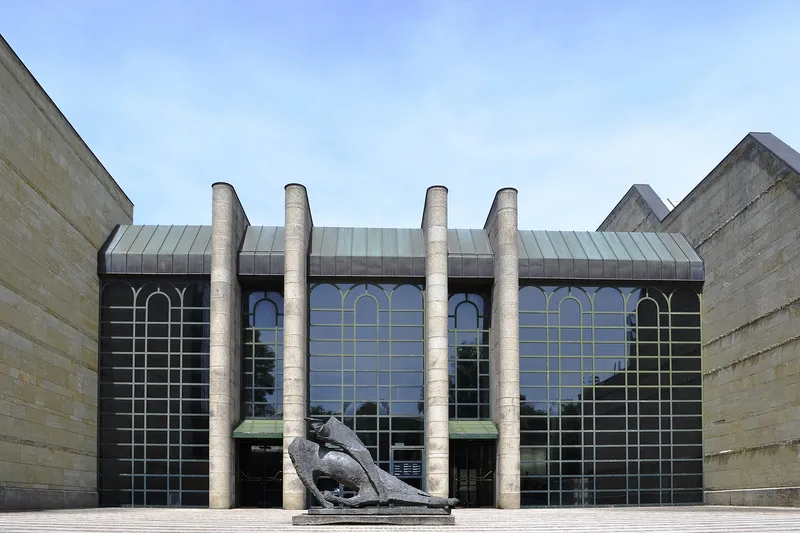
From the park it's a short hop to a museum, and day two is where a two-day trip can afford one properly. Choose by interest, and pick just one to avoid fatigue. Art lovers should head to the Kunstareal in Maxvorstadt, a few minutes west, where the Alte Pinakothek (Old Masters), the Pinakothek der Moderne (twentieth-century art, design and architecture) and the Brandhorst and Lenbachhaus sit within a few minutes of each other — one is plenty for an afternoon. Science-minded travellers and families should instead cross to the Deutsches Museum on its island in the Isar, one of the world's great science-and-technology museums, with hands-on halls that easily fill a couple of hours.
Whichever you choose, check the day's opening hours and any ticket requirements before you go — some museums close one day a week, often Monday, and a few have free or reduced-price days that are worth knowing about. If you'd rather keep day two entirely outdoors and save museums for a return trip, that's a perfectly good call too: spend the extra time in the park, along the Isar, or out at Nymphenburg, which is the afternoon's other anchor. The plan flexes around your appetite for indoors versus green.
Day 2, afternoon · Schloss Nymphenburg
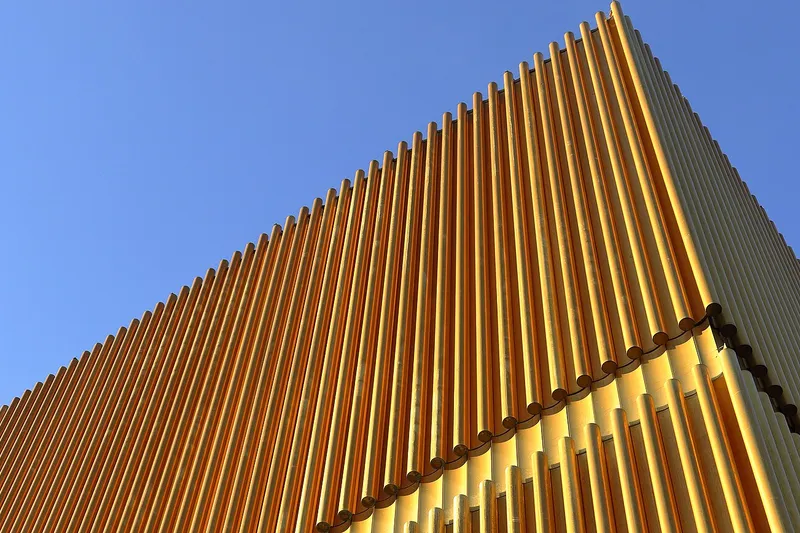
Save the second half of day two for Schloss Nymphenburg, the Wittelsbachs' summer palace on the western edge of the city, reached by tram in around twenty minutes from the centre. The baroque palace stretches in a long white range behind a formal canal and fountains; inside are the grand Stone Hall with its ceiling fresco, the famous Gallery of Beauties, and a set of state rooms, while the grounds run back into a vast English-style park dotted with smaller pavilions — the rococo Amalienburg hunting lodge among them — canals and a lake. You can do as much or as little as you like: a focused palace visit, or a long, slow afternoon of palace and gardens together.
Nymphenburg is the grand, golden-hour finale the two-day plan is built toward. Time your visit so you're walking the gardens or the canal as the afternoon light softens — the palace reflected in the water is one of Munich's great set-piece views. Check the palace's opening hours and ticket options before you set out (combined tickets often cover the palace, the Marstallmuseum of royal carriages and the park pavilions), and note that some of the park pavilions keep shorter seasonal hours than the main palace. The park itself is free and open even when the interiors aren't.


Day 2, evening · A beer garden to finish
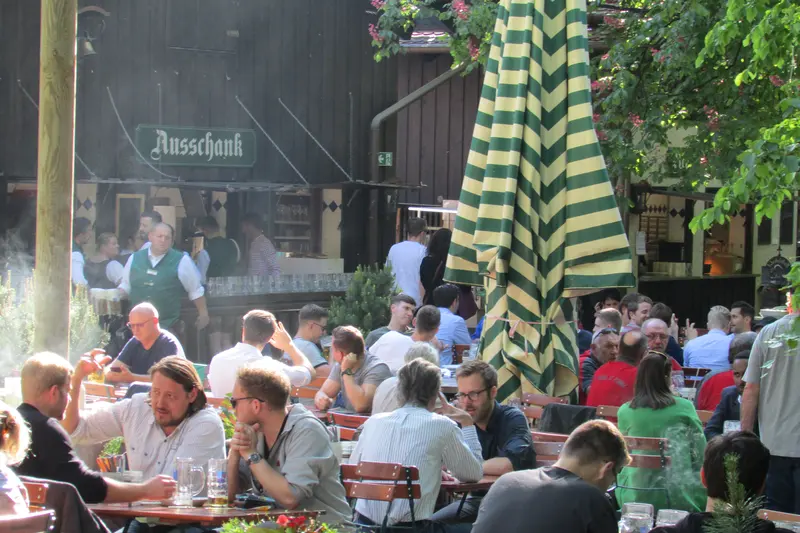
Round off two days in Munich the way the city likes to end an evening — in a beer garden, ideally under the century-old chestnut trees that were planted to keep the beer cellars cool before refrigeration. In warm months, the classic choice on this side of town is to head back toward the centre and the Augustiner-Keller near the Hauptbahnhof, one of the great traditional gardens, where the beer is poured from wooden barrels and you can bring your own food to the unserved benches and buy only the Maß. It's a fitting, unpretentious finale to a trip that's taken you from the medieval core to the parks and the palace.
If the weather has turned or you'd rather end indoors, swap the garden for a traditional Wirtshaus or a final beer hall, or — for a more romantic close — a candlelit dinner in the Glockenbachviertel, the design-and-nightlife quarter south of the centre. Two days is enough to have earned a relaxed last evening, so don't over-plan it; pick the register that suits your mood and let the trip wind down. You've seen the great square and the rooftops, the market and the churches, a royal palace twice over, a world-class museum and the city's greatest park — a genuinely complete first taste of Munich.


Arriving and leaving without losing half a day
With only two days, the hours around your arrival and departure are worth protecting, because it's easy to lose a precious half-day to logistics. From the airport, the S-Bahn (the S1 and S8 lines) runs straight into the centre in around 40 minutes for the price of an MVV ticket — far cheaper than a taxi and, at peak times, often no slower. If you land early, don't waste the morning waiting for hotel check-in: most hotels will store your bags before your room is ready, so drop the luggage, pick up the day-one plan at Marienplatz, and start sightseeing immediately. The same trick works in reverse on departure day — check out, leave your bags at the hotel, and squeeze in a final church, a market stroll or a last coffee before collecting them and heading to the train.
A little thought about where you base yourself pays off across both days. Somewhere central and walkable — in or near the Altstadt, or a short tram or U-Bahn hop from Marienplatz — means you start each morning in the thick of things rather than commuting in, and it makes the late beer-garden finishes painless. If you're arriving or leaving by long-distance train, the Hauptbahnhof is a few minutes from the centre and well connected, so a hotel between the station and Marienplatz keeps both your transfers and your sightseeing short. Get these bookends right and a two-day trip genuinely feels like two full days rather than one and a half.

Weather, Sundays and how to flex the plan
Two days gives you welcome room to absorb Munich's changeable weather. The plan is written for fine conditions, but it has an obvious wet-weather rebalance built in: if rain falls on day two, flip the days, doing the indoor-heavy Old Town and Residenz day when it's wet and saving the English Garden and Nymphenburg for the drier day. Within a day, lean on the roofed sights — the Residenz, the museums, the churches, the beer halls — and shorten the park stretches when the sky's against you. In hot weather, start early to beat the heat and the cruise crowds, do the indoor sights at midday, and save the parks, the river and the beer gardens for the cooler late afternoon.
Watch the weekly rhythm too. If one of your two days is a Sunday or a public holiday, the shops are closed but everything that anchors this plan stays open — so spend the Sunday on the Old Town's sights, the museums, the park and Nymphenburg, and do any shopping on the other day. Some museums also close one day a week, often Monday, so if a specific museum is a priority, check its closing day before you assign it to day two. And because both days lean on the transit network for at least one leg, an MVV day ticket on day two usually pays for itself.
Above all, treat the two-day split as flexible. The days are designed to complement each other, but every piece is portable — lift the English Garden into day one if the weather suits, push the Residenz to day two, swap a museum for a longer park afternoon. If two days leaves you wanting more, the natural next step is a third day for a day trip into the Alps, a castle or a lake, which is where Munich's surroundings start to shine. Verify the volatile details, keep one slot loose each day, and the rest of a two-day Munich trip looks after itself.
- Rain plan: flip the days — do the Old Town/Residenz day when wet, the parks and palace when dry.
- Hot-day plan: start early, indoor sights at midday, parks and beer gardens in the cool evening.
- On a Sunday: lean on sights, museums, the park and Nymphenburg; shop on the other day.
- Check museum closing days (often Monday) before assigning one to day two.
- Want more? Add a third day for a day trip — the Alps, a castle or a lake.


At a glance
What it covers: a balanced 48-hour first visit to Munich — Old Town one day, parks, a museum and a palace the next.
Day 1 morning: Marienplatz and the 11:00 Glockenspiel, Alter Peter, the Viktualienmarkt.
Day 1 afternoon and evening: the churches, the Residenz, the Hofgarten and a beer hall.
Day 2 morning: the English Garden, the Eisbach wave and the Chinese Tower beer garden.
Day 2 afternoon: a museum (pick one) and Schloss Nymphenburg, ending in a beer garden.
Best for: first-time visitors who want the real Munich without a frantic pace.
- Day one is on foot; day two adds a tram to Nymphenburg and maybe a museum hop.
- Get an MVV day ticket for day two once you're riding a few times.
- Flip the days for weather — Old Town when wet, parks and palace when dry.
- Pick one museum on day two; don't chain several.
- Verify hours, closing days and ticket needs before locking a tight schedule.

One Day in Munich
A tight but realistic plan for one day in Munich — a morning in the Old Town built around the Glockenspiel, a market lunch, the Residenz or a museum in the afternoon, and a beer-hall evening, all on foot and without a wasted step.
Read guide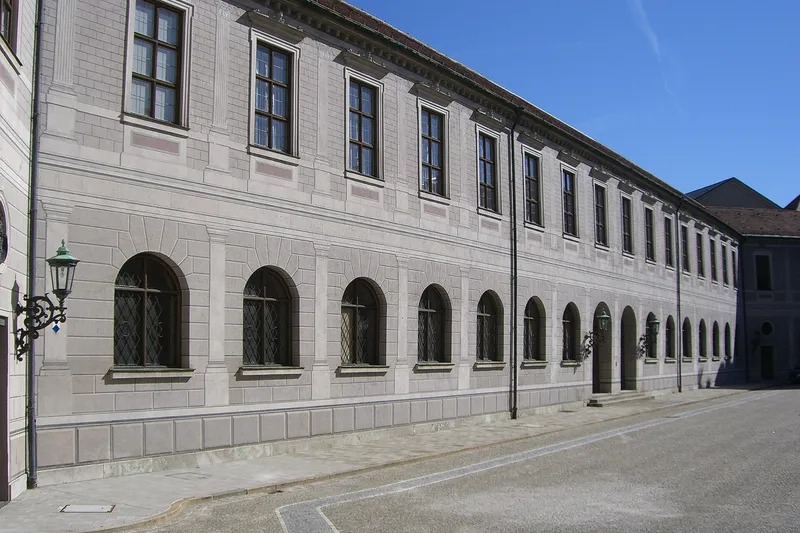
Munich Residenz
A room-by-room planning guide to the Residence Museum, the Treasury, the Cuvilliés Theatre and the Hofgarten — what to see, what to skip, and how to keep museum fatigue at bay.
Read guide
The English Garden, Munich
How to walk Munich's vast central park — the Eisbach surf wave, the Monopteros viewpoint, the Chinese Tower beer garden, the lawns, the streams and the long route north to the Kleinhesseloher See.
Read guideMore in Itineraries
6
A Weekend in Munich
A Friday-to-Sunday weekend in Munich planned the way a city break actually runs — arrival-evening logic, a full Saturday of sights and gardens, a slower Sunday that works around the shops being shut, with hotel-area, dinner-timing and no-wasted-transit advice throughout.
Read guide
Four Days in Munich
A slower four-day Munich itinerary that adds the things three days has to skip — a proper neighbourhood day, more museums and beer gardens, and one big day trip into the Alps or to the lakes — built for travellers who want to live the city rather than tick it off.
Read guide
Local Munich Beyond the Old Town
Where Munich actually lives once you've seen Marienplatz — the village-feel neighbourhoods, the riverside, the local cafés and markets, the parks and the beer gardens that locals fill, with a route to weave them into a slower second or third day.
Read guide
Luxury Munich Itinerary
A high-end, unhurried plan for Munich — grand-dame and design hotels, private guides, fine dining, palaces and treasuries, the opera, and an Alpine or lakeside add-on, built around comfort and time rather than a packed schedule.
Read guide
Munich Airport Layover Guide
How to spend a layover at Munich Airport — when a dash into the city is realistic, how long you really need, what to do without leaving, and when it's smarter to stay near the terminals.
Read guide
Munich Art & Museums Itinerary
A rain-proof culture itinerary for Munich — a focused day in the Kunstareal among the Pinakotheken and the Blue Rider, a science day at the Deutsches Museum, and a cars-and-modern-architecture option around BMW and Olympic Park, with how to pair them without museum fatigue.
Read guide