
Odeonsplatz, Theatinerkirche & Hofgarten
A refined short walk through Odeonsplatz — the Feldherrnhalle, the buttercup-yellow Theatinerkirche, the Hofgarten arcades and the Residenz edge — and the difficult 20th-century history the square also carries.


- ✓Odeonsplatz is Munich's grandest open square — Italian in feel, framed by the Feldherrnhalle loggia, the yellow Theatinerkirche and the start of the long, straight Ludwigstraße.
- ✓The Feldherrnhalle, modelled on Florence's Loggia dei Lanzi, was the site of the failed 1923 Beer Hall Putsch and later a Nazi shrine — the square holds that history alongside its beauty.
- ✓The Theatinerkirche's high-Baroque interior is dazzlingly white and its dome is one of the best free interiors in the centre.
- ✓It's the natural hinge between the Residenz, the Hofgarten and the English Garden — five minutes from Marienplatz, on the U-Bahn.
The most Italian square in Munich
Odeonsplatz is where Munich stops feeling Gothic and starts feeling southern. Open it up on a clear afternoon and the comparison the city's own kings intended becomes obvious: the Feldherrnhalle, the open loggia closing the south end, is a direct nod to Florence's Loggia dei Lanzi, and the whole square was laid out in the 19th century to give Munich a piece of Italy. Stand in the middle and you can read three streets fanning away — Ludwigstraße running ruler-straight to the north, Briennerstraße to the west, and Residenzstraße back toward the old town.
It's a square to arrive at rather than tick off — a place to pause, take the light, and let it orient you between the Residenz on one side and the gardens on the other. Most visitors pass through it on the way somewhere else; it's worth giving it ten minutes of its own.
The square is also a stage for the city's life. It hosts open-air classical concerts in summer — the 'Klassik am Odeonsplatz' series fills it with seating and an orchestra against the lit façade of the Residenz — and it's a gathering point for celebrations, demonstrations and the occasional vintage-car parade. On an ordinary day it's simply a place where the city breathes out: a wide stone expanse where the Altstadt's density suddenly opens, framed by some of Munich's most quoted architecture.

The Theatinerkirche — the yellow church you'll photograph
The building that dominates every photo of the square is the Theatinerkirche St. Kajetan, its buttercup-yellow façade and twin towers a Munich signature. It was begun in the 1660s to mark the long-awaited birth of an heir to the Electress and built in an Italian high-Baroque style brought north by architects from Italy, then finished with a rococo façade a century later. The colour — that warm ochre-yellow — is unmistakable against a blue sky.
Step inside, because the interior is the real reward and it's free to enter as a working church. It's a vast, brilliant white space, all stucco and curves, rising to a dome that floods with light. It's also the burial place of several Wittelsbach rulers in the Fürstengruft, the princely crypt below — including, by tradition, the church's founders. Keep your voice down and dress respectfully; services take precedence over sightseeing, and opening times flex around them, so treat any posted hours as subject to change.
Architecturally it's a landmark in its own right: when it was built it brought a thoroughly Italian, Roman-Baroque language to a city that had been building in a more northern style, and it set the template for the churches that followed. The model was Sant'Andrea della Valle in Rome, and the Italian master who designed it, Agostino Barelli, gave Munich its first great dome. The yellow you see is a later choice — the rococo façade, with its scrolling gable and the two saints in their niches, was completed in the 1760s by the Cuvilliés workshop, the same hand behind the Residenz's finest rooms.
It earns its place in any visit to the square not just for the photograph but for the contrast with everything around it. Munich's other great churches — the brick Frauenkirche, the Gothic St Peter's — are northern and earthbound; the Theatinerkirche is a burst of Mediterranean light and movement dropped into the old town. Standing in the white interior with the dome overhead, it's easy to forget you're a few minutes from the heavy stone of Marienplatz. For many visitors it's the most surprising free interior in the centre.

History the square doesn't hide
The Feldherrnhalle is beautiful and it is also a difficult place. Built in the 1840s as a hall of honour for Bavarian generals, it became the endpoint of Hitler's failed Beer Hall Putsch in November 1923, when police halted the marchers here. Under the Nazi regime the loggia was turned into a shrine, and passers-by were forced to give the Nazi salute — so many Münchners took a detour down the small lane behind it to avoid doing so that the alley earned a nickname as the 'shirkers' lane' (Viscardigasse), where a bronze line in the cobbles now marks the route of quiet refusal.
It's also worth knowing the building's original purpose, because it complicates the picture in a useful way. The Feldherrnhalle was commissioned by King Ludwig I in the 1840s simply as a hall of honour for two great Bavarian commanders, modelled on a Florentine Renaissance loggia and meant as a piece of civic beauty. The dark associations came a century later, layered onto a structure that began as something else entirely — which is why Münchners today neither tear it down nor celebrate it, but live alongside it as a place that carries more than one meaning at once.
We mention this not to darken a pretty square but because it's part of why the square matters, and because a thoughtful visit holds both things at once. If the 20th-century history is what draws you, the city's dedicated history sites cover it with proper context, and a good guided walk will set Odeonsplatz within the wider story rather than leaving it as a single grim footnote.

How to walk it — and what to fold in nearby
Odeonsplatz works best as a short, refined loop rather than a destination on its own. Come up from Marienplatz along Residenzstraße past the Residenz façade, arrive into the square, step inside the Theatinerkirche, then slip through the archway on the north-east side into the Hofgarten — the formal garden with its arcades and central pavilion, and the calmest green space in the centre. From the far side of the Hofgarten you're within striking distance of the English Garden, which makes this the cleanest route from the old town out to Munich's great park.
For a coffee or a pause, the cafés around the square and along Briennerstraße are pleasant; for grandeur, walk a little way up Ludwigstraße to see the avenue's full, severe sweep — a kilometre-long boulevard laid out under King Ludwig I and built to make a capital look like a capital, terminating in the great arch of the Siegestor at the far end. The Feldherrnhalle, the Theatinerkirche and the start of that avenue make Odeonsplatz one of the most photographed compositions in the city, especially in the late-afternoon light when the yellow church glows.
It's all flat and short, and entirely doable as a thirty-minute detour or stretched into a leisurely couple of hours with the gardens. Because it's a transit hub as much as a sight, it's also a sensible place to start or end a day: the U-Bahn beneath it puts the museum quarter, the old town and Schwabing all a few stops away.
Run the loop in reverse and the square makes just as good an ending as a beginning. After a long walk in the English Garden you can come back south through the Hofgarten, out onto Odeonsplatz as the afternoon light catches the Theatinerkirche, and finish with a coffee on the terrace of one of the grand old cafés that face this corner — Munich has a venerable café culture, and this is one of its natural homes. Either direction works; what matters is that you don't treat Odeonsplatz as a place to merely cross, because it's the hinge that makes the whole walk hang together.
When to go, and the best photographs
There's no ticket and no queue, so timing is purely about light and mood. Early morning gives you the square almost to yourself and the cleanest shots of the empty loggia; late afternoon and the golden hour set the Theatinerkirche's yellow façade alight and are the reason most postcard images are taken then. Avoid the dead flat light of midday if you can — the square photographs best when the sun rakes across it from the side.
For the classic frame, stand on the south side of the square looking north-east: you can line up the Feldherrnhalle's arches in the foreground with the twin towers of the Theatinerkirche behind. For the church alone, the Briennerstraße corner gives a clean three-quarter view of the towers and façade. And don't forget to look down: the bronze line set into the cobbles of nearby Viscardigasse, marking the path people once took to dodge the Feldherrnhalle salute, is one of the city's most quietly moving small monuments.
The square as a gateway — what's a few steps away
Half of Odeonsplatz's value is positional: it sits at the meeting point of several of Munich's best walks, so it's worth knowing what each exit leads to. Step east through the Residenzstraße side and you're at the Residenz, the Wittelsbachs' vast city palace. Slip through the north-east archway and you're in the Hofgarten, and beyond it the English Garden. Head north up Ludwigstraße and you pass the State Library and the university on the way to Schwabing. Go west along Briennerstraße and you reach the elegant Wittelsbacherplatz and, further on, the museum quarter.
South, the short walk back toward Marienplatz along Residenzstraße and Theatinerstraße is one of the most pleasant shopping streets in the centre, lined with cafés and the kind of windows that slow you down. This is why so many self-guided routes pivot on Odeonsplatz: from this one square you can branch into palaces, gardens, museums, the university quarter or the old town, all on foot. Treat it as the hub of a half-day rather than a single stop and it earns its place easily.
For couples and slow walkers, the combination of the square, the church interior, the Hofgarten arcades and the easy onward stroll into the English Garden makes this one of the loveliest gentle routes in Munich — grand but unhurried, beautiful but free.

At a glance
Quick orientation — church opening hours flex around services, so treat them as variable.
- What it is: a grand 19th-century square framed by the Feldherrnhalle, the Theatinerkirche and the start of Ludwigstraße.
- Where: north edge of the Altstadt, between the Residenz and the Hofgarten.
- Getting there: U-Bahn Odeonsplatz (U3/U4/U5/U6); a 5-minute walk from Marienplatz.
- Cost: free to stand in and to enter the Theatinerkirche (a working church).
- Time needed: 20–30 minutes for the square and church; longer with the Hofgarten.
- Don't miss: the white Baroque interior and dome of the Theatinerkirche.
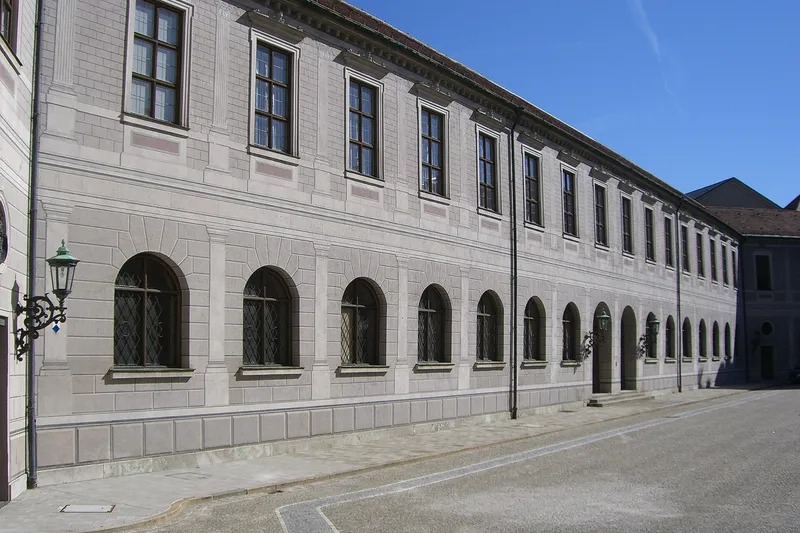
Munich Residenz
A room-by-room planning guide to the Residence Museum, the Treasury, the Cuvilliés Theatre and the Hofgarten — what to see, what to skip, and how to keep museum fatigue at bay.
Read guide
Hofgarten
A calm, symmetrical Renaissance garden between Odeonsplatz, the Residenz and the English Garden — the centre's loveliest free breather, with arcades, a domed pavilion and a quiet boules scene.
Read guide
Munich Old Town Walk
A self-guided walking route through Munich's Altstadt — linking Marienplatz, the great churches, the Viktualienmarkt, the royal streets, the city gates and the beer halls in one easy loop.
Read guideMore in Things to Do
6
Allianz Arena, Munich
How to visit Munich's glowing football stadium — the self-guided Erlebnistour, the FC Bayern Museum, match-day logistics, and the easy U6 ride out to Fröttmaning.
Read guide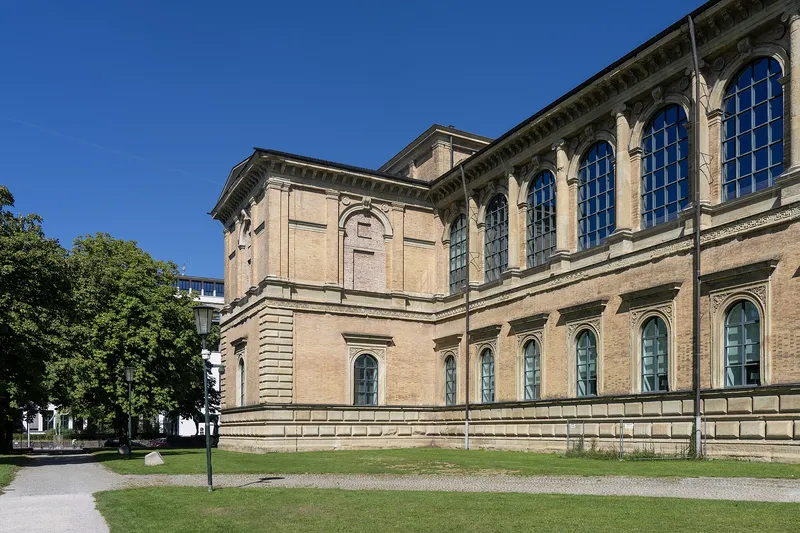
Alte Pinakothek, Munich
How to visit Munich's Old Masters gallery in the Kunstareal — the Dürers and Rubenses worth crossing town for, the Sunday-ticket angle, and how to build a wider museum-quarter day around it.
Read guide
Asamkirche, Munich
How to visit Munich's astonishing late-Baroque Asamkirche on Sendlinger Straße — the church two brothers built next to their own house — without overplanning it.
Read guide
Best Munich Tours
When a guided tour earns its place in a Munich trip — and which kind to pick. Old Town walks, food and beer crawls, football and BMW, the Third Reich history walk, and the big castle and Dachau day trips, weighed by time, cost and effort.
Read guide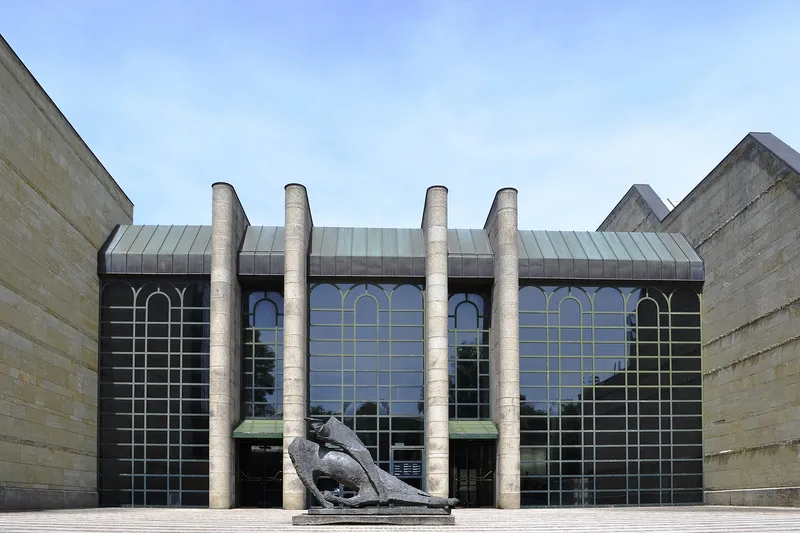
Best Museums in Munich
Choose the right Munich museum for you — by interest, by how much time you have, by which day of the week, and by how useful it is on a rainy day.
Read guide
Best Photography Spots in Munich
Rooftops, squares, churches, parks and palaces — the most photogenic places in Munich, with the light and timing notes to shoot each one well.
Read guide