
Hofgarten
A calm, symmetrical Renaissance garden between Odeonsplatz, the Residenz and the English Garden — the centre's loveliest free breather, with arcades, a domed pavilion and a quiet boules scene.

Photo: Aurora Song / Unsplash

- ✓Laid out in the early 17th century, the Hofgarten is a formal Italian-Renaissance court garden — symmetrical gravel paths radiating from a central domed pavilion to the goddess Diana.
- ✓Arcaded walkways (the Hofgartenarkaden) run along two sides, frescoed and shaded — a dry, beautiful place to walk in any weather.
- ✓It's free, open and central: the natural pause between the Residenz, Odeonsplatz and the English Garden, which begins just beyond its northern edge.
- ✓On warm days locals play boules on the gravel and the benches fill — it's a working city garden, not a roped-off showpiece.
The centre's quietest beautiful corner
The Hofgarten is the breath you take between grand things. Tucked behind the Residenz and reached in a few steps from Odeonsplatz, it's a formal garden in the Italian Renaissance manner — laid out in the early 1600s for the Bavarian court — with gravel paths radiating in perfect symmetry from a central pavilion. After the gilt of the palace and the open stone of the square, its low hedges, lime trees and ordered calm are a relief, and it asks nothing of you: no ticket, no queue, no closing of an exhibit.
At its heart stands the Diana pavilion (Dianatempel), a domed, open-sided rotunda built in the 1610s, crowned by a gilded figure — a 19th-century bronze of Bavaria as a tutelary goddess, added long after the pavilion itself — from which eight paths fan out like spokes. The acoustics under the dome are unexpectedly good, so musicians often busk there, and a single voice or a lone accordion can fill the whole rotunda. Couples sit on the steps; children chase pigeons. It's the kind of place you mean to pass through in five minutes and end up lingering in for half an hour.
The garden was laid out for Duke Maximilian I in the early 17th century, when the formal Italian style was the height of princely fashion, and it has kept that strict geometry ever since: clipped hedges, straight gravel walks, beds arranged in mirror-image symmetry. It's small by the standards of a royal garden — you can stroll the whole thing in fifteen minutes — but its scale is part of the charm. This is an intimate, human-sized version of grandeur, not the endless vistas of Versailles.
What's easy to miss is how unusual this survival is. Most of the formal court gardens that once surrounded European palaces were swept away by the 18th-century fashion for naturalistic 'English' landscapes, or lost to later development. The Hofgarten kept its 17th-century bones, which makes it a genuinely rare thing: a working, public example of the early-Baroque formal garden, sitting in the middle of a modern capital. You're not looking at a reconstruction of an idea here but at the idea itself, kept clipped and raked for four hundred years.

The arcades, the boules and the everyday life of the garden
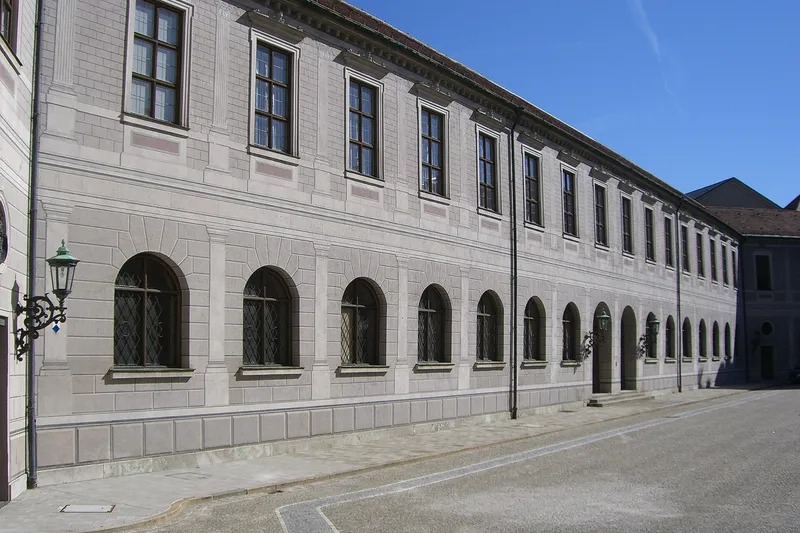
Along the garden's western and northern sides run the Hofgartenarkaden, long covered walkways painted with frescoes — including, on the north range, a celebrated cycle of Wittelsbach history. They make the Hofgarten a genuinely all-weather stop: when a Munich shower blows through, you can keep walking, dry, with the garden on one side and centuries of painted history on the other.
What makes the Hofgarten lovable rather than merely handsome is how used it is. On warm afternoons the gravel hosts an informal boules (pétanque) scene, retirees and students alike clicking metal balls in the shade. The benches fill with people reading and eating lunch. It is a court garden that became a public one, and it wears the role easily — there's no sense here of a roped-off heritage exhibit, just a beautiful old garden doing the everyday work of a city park.
The frescoes in the arcades repay a slow look, too. The north range carries a 19th-century cycle of Bavarian and Wittelsbach history, restored after war damage, while other stretches hold scenes and grotesques in the older manner. On a bright day the light bounces off the gravel and up into the vaults, lighting the paintwork; on a grey one the arcades feel like a long, cool cloister. Either way they give the garden a second dimension — a sheltered, contemplative edge running alongside the open formal beds.
Note that one side of the garden is flanked by the Bavarian State Chancellery (Staatskanzlei), whose modern glass-and-stone bulk incorporates the surviving central dome of the former Bavarian Army Museum — a striking, divisive piece of architecture that frames the garden's eastern edge and is worth a look in its own right. In front of it stands a memorial to the German resistance and the victims of National Socialism, a reminder that even this most peaceful corner of the city carries the 20th century with it.
Look, too, for the smaller monuments dotted through the garden: there's a memorial to the composer Christoph Willibald Gluck, and one to the members of the White Rose resistance group, whose Munich university lies a short walk north. None of them shouts. The Hofgarten holds its history the way it holds everything else — quietly, and without disturbing the people having lunch.
Romance, and the easy walk on to the English Garden
The Hofgarten is one of the city's gentlest romantic stops — symmetrical, shaded, free and rarely crowded, with arcades made for a slow arm-in-arm loop and a pavilion that all but asks for a photograph. It's a fixture on any unhurried couple's route through the centre, and it's at its loveliest early in the morning or in the last hour of light, when the low sun rakes across the gravel.
It's also a doorway. The garden's northern edge sits right by the start of the English Garden — cross over and within minutes you're in Munich's vast informal park, on the way to the Eisbach wave, the Monopteros viewpoint and the Chinese Tower beer garden. That makes the Hofgarten the cleanest, prettiest pivot from the formal old-town sights to the wild green sprawl beyond, and the reason so many self-guided walks thread through it.
The contrast between the two gardens is, in fact, half the pleasure. The Hofgarten is everything a formal garden is — symmetrical, controlled, French-Italian in spirit — while the English Garden just beyond it is its deliberate opposite, a sweeping naturalistic landscape modelled on the informal English parks of the 18th century. Walking from one into the other in the space of a few minutes is a small lesson in two centuries of garden taste, and a lovely transition besides: you step out of the clipped order of the court and into something that pretends to be wild.
Practical notes
The Hofgarten is a public garden, free and open daily, with no ticket and no fixed museum-style hours to plan around — it's the easy, anytime stop in a centre full of timed entries. There are cafés on and near the surrounding square and arcades for a coffee or a pause, and the paths are flat gravel, broadly accessible, though gravel underfoot is worth noting for wheels.
It's exposed in the way formal gardens are — limited deep shade beyond the lime avenues and the arcades — so in high summer aim for morning or evening, and in a shower duck under the arcades. There's nothing here that goes out of date, which is precisely the point: of everything around the Residenz, the Hofgarten is the one stop you never need to verify before you go.

The garden through the seasons
The Hofgarten reads differently across the year, and all of its moods are worth catching. In late spring and summer the beds are planted and the gravel hums with the click of boules and the chatter of lunch crowds; the lime avenues throw welcome shade and the cafés put tables out. This is the garden at its most sociable and its most photographed.
Autumn is arguably its best season — the formal lines look wonderful under turning leaves, the crowds thin, and the low light suits the symmetry. Winter strips it back to bone: bare hedges, raked gravel, the pavilion standing stark against grey skies, and far fewer people, which makes a cold-weather loop oddly romantic. Whenever you come, the arcades give you a dry, beautiful fallback if the famously changeable Munich weather turns on you mid-stroll.
Because it's free, open and central, the Hofgarten is the rare Munich sight you can enjoy with zero planning — drop in for ten minutes between other things, or settle on a bench with a market pastry and let an hour go. It asks nothing and gives a great deal, which is the highest praise we can offer a city garden.

Making the most of a short stop
Because the Hofgarten is small and free, the temptation is to march straight through it on the way from Odeonsplatz to the English Garden — and many people do. But it repays even a few minutes of actually stopping. Walk the full length of the frescoed north arcade and look up at the painted Wittelsbach cycle; circle the Diana pavilion to see the paths line up from each of the eight approaches; find a bench on the shaded side and simply watch the boules players for a while. It's one of the few places in the centre that asks you to slow down rather than keep moving.
If you're assembling a picnic, the Viktualienmarkt or any of the bakeries near Odeonsplatz can supply a pastry, a pretzel or a coffee to bring in — there's no rule against eating on the benches, and a quiet lunch in the Hofgarten is a far nicer break than a crowded café. For a longer outing, treat the garden as the calm middle of a sequence: the Residenz before it, the English Garden after, and the Hofgarten as the breath in between, where the city's grandeur briefly turns soft and green.
And if it rains? Head straight for the arcades. The covered, frescoed walkways on two sides mean the Hofgarten is one of the few outdoor sights in Munich you can still enjoy in a shower — you simply trade the gravel paths for the painted colonnade and keep walking, dry, until the weather passes.

At a glance
Quick orientation — one of the few central sights with nothing to verify before you go.
- What it is: a free, formal early-17th-century court garden with a central domed pavilion and frescoed arcades.
- Where: behind the Residenz, between Odeonsplatz and the English Garden.
- Getting there: U-Bahn Odeonsplatz, then a 2-minute walk; flat and central.
- Cost: free, open daily, no ticket.
- Time needed: 15–30 minutes on its own; the perfect link in a longer walk.
- Best paired with: the Residenz and Odeonsplatz, then onward into the English Garden.

Odeonsplatz, Theatinerkirche & Hofgarten
A refined short walk through Odeonsplatz — the Feldherrnhalle, the buttercup-yellow Theatinerkirche, the Hofgarten arcades and the Residenz edge — and the difficult 20th-century history the square also carries.
Read guide
The English Garden, Munich
How to walk Munich's vast central park — the Eisbach surf wave, the Monopteros viewpoint, the Chinese Tower beer garden, the lawns, the streams and the long route north to the Kleinhesseloher See.
Read guide
Romantic Walks in Munich
Five walks for two — the Nymphenburg canal, the English Garden to the Monopteros, the Isar river banks, the Hofgarten-to-Odeonsplatz loop and an Old Town evening route — with timings, golden-hour notes and where to stop.
Read guideMore in Things to Do
6
Allianz Arena, Munich
How to visit Munich's glowing football stadium — the self-guided Erlebnistour, the FC Bayern Museum, match-day logistics, and the easy U6 ride out to Fröttmaning.
Read guide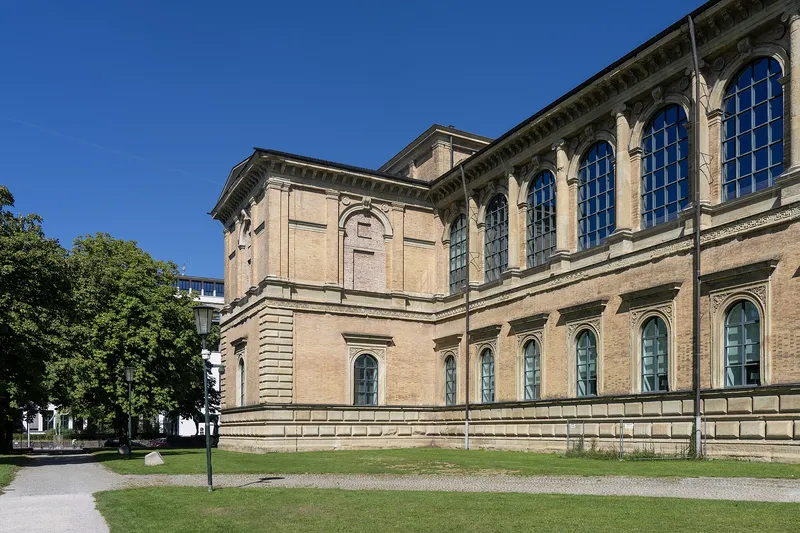
Alte Pinakothek, Munich
How to visit Munich's Old Masters gallery in the Kunstareal — the Dürers and Rubenses worth crossing town for, the Sunday-ticket angle, and how to build a wider museum-quarter day around it.
Read guide
Asamkirche, Munich
How to visit Munich's astonishing late-Baroque Asamkirche on Sendlinger Straße — the church two brothers built next to their own house — without overplanning it.
Read guide
Best Munich Tours
When a guided tour earns its place in a Munich trip — and which kind to pick. Old Town walks, food and beer crawls, football and BMW, the Third Reich history walk, and the big castle and Dachau day trips, weighed by time, cost and effort.
Read guide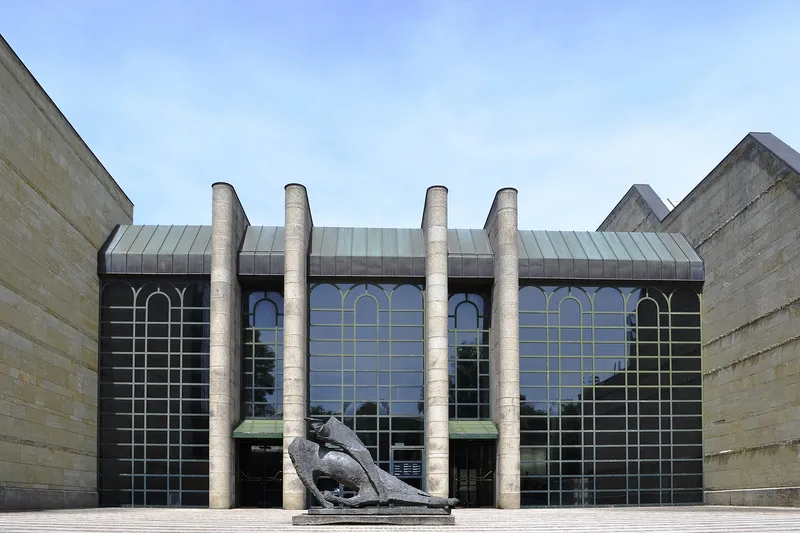
Best Museums in Munich
Choose the right Munich museum for you — by interest, by how much time you have, by which day of the week, and by how useful it is on a rainy day.
Read guide
Best Photography Spots in Munich
Rooftops, squares, churches, parks and palaces — the most photogenic places in Munich, with the light and timing notes to shoot each one well.
Read guide