
Lehel Munich Guide
Lehel is Munich's elegant secret — a calm, well-heeled quarter wedged between the Altstadt and the Isar, minutes from the English Garden, the Eisbach surfers and a cluster of fine museums. Here's why it's our pick for a refined, low-stress base, and how it compares to the Old Town.

Photo: David Fucsku / Unsplash

- ✓Lehel sits between the Altstadt and the Isar — central enough to walk to Marienplatz, calm enough to sleep soundly.
- ✓The southern tip of the English Garden and the Eisbach standing wave are right on its northern edge.
- ✓It's a refined, residential quarter with handsome streets, good cafés and a museum cluster — quiet luxury rather than nightlife.
- ✓Our pick for couples, repeat visitors and anyone who wants to be central without being in the crowds.
Where Lehel is — and why it works
Lehel is the slim, handsome quarter that fills the space between the eastern edge of the Altstadt and the river Isar, just south of the English Garden. It's one of Munich's oldest suburbs outside the medieval wall, and it has aged into something quietly desirable: a grid of dignified 19th-century streets, tree-lined and residential, with good cafés, a scatter of galleries and museums, and almost none of the tourist churn that fills the Old Town a few minutes west.
That position is the whole point. From Lehel you can walk into the Altstadt and onto Marienplatz in well under fifteen minutes, stroll to the southern tip of the English Garden in the other direction, and reach the Isar's paths in moments — all without staying in the thick of the crowds or the noise. The U4/U5 (Lehel station) and several trams put the rest of the city within easy reach. It's central in every practical sense, yet it feels like a calm residential neighbourhood, which is a rare and valuable combination for a visitor.
Think of Lehel as the buffer between Munich's two great pleasures — the historic Old Town on one side and its largest park on the other — close enough to both to slip into either on a whim, but belonging to neither's bustle. That in-between calm is exactly what makes it such a comfortable base: you get the upside of two of the city's best assets without having to sleep inside the energy of either.
- Location: between the Altstadt and the Isar, just south of the English Garden.
- To Marienplatz: a walk of well under 15 minutes; to the park, a couple of minutes.
- Transit: Lehel station (U4/U5) plus trams along the riverside.
- Feel: leafy, residential and grown-up — central without the centre's bustle.
What's on your doorstep
Lehel punches above its size for things to see and do. Its northern edge runs straight into the southern tip of the English Garden — one of the largest city parks in the world — and into the Eisbach, the artificial river channel whose famous standing wave draws surfers year-round; watching them ride it just inside the park is one of Munich's great free spectacles. (Whether the wave is open to surf can vary, so it's the surfers' status to check, not yours to plan around.)
The quarter also holds a genuine cluster of museums for art lovers, and it's a short walk from the Residenz, the Hofgarten and Odeonsplatz at the Altstadt's northern edge — so a morning can flow from a quiet Lehel café into the royal court garden and back along the river without ever feeling rushed. The Isar itself, with its gravel banks and walking-and-cycling paths, is the quarter's other great asset: a place for an early stroll, a sunset wander or a warm-weather picnic, all within a couple of minutes of the door.
What makes all this so appealing is the range packed into such a short radius. In a single unhurried day from a Lehel base you could watch the surfers on the Eisbach, walk the southern reaches of the English Garden, sit in a museum, cross into the Old Town for lunch, and end with a sunset by the river — none of it more than a stroll apart, and none of it requiring a plan. Few central neighbourhoods anywhere put the park, the river, the museums and the historic core within such easy, walkable reach of one front door.
- The Eisbach standing wave and the southern English Garden — free, on the northern edge.
- A cluster of art museums within the quarter for a rainy or culture-led morning.
- The Residenz, Hofgarten and Odeonsplatz, a short walk into the Altstadt's edge.
- The Isar's paths and banks for strolls, sunsets and warm-weather picnics.

The quiet-luxury hotel logic
Lehel's lodging character matches its streets: more polished and residential than party-central, leaning toward the upper-mid and upscale end rather than budget bunks. That's not a drawback so much as a self-selection — people who book Lehel are usually after a calm, refined stay within walking distance of the centre, and the hotels reflect it. You'll find handsome, well-run places where the appeal is a good night's sleep, a proper breakfast and a quiet street to step out onto in the morning, rather than a buzzing bar on the corner.
The practical case for staying here is strong. You get genuine centrality — the Altstadt and the park both on foot — without the Old Town's crowds, noise and very top prices, and the river and English Garden make the area feel like a small holiday in itself. If your trip is built around the city's culture and atmosphere rather than its nightlife, and you value calm, Lehel is one of Munich's smartest bases. For the actual hotel shortlist, our luxury-stays guide is the place to compare the higher-end options.
It's worth being honest about who Lehel is not for. If you want the cheapest possible bed, you'll do better around the station or in Westend; if you want to roll out of your hotel into a wall of bars, the Glockenbachviertel is your quarter. Lehel's value is a different currency — a quiet street, a short walk to almost everything that matters, and a neighbourhood that feels like Munich rather than a tourist strip. For the travellers it suits, that trade is an easy yes, and it's why we recommend it so often for a calm, refined stay. As with any hotel decision, confirm current rates and specifics when you book, since these move with the season.
- Mood of the stay: calm, residential and polished — quiet luxury over nightlife.
- Hotel mix: skews upper-mid to upscale; fewer true-budget beds.
- The win: real centrality and park access without the Old Town's crowds and top prices.
- Best for: couples, repeat visitors and anyone who prizes a quiet night.
A little history and character
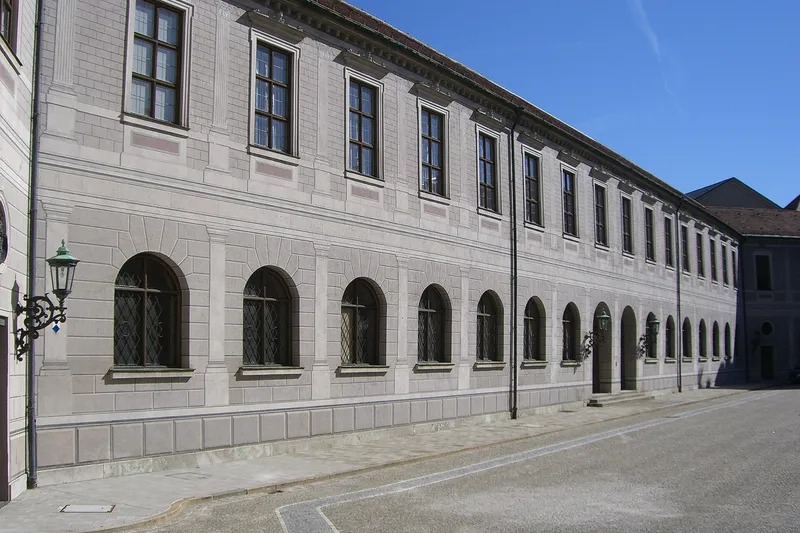
Lehel has a backstory that explains its present-day calm. It grew up as one of Munich's first suburbs beyond the medieval wall, long a more modest, working district that was gradually rebuilt through the 19th century into the dignified residential quarter you see today — block after block of handsome, ornamented facades laid out on a quiet grid. Spared the commercial intensity that took over the Old Town, it kept its residential bones, which is precisely why it now reads as such a graceful, lived-in place rather than a tourist stage set.
That character shows in the details: well-kept streets, a couple of fine churches, galleries and small museums folded among the apartments, and the sense that you're staying in a real Munich neighbourhood rather than a visitor enclave. It's the kind of quarter where you start to recognise the café staff by the second morning and where the loudest sound at night is likely to be the Eisbach. For travellers who want to feel like temporary residents rather than sightseers, that authenticity is a large part of the appeal.
- Origin: one of Munich's oldest suburbs outside the wall, rebuilt grandly in the 19th century.
- Built form: handsome, ornamented facades on a quiet residential grid.
- Feel: a real, lived-in neighbourhood — graceful and unhurried, not a tourist enclave.
Getting around from Lehel
For all its calm, Lehel is genuinely well-connected. Lehel station sits on the U4 and U5 lines, trams run along the riverside and toward the centre, and the Altstadt is close enough that walking is often the nicest option anyway — Marienplatz, the Residenz and the Hofgarten are all within a comfortable stroll. The airport S-Bahn runs through the central stations a stop or two away, so arriving and leaving is straightforward without ever needing a car.
In practice, a Lehel base means you walk for pleasure and ride only when you choose to. A typical day might start on foot — a riverside stroll or a wander into the English Garden — and use the U-Bahn only to reach something further out, like the Kunstareal museums or Nymphenburg. As with anywhere in Munich, treat specific line details and any volatile timetable as something to confirm with the MVV when you travel, but the headline is simple: from Lehel, the whole city is easy, and most of the best of it is on foot.
- Lehel station (U4/U5) plus riverside trams; the airport S-Bahn runs through nearby central stations.
- Marienplatz, the Residenz, the Hofgarten and the English Garden are all walkable.
- Walk for pleasure, ride only for the further-out sights — no car needed.

Eating, drinking and the daily rhythm
Lehel won't out-buzz the Glockenbachviertel for nightlife or out-eat the Old Town for famous beer halls, and it doesn't try to. What it offers instead is a relaxed, local daily rhythm: good neighbourhood cafés for breakfast and an afternoon coffee, unpretentious restaurants where you're as likely to sit beside a Münchner as a visitor, and the easy option of strolling into the Altstadt or up to a beer garden in the English Garden when you want something livelier. It's a base to live in rather than a stretch of bars to crawl.
That makes Lehel especially well-suited to couples and to slower, more romantic trips — a morning by the river, a museum, a long lunch, and the city's grander dining on Maximilianstraße or in the Old Town only a short walk away for an occasion. If your idea of a good evening is a quiet wine, a wander and an early start on the park, the quarter delivers it. As anywhere, individual cafés and restaurants come and go and keep their own hours, so check before you set your heart on a specific spot.
The same calm that defines Lehel's evenings shapes its days. There's no single 'scene' to plug into here, no headline market or famous beer hall pulling crowds — just a steady, civilised rhythm you set yourself. For some travellers that would feel too quiet; for the many who choose Lehel deliberately, it's the entire appeal, a place to decompress between the city's louder pleasures. With the Old Town, the park and the river all on foot, you're never short of somewhere to go when you want more — you simply come home to somewhere peaceful.
- Strength: relaxed local cafés and unpretentious restaurants over big-name nightlife.
- Lively evenings are a short walk away in the Altstadt or an English Garden beer garden.
- Ideal for couples and slow, romantic trips — river, museum, long lunch, early park morning.

Lehel vs the Altstadt — which to book
The honest comparison most visitors are making is Lehel against the Altstadt. Choose the Altstadt if you want to step out of the hotel directly into the headline sights, you're on a short trip where every minute counts, and you don't mind paying the premium and sharing the squares with the crowds. Choose Lehel if you'd rather be a short, pleasant walk from those same sights while sleeping somewhere calm, green and residential — and very likely paying a little less for an equivalent room.
For first-time visitors who prize maximum convenience and the storybook setting, the Altstadt still wins. For couples, returning travellers, light sleepers and anyone whose ideal day starts with a quiet stroll by the river rather than the bustle of Marienplatz, Lehel is the more rewarding base — and it remains an easy walk or a couple of U-Bahn stops from everything the Old Town holds. Whichever you lean toward, treat current room prices and any specific hotel details as things to verify when you book; the character of each quarter is the part you can count on.

The English Garden, Munich
How to walk Munich's vast central park — the Eisbach surf wave, the Monopteros viewpoint, the Chinese Tower beer garden, the lawns, the streams and the long route north to the Kleinhesseloher See.
Read guide
Hofgarten
A calm, symmetrical Renaissance garden between Odeonsplatz, the Residenz and the English Garden — the centre's loveliest free breather, with arcades, a domed pavilion and a quiet boules scene.
Read guide
Luxury Hotels in Munich
How to choose a high-end Munich stay by style and street — the grand-dame palace hotels of the Altstadt and Maximilianstraße, design-led boutiques, spa retreats and the quiet luxury of Lehel — with the practical detail that makes a splurge worth it.
Read guideMore in Neighborhoods
6
Altstadt Munich Guide
Munich's Old Town, the Altstadt, holds the city in miniature — Marienplatz and the Glockenspiel, the Frauenkirche, the Viktualienmarkt, the Residenz and the Hofbräuhaus, all inside a flat, walkable ring. Here's what to see, where to eat, where to stay, and how to sidestep the busiest hours.
Read guide
Around Olympiapark, Munich
The northern districts around Olympic Park, BMW Welt and the Olympic Village — a green, modern, family-friendly zone with strong transit links and easy reach of the Allianz Arena.
Read guide
Au, Munich
A local-feeling riverside quarter on the Isar's east bank — home to the thrice-yearly Auer Dult market, the Nockherberg and its strong-beer season, and quieter food and evenings away from the crowds.
Read guide
Best Area to Stay in Munich for a First Visit
A decisive, opinionated answer for first-timers — why the Altstadt (or its quiet fringe) is the right base for a first Munich trip, with Lehel, Maxvorstadt and Schwabing as the best alternatives and the station area as the value play.
Read guide
Best Hotels in Munich
How to pick the right Munich hotel — curated shortlists organised by area, by style, by budget and by season, with a clear method for choosing rather than a stale list of names, plus deeper guides to luxury and budget stays.
Read guide
Boutique Hotels in Munich
Where to find Munich's stylish smaller stays — the design-led boutiques of Maxvorstadt's museum quarter, the romantic Altstadt corners, and the bar-and-bistro hotels of the Glockenbachviertel — and how to pick the right one for your kind of trip.
Read guide