
Altstadt Munich Guide
Munich's Old Town, the Altstadt, holds the city in miniature — Marienplatz and the Glockenspiel, the Frauenkirche, the Viktualienmarkt, the Residenz and the Hofbräuhaus, all inside a flat, walkable ring. Here's what to see, where to eat, where to stay, and how to sidestep the busiest hours.

Photo: Philipp Bachhuber / Unsplash

- ✓The Altstadt is the historic core inside the line of the old city wall — flat, roughly a kilometre across, and walkable end to end in fifteen minutes.
- ✓It's the densest concentration of Munich's headline sights, which makes it the obvious first-trip base — and the most expensive and most crowded.
- ✓See the central squares early or late and eat a street or two off Marienplatz to escape both the prices and the cruise-day crush.
- ✓Almost everything here is free to look at or enter; the optional spends are a tower climb, the Residenz, and your meals.
What the Altstadt is
The Altstadt — literally 'Old Town' — is the historic heart of Munich, the circle of streets that grew inside the medieval city wall around Marienplatz. The wall is long gone, but its ring road and three surviving gates still trace the old edge, and the area inside stays remarkably compact: flat, largely pedestrianised in the centre, and small enough to cross on foot in a quarter of an hour. It's where Munich began in 1158 and where, eight and a half centuries later, the city still does its most concentrated business of being beautiful.
For a visitor, the Altstadt's appeal is simple density. Within this small ring you'll find the New Town Hall and its Glockenspiel, the Frauenkirche's twin onion domes, the open-air Viktualienmarkt, the vast Residenz palace, the Hofbräuhaus, three medieval gates and a clutch of extraordinary churches — all a few minutes' walk from one another. You can't really 'do' the Altstadt as a checklist; the pleasure is in wandering it, letting one square spill into the next and ducking into open church doors as you go.
It helps to picture the shape. Marienplatz sits at the centre; the three surviving gates — the Karlstor to the west, the Sendlinger Tor to the south and the Isartor to the east — mark the old edges and make handy reference points. The pedestrian shopping street runs from the Karlstor in to Marienplatz, the markets and food cluster to the south, and the royal quarter of the Residenz, Odeonsplatz and the Hofgarten caps the north. Once those few landmarks click into place, you'll find you rarely need a map: in a circle this small, the next good thing is always a minute away.
- Location: the historic core inside the old city-wall ring, centred on Marienplatz.
- Size: ~1 km across, flat, walkable end to end in about 15 minutes.
- Transit: Marienplatz (U3/U6, S-Bahn, trams) and Karlsplatz/Stachus anchor the ring.
- Character: postcard squares, church bells and markets by day; quieter once shops close.
The sights, square by square
Start where the city does, on Marienplatz. The square is framed by the neo-Gothic New Town Hall, whose tower carries the Glockenspiel — 43 bells and 32 figures that re-enact a ducal wedding and the coopers' dance, running daily late morning and at midday, with an extra afternoon show added in the warmer months. The gilded Marian Column stands at the centre, and just across the way the older Alter Peter (St. Peter's) offers a tight tower climb to the best rooftop view in the centre, looking straight down onto the square and across to the Frauenkirche.
From Marienplatz the sights fan out in every direction. South lies the Viktualienmarkt, the permanent open-air food market with its maypole and rotating beer garden; just beyond, down Sendlinger Straße, the tiny Asamkirche hides a jewel-box of late-Baroque gold behind a plain facade, ending at the brick towers of the Sendlinger Tor. West rises the Frauenkirche, Munich's cathedral, its twin domes the symbol of the skyline. North-east, behind a deliberately modest street front, sprawls the Residenz, the Wittelsbachs' enormous city palace, with the Hofgarten behind it and Odeonsplatz and the yellow Theatinerkirche at the Old Town's northern edge.
- Marienplatz & the Glockenspiel — the square at the city's heart (daily late-morning and midday shows, plus an afternoon show in summer; confirm times on the day).
- Alter Peter (St. Peter's) — the best rooftop view in the centre, by a steep tower climb.
- Viktualienmarkt — open-air food market and small beer garden, a minute south.
- Asamkirche & Sendlinger Tor — a Baroque jewel and a medieval gate down Sendlinger Straße.
- Frauenkirche — the twin-domed cathedral and skyline symbol.
- Residenz, Hofgarten & Odeonsplatz — the royal quarter at the northern edge.
Where to eat in the Altstadt
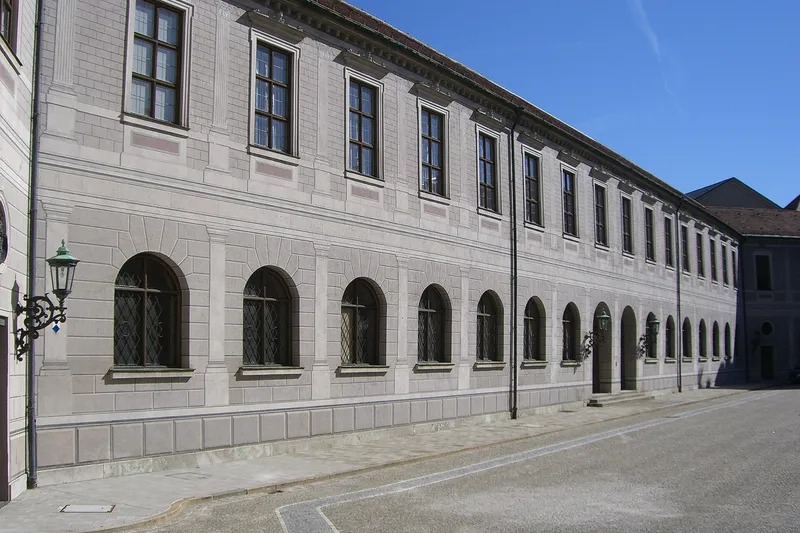
The Altstadt feeds you well if you know where to step. The honest rule is to move one or two streets off Marienplatz: the restaurants directly on the central squares lean touristy and pricey, while the lanes just behind them hide better food at fairer prices. For a quick, authentic bite, the Viktualienmarkt is unbeatable — a stand-up Brezn and Weißwurst (eaten before noon, peeled not cut, with sweet mustard) or a warm Leberkässemmel, taken among the stalls.
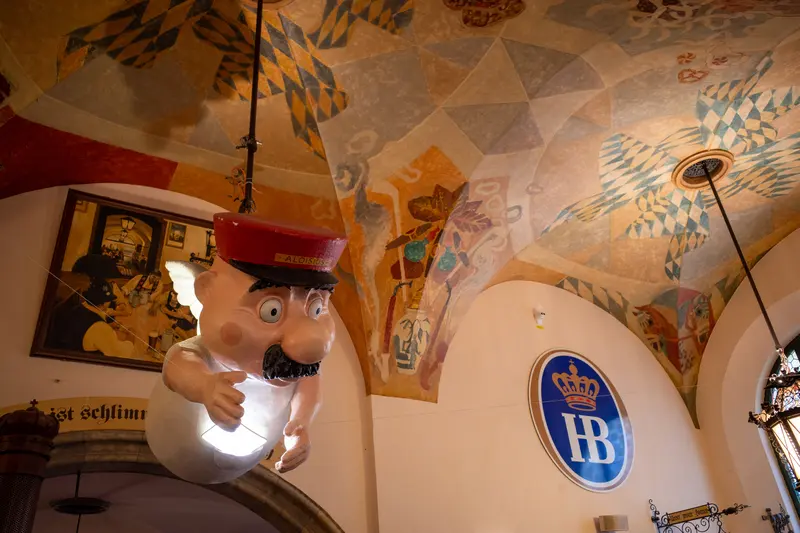
For the full Bavarian beer-hall experience, the Hofbräuhaus is the famous one — loud, brass-banded, touristy and worth one evening for the spectacle — while quieter, equally good halls and taverns hide in the surrounding streets. The Altstadt also holds the city's grandest shopping-and-dining axis, Maximilianstraße, for a smarter occasion. As ever in Munich, confirm opening hours before you set out, and remember most shops (though not restaurants) close on Sundays.
Coffee and pauses are easy to come by too. The cafés around the Viktualienmarkt and the lanes off the central squares serve everything from a quick stand-up espresso to a long afternoon Kaffee und Kuchen, and the market's own small beer garden — which rotates its pour between the city's breweries through the year — is the most atmospheric spot in the Old Town for a single, unhurried Maß. The golden rule holds throughout: the closer to Marienplatz, the higher the price and the bigger the crowd, so a short walk almost always buys both a better seat and a better bill.
- Move one or two streets off Marienplatz for better food at better prices.
- Viktualienmarkt: the best quick, authentic Old Town bite, eaten standing among the stalls.
- Hofbräuhaus: the famous beer hall — worth one loud evening; quieter alternatives nearby.
- Sundays: most shops close, so plan market and grocery runs for Saturday.

Where to stay — and whether you should
Staying in the Altstadt means stepping out of your hotel and straight into the sights, which is the whole reason to do it. It's the natural first-trip base for anyone short on time who wants to walk to everything and soak up the storybook atmosphere from morning to night. The hotels run from grand historic names to polished mid-range options, and the location premium is real — this is the most expensive part of the city to sleep in.
The trade-offs are worth weighing. The central squares are busy and commercial by day and can feel quiet once the shops shut, and the very best Old Town rooms cost noticeably more than equally well-connected beds a few minutes out. If walkability and atmosphere are your priorities and budget is secondary, book the Altstadt with confidence. If value matters more, neighbouring Lehel offers calm and the same near-centre walkability, while the station area trades looks for the best transit and prices. Our first-time guide weighs these directly.
- Best for: first-timers, short stays, walk-to-everything convenience and atmosphere.
- Trade-offs: the city's highest room prices; busy by day, quiet at night.
- Value alternatives: Lehel for calm and walkability; the station area for transit and price.

The Old Town's churches and quiet corners
For a quarter so famous for its beer halls, the Altstadt is also unusually rich in churches, and they make the best free, crowd-free pauses between the headline sights. The Frauenkirche's vast brick-Gothic interior is bright and surprisingly plain — bombed and rebuilt after the war — with the legend of the Teufelstritt, the 'Devil's Footstep', set into the stone just inside the door. A few minutes away on Sendlinger Straße, the Asamkirche packs an astonishing burst of late-Baroque gold and swirling stucco into a space barely wider than a house, built by the Asam brothers in the 1730s as their private chapel.
Beyond the big names, the Old Town hides smaller refuges. The Theatinerkirche's butter-yellow domes preside over Odeonsplatz at the northern edge; Alter Peter, the oldest parish church in the centre, anchors the south; and the Michaelskirche on the pedestrian shopping street is a grand Renaissance hall worth a glance. Tucked-away courtyards and the formal Hofgarten behind the Residenz offer green, gravelled calm a step off the busiest lanes. None of these need booking — just an open door and a few quiet minutes — and together they turn a walk through the Altstadt into something with more texture than a sight-checklist.
- Frauenkirche — the cathedral's bright, rebuilt interior and the Devil's Footstep legend.
- Asamkirche — a jewel-box of Baroque gold on Sendlinger Straße, free to enter.
- Theatinerkirche & Michaelskirche — grand churches at the Old Town's edges, easy to glance into.
- Hofgarten & hidden courtyards — gravelled, green pauses a step off the busy lanes.


Getting around — and a few practical notes
The Altstadt is the easiest part of Munich to navigate, and mostly you'll do it on foot: it's flat, compact and largely pedestrianised in the centre, so a U-Bahn ride within the Old Town is rarely worth the stairs. When you do need transit, Marienplatz (U3/U6 and the S-Bahn trunk line) and Karlsplatz/Stachus sit at the ring's western and central edges, with trams looping the old wall line — and the airport S-Bahn runs straight through, making arrival and departure simple from anywhere in the centre. Cars are a hindrance here, not a help; if you drive, park once and walk.
A handful of small things smooth a visit. Wear shoes you can spend hours in, because it's all cobbles and stone. Carry a little cash for the market, church donation boxes and a tower fee, even though cards are widely taken. Most shops close on Sundays, so plan market runs for Saturday. And treat any specific opening hours, tower-climb times or admission prices as things to confirm on the day — these shift with the season, and the Glockenspiel's extra afternoon show comes and goes with the calendar. Build a loose plan around the late-morning and midday Glockenspiel shows and let the dense, walkable Old Town fill in the rest.
- Walk it: the Altstadt is flat, compact and best on foot; transit is rarely needed inside the ring.
- Anchors: Marienplatz (U3/U6, S-Bahn) and Karlsplatz/Stachus; the airport S-Bahn runs through the centre.
- Carry some cash for the market, churches and a tower fee; most shops close Sundays.
- Confirm hours, tower times and prices on the day — they change with the season.


Beating the crowds
The Altstadt's popularity is also its only real drawback, and a little timing solves most of it. Marienplatz and the Glockenspiel draw their thickest crowds around the 11:00 and noon shows and through the middle of the day, especially when river-cruise and coach groups are in town. The simplest fix is to flip your rhythm: see the central squares and climb Alter Peter early in the morning or in the last light of the evening, and save the middle hours for indoor sights — the Residenz, the Asamkirche, the Frauenkirche — or for the quieter eastern and northern fringes of the Old Town.
A few more tactics help. Eat at off-peak hours and away from the main squares. Use the surviving gates and the streets behind them — Sendlinger Tor, the Hofgarten, the lanes around the Residenz — as breathing space when Marienplatz feels packed. And because the whole Altstadt sits within the U-Bahn ring, you're never more than a few minutes from a quick escape to a calmer quarter. The season matters too: summer and the Christmas-market weeks are the busiest, so steer your expectations accordingly. As always, treat any specific hours or show times as things to confirm on the day.
It's worth keeping perspective on all this, though. The Altstadt's crowds are the ordinary crowds of a beloved European old town, not a reason to avoid it — and the same density that fills the squares is exactly what makes the quarter so rewarding to stay in and stroll through. Handle the timing, lower your shoulders, and the Old Town gives back far more than the busy hour around the Glockenspiel might suggest. For most visitors it remains the most magical place in Munich to wake up.
- See Marienplatz and climb Alter Peter early morning or evening, not midday.
- Use the middle of the day for indoor sights — the Residenz, Asamkirche, Frauenkirche.
- Retreat to the Hofgarten, the gates and the back lanes when the squares fill.
- Busiest periods: summer and the Christmas-market weeks — adjust your timing.


Marienplatz, Munich
How to see Munich's central square — the New Town Hall and Glockenspiel, the Marian Column, the Old Town Hall and the food stops a minute away.
Read guide
Viktualienmarkt, Munich
How to eat, shop and linger at Munich's open-air food market a minute from Marienplatz — the stalls, the beer garden under the maypole, and the unwritten rules that make it work.
Read guide
Munich Old Town Walk
A self-guided walking route through Munich's Altstadt — linking Marienplatz, the great churches, the Viktualienmarkt, the royal streets, the city gates and the beer halls in one easy loop.
Read guideMore in Neighborhoods
6
Around Olympiapark, Munich
The northern districts around Olympic Park, BMW Welt and the Olympic Village — a green, modern, family-friendly zone with strong transit links and easy reach of the Allianz Arena.
Read guide
Au, Munich
A local-feeling riverside quarter on the Isar's east bank — home to the thrice-yearly Auer Dult market, the Nockherberg and its strong-beer season, and quieter food and evenings away from the crowds.
Read guide
Best Area to Stay in Munich for a First Visit
A decisive, opinionated answer for first-timers — why the Altstadt (or its quiet fringe) is the right base for a first Munich trip, with Lehel, Maxvorstadt and Schwabing as the best alternatives and the station area as the value play.
Read guide
Best Hotels in Munich
How to pick the right Munich hotel — curated shortlists organised by area, by style, by budget and by season, with a clear method for choosing rather than a stale list of names, plus deeper guides to luxury and budget stays.
Read guide
Boutique Hotels in Munich
Where to find Munich's stylish smaller stays — the design-led boutiques of Maxvorstadt's museum quarter, the romantic Altstadt corners, and the bar-and-bistro hotels of the Glockenbachviertel — and how to pick the right one for your kind of trip.
Read guide
Budget Hotels in Munich
How to stay in Munich cheaply without ending up somewhere grim or remote — the best-value areas like Westend and the streets around the Hauptbahnhof, the hostel-versus-hotel calculation, and the transit trade-offs that decide whether a low price is actually a bargain.
Read guide