
Marienplatz, Munich
How to see Munich's central square — the New Town Hall and Glockenspiel, the Marian Column, the Old Town Hall and the food stops a minute away.

Photo: Andrey Omelyanchuk / Unsplash

- ✓Marienplatz has been Munich's central square since 1158 and is the zero point from which the rest of the Old Town radiates.
- ✓The New Town Hall's Glockenspiel plays at 11:00 and noon daily, with an extra afternoon show in the warmer months — verify the current schedule.
- ✓Climb Alter Peter (St. Peter's tower) opposite for the postcard view straight down onto the square.
- ✓The Viktualienmarkt, the Frauenkirche and the Old Town Hall are all within a two-minute walk.
Say it like a local
Tap to hear each one spoken.
The square at the centre of everything
Marienplatz is Munich's living room. Laid out in 1158 as the town's market and meeting place, it has been the focus of the city for almost nine centuries — the spot where markets were held, tournaments staged, and, today, where football titles are celebrated from the New Town Hall balcony. It is a pedestrian square, ringed by the city's grandest civic architecture and pierced by the U-Bahn and S-Bahn lines beneath, which makes it both the symbolic and the practical heart of the Old Town. Almost any first walk through Munich begins or ends here.
The square takes its name from the Mariensäule, the Marian Column at its centre — a gilded statue of the Virgin Mary on a tall column, raised in 1638 to give thanks for the city surviving Swedish occupation during the Thirty Years' War. It is, by tradition, the exact point from which distances to Munich are measured. Stand beside it and you have the whole square in view: the towering New Town Hall to the north, the smaller Old Town Hall closing the east end, and the lanes peeling off towards the markets and churches.


The New Town Hall and the Glockenspiel
The building that defines Marienplatz is the Neues Rathaus, the New Town Hall — a vast neo-Gothic pile built between 1867 and 1909, all pinnacles, gargoyles and a 85-metre central tower. Despite looking medieval, it is barely older than the cars on the street; the style was a deliberate nod to Munich's Gothic past. Its facade is worth a slow look: statues of Wittelsbach dukes, a dragon clambering up one corner, and the figure of the Münchner Kindl, the city's child-monk emblem, at the very top.
The tower carries the Glockenspiel, the mechanical carillon that draws the crowds. Its 43 bells and 32 near-life-size figures perform on two levels: the upper stage re-enacts the 1568 marriage of Duke Wilhelm V, complete with a jousting tournament in which the Bavarian knight unseats his rival, while the lower stage shows the Schäfflertanz, the coopers' dance that legend says cheered the city after a plague. It runs at 11:00 and noon every day, with an additional afternoon performance (around 17:00) in the warmer months; the seasonal timings change, so check the current schedule before you build your morning around it. The show lasts around ten to fifteen minutes.
You can also go up the tower itself: a lift climbs to a viewing platform near the top for a view over the Old Town roofs (confirm current opening and ticket details, as access can be limited). For the classic head-on view of the Glockenspiel figures, stand back towards the southern side of the square or in the Sterneckerstraße corner.
The Old Town Hall, the column and the corners
At the eastern end of the square sits the Altes Rathaus, the Old Town Hall — a step-gabled medieval building rebuilt several times, its tower now home to a toy museum. The hall behind the facade is the one from whose precursor, in 1938, a notorious Nazi-era speech was given, a piece of dark history the city does not hide. Today the building's archway frames the way through to the Tal, the old road east towards the river.
The square's smaller details reward a pause. The Fischbrunnen, the fish fountain on the north-west corner, is a traditional meeting point and the spot where, in a centuries-old ritual, the mayor ceremonially 'washes the city purse' at Lent. The lanes leading off Marienplatz each go somewhere good: south to the Viktualienmarkt and the Asamkirche, west along the Kaufingerstraße shopping street to Karlsplatz, and north past the Frauenkirche towards the Residenz.
- Mariensäule — the 1638 Marian Column at the square's centre; the city's measuring point.
- Altes Rathaus — the step-gabled Old Town Hall, with a toy museum in its tower.
- Fischbrunnen — the fish fountain and traditional meeting point on the north-west corner.
- The lanes off the square lead to the market, the cathedral and the shopping streets.
What's within a two-minute walk
Marienplatz's great advantage is everything around it. Walk south and you reach the Viktualienmarkt in two minutes — the open-air food market with its maypole and central beer garden, the best place near the square for a stand-up lunch. Cross to the opposite side and Alter Peter, St. Peter's church, offers the best Old Town viewpoint: a spiral stair (no lift) up to a gallery looking straight back down onto the square. West, past the pedestrian shopping street, the twin onion domes of the Frauenkirche rise over the rooftops, with the Devil's Footstep legend inside the door.
This density is why Marienplatz works so well as a base for a day's sightseeing. You can stand on the square for the Glockenspiel at eleven, climb Alter Peter for the rooftops, drop into the Viktualienmarkt for a Brezn and a Weißbier, and visit two great churches — all without straying more than a few hundred metres.

A square that has seen the whole city's story
Marienplatz is not only Munich's geographic centre but its historical stage. For most of the city's life it was simply the Marktplatz, the marketplace — the open ground where grain and salt were traded and where the salt road that made Munich rich passed through. It was renamed for the Marian Column in the 17th century, and over the centuries it has hosted everything from medieval markets and executions to royal proclamations and, in the modern era, political rallies and football celebrations. The square's calm, pedestrian present sits on top of a very layered past.
That layering is part of why the architecture is worth reading slowly. The neo-Gothic New Town Hall is a Victorian-era statement of civic pride dressed in medieval clothes; the genuinely old Altes Rathaus beside it was rebuilt after wartime damage; and the whole ensemble was carefully restored after the bombing of the 1940s, which flattened much of the centre. What you see today is a 19th- and 20th-century vision of a Gothic city, lovingly maintained — and all the more striking for it.

When to go and how to beat the crowds
Marienplatz is busy whenever Munich is busy, and busiest of all in the few minutes around the 11:00 Glockenspiel and through the middle of the day. For a calmer square, come early — before nine the space is almost empty and the light on the New Town Hall is at its best — or after dinner, when the facade is floodlit and the day-trippers have thinned. The square is at its most magical in December, when the Christkindlmarkt fills it with stalls and a thirty-metre tree, and at its most jubilant when FC Bayern parade a trophy on the balcony.
The square's calendar is worth knowing. Beyond the Glockenspiel, Marienplatz hosts the city's biggest Christmas market through Advent, the finish of the marathon, political and civic gatherings, and the wild outdoor celebrations whenever the football or the city has something to cheer. If you want the square at its quietest and most photogenic, a weekday morning out of festival season is the answer; if you want it at its most alive, come on a December evening or after a Bayern title.
Practically, Marienplatz is the single most connected point in the city: the U3 and U6 U-Bahn lines and every main S-Bahn line stop directly beneath it, so it is the natural place to arrive and to navigate from. There is no admission to the square or the churches; the only paid elements are the tower climbs and the Glockenspiel tower lift. The dense crowds at show times are a magnet for pickpockets, so keep bags zipped and in front of you. And as ever with opening times and prices in a working city, confirm the current details on official sources before relying on them.
Map pins
Map data © OpenStreetMap contributors · Tiles © OpenFreeMap

The Munich Glockenspiel
Show times, the best viewpoints, crowd tips and the story behind the figures of the New Town Hall Glockenspiel on Marienplatz.
Read guide
New Town Hall, Munich
How to see Munich's neo-Gothic Neues Rathaus — the tower lift and its view, the two quiet courtyards, the Glockenspiel timing, and the best Marienplatz photo angles.
Read guide
St Peter's Church and tower, Munich
Plan the climb up Alter Peter — Munich's oldest church tower — for the best rooftop view in the Old Town, with timing, crowd tactics and a step-by-step on how to do it.
Read guideMore in Things to Do
6
Allianz Arena, Munich
How to visit Munich's glowing football stadium — the self-guided Erlebnistour, the FC Bayern Museum, match-day logistics, and the easy U6 ride out to Fröttmaning.
Read guide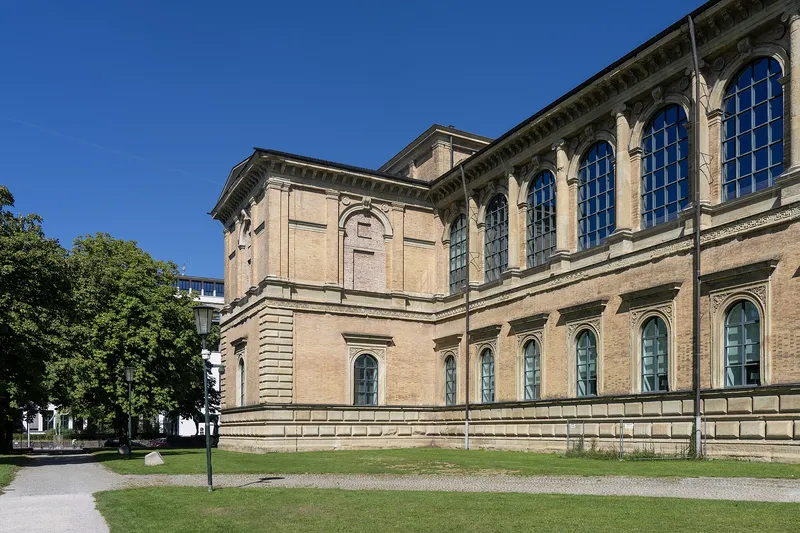
Alte Pinakothek, Munich
How to visit Munich's Old Masters gallery in the Kunstareal — the Dürers and Rubenses worth crossing town for, the Sunday-ticket angle, and how to build a wider museum-quarter day around it.
Read guide
Asamkirche, Munich
How to visit Munich's astonishing late-Baroque Asamkirche on Sendlinger Straße — the church two brothers built next to their own house — without overplanning it.
Read guide
Best Munich Tours
When a guided tour earns its place in a Munich trip — and which kind to pick. Old Town walks, food and beer crawls, football and BMW, the Third Reich history walk, and the big castle and Dachau day trips, weighed by time, cost and effort.
Read guide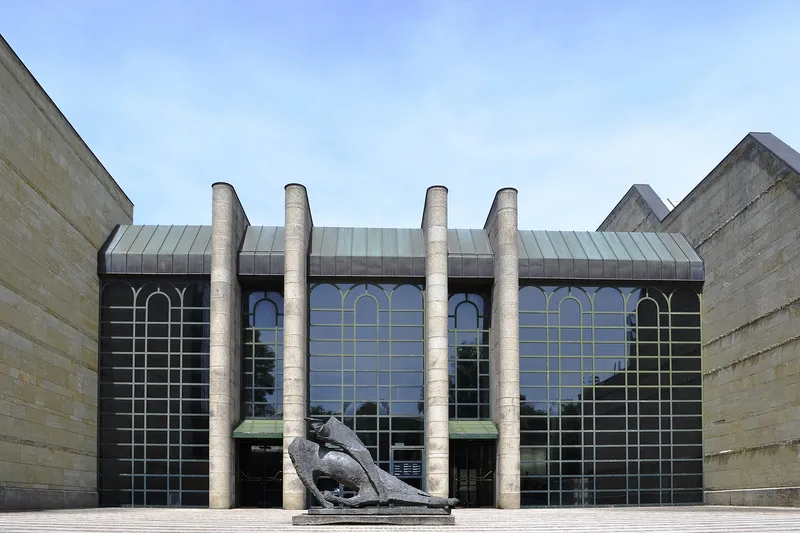
Best Museums in Munich
Choose the right Munich museum for you — by interest, by how much time you have, by which day of the week, and by how useful it is on a rainy day.
Read guide
Best Photography Spots in Munich
Rooftops, squares, churches, parks and palaces — the most photogenic places in Munich, with the light and timing notes to shoot each one well.
Read guide