
 Neighborhoods
Munich Neighborhoods Guide
A traveller's map of Munich's quarters — what each one feels like, what it's good for, and which to book. From the postcard Altstadt and museum-rich Maxvorstadt to leafy Lehel, bohemian Schwabing and the lively Glockenbachviertel, with the practical logic for choosing a base.

Photo: Daniel Schmidt / Unsplash
- ✓Munich is compact and ringed by excellent transit, so no central neighbourhood is a 'wrong' choice — each just has a different character and price.
- ✓The Altstadt is the most walkable and the most expensive; Maxvorstadt and Schwabing suit museum-and-café trips; the Glockenbachviertel and Isarvorstadt own the nightlife.
- ✓Lehel is the quiet, polished surprise — minutes from the English Garden and the centre, with a calmer, residential feel.
- ✓The station area (Ludwigsvorstadt) is the best-connected and best-value base, if not the prettiest; Westend and Neuhausen-Nymphenburg trade a little distance for local life and better prices.
How Munich fits together
Munich is smaller than its reputation suggests, and that shapes everything about where to stay. The historic core — the Altstadt — sits inside the line of the old city wall, a flat circle barely a kilometre across, with Marienplatz at its heart. Around that ring spread the 19th- and 20th-century quarters, each with its own personality, and the river Isar curves down the eastern edge with the vast green of the English Garden flung out to the north. Almost everything a first-time visitor wants is within a twenty-minute walk or a couple of U-Bahn stops of the centre.
Because the city is so compact and the MVV transit network so good, choosing a neighbourhood is less about access — you'll have plenty everywhere — and more about the atmosphere you want to wake up in. Do you want to step out into postcard Old Town squares, leafy residential calm, café-and-bookshop streets, or a buzzing bar quarter? This guide profiles the areas a traveller actually weighs up, says what each is good for, and points you to a deeper guide for the ones you're seriously considering. For the pure hotel-picking decision, our where-to-stay guide turns all of this into a booking recommendation.
- The Altstadt core is ~1 km across, flat and walkable — the city's centre of gravity.
- The Isar and the English Garden define the green, eastern and northern edges.
- MVV transit (U-Bahn, S-Bahn, trams, buses) on one ticket makes every central area well-connected.
- Pick by atmosphere, not access — then refine with the hotel guides.


Altstadt — the postcard centre
The Altstadt is Munich at its most concentrated: Marienplatz and the Glockenspiel, the Frauenkirche's twin domes, the Viktualienmarkt, the Residenz, the Hofbräuhaus and the surviving medieval gates, all within a few minutes of one another. Staying here puts you inside the city's storybook and within walking distance of nearly every headline sight, which is exactly its appeal — and exactly why it commands the highest prices and fills with day-trippers and cruise crowds in peak season.
Book the Altstadt if walkability and atmosphere top your list and budget is secondary, and if you don't mind that the very centre quietens commercially in the evening once the shops close. It's the obvious first-trip choice for anyone who wants to step out of the hotel and straight into the sights. To dodge the worst of the crush, see the central squares early or late and eat a street or two off Marienplatz.
The Altstadt isn't a single mood, either. The western half around Karlsplatz (Stachus) is the busy shopping artery; the southern edge around the Viktualienmarkt and the Sendlinger Tor feels more village-like and food-focused; and the northern royal quarter around the Residenz, Odeonsplatz and the Hofgarten is the grandest and calmest corner. If you want the postcard without the peak bustle, a room toward those quieter edges keeps you in the Old Town while sidestepping the thickest of the Marienplatz crowds.
- Best for: first-timers, sightseers, walkability, short stays where time is tight.
- Trade-offs: the highest prices and the heaviest daytime crowds in the city.
- Mood: storybook squares and church bells; quieter after the shops shut.


Lehel — quiet, polished and central
Tucked between the Altstadt and the Isar, Lehel is Munich's elegant secret: a calm, well-heeled residential quarter that's a short walk from both the city centre and the southern tip of the English Garden, with the Eisbach surfers and a cluster of fine museums on its doorstep. It has none of the Old Town's crowds and none of the nightlife quarters' noise — just handsome streets, good cafés and an easy, grown-up sense of place.
Lehel suits travellers who want to be central without being in the thick of it: couples, repeat visitors, and anyone who values a quiet night's sleep and a morning stroll along the river or into the park. It leans upmarket on hotels, in keeping with its character, but the walkability to the centre and the green is hard to beat. It's our pick for a refined, low-stress base.
- Best for: couples, return visitors, anyone wanting central but calm.
- Trade-offs: fewer budget beds; quieter evenings (which is rather the point).
- Mood: leafy, residential and polished — the English Garden a stroll away.


Maxvorstadt — museums, students and cafés
Just north-west of the Altstadt, Maxvorstadt is Munich's brain: home to the Kunstareal museum quarter — the three Pinakotheken, the Brandhorst and the Lenbachhaus — plus the main university and a population of students that keeps the cafés good and the prices a notch friendlier than the Old Town. The streets are leafy and handsome, the bookshops plentiful, and the whole area is a short walk or one stop from the centre.
It's the natural base for an art-and-culture trip: you can roll out of bed and into a Pinakothek, then spend the afternoon café-hopping. The atmosphere is intellectual and unhurried rather than buzzy or touristy, which is exactly why a certain kind of traveller falls for it. Boutique hotels here often offer better value than equivalent Old Town rooms.
Maxvorstadt also rewards visitors who like to walk. The Altstadt is a short stroll south, Königsplatz and its neoclassical museums sit at the quarter's heart, and the English Garden's western reaches are close to the north-east — so a day can flow from an art gallery to a park lawn to an Old Town dinner without ever touching the U-Bahn. For travellers whose Munich is mostly museums, lectures and long coffees, it's hard to beat.
- Best for: museum lovers, café culture, slightly better value than the Altstadt.
- Trade-offs: less classic-postcard scenery; quieter at night.
- Mood: leafy, studious and creative — the museum quarter on your doorstep.

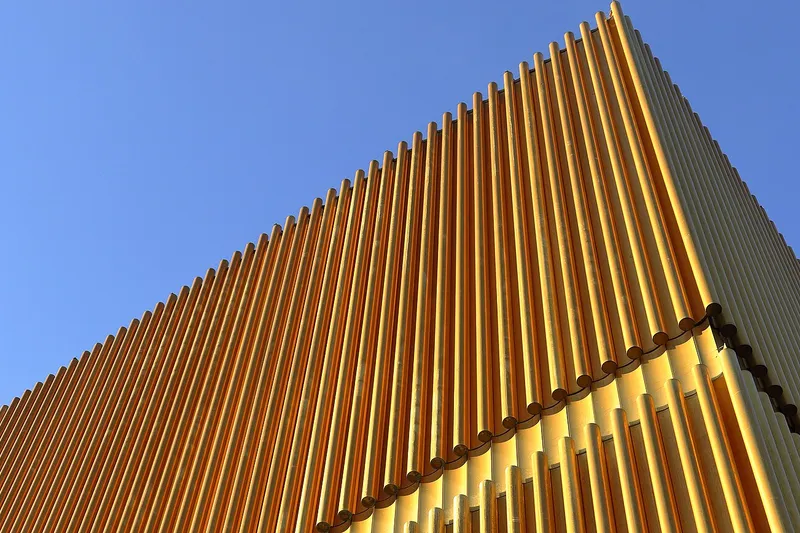
Schwabing — bohemian Munich and the park
North of Maxvorstadt, Schwabing is the city's old bohemian quarter — once the haunt of artists and writers, now a leafy, comfortable district of tree-lined avenues, cafés, wine bars and easy access to the northern reaches of the English Garden. It still carries a creative, slightly genteel air, with good restaurants and a relaxed nightlife that's lively without being raucous.
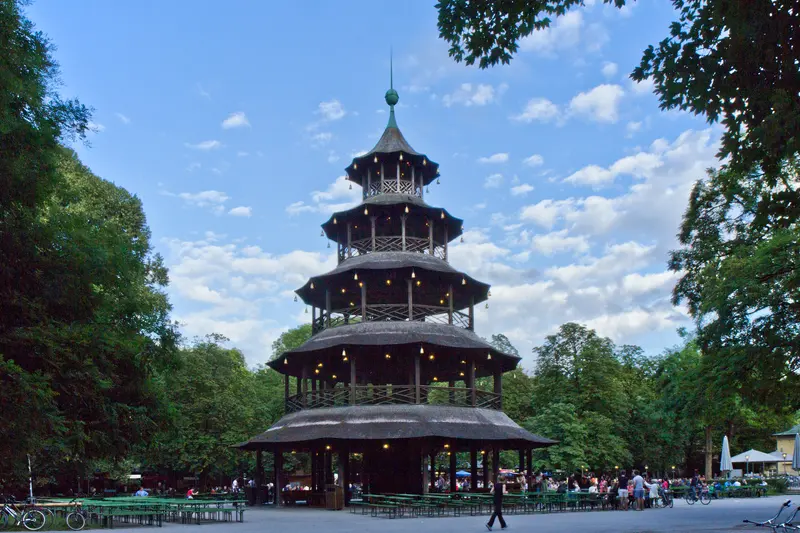
Schwabing works for travellers who want green space and café life over Old Town proximity, and who don't mind being a few U-Bahn stops from Marienplatz (the U3 and U6 make it painless). It's a particularly lovely base in warm weather, when the English Garden and its Chinese Tower beer garden are a stroll away. Think calm, cultured and a little romantic.
Schwabing is also large and varied: the stretches nearer the university and Maxvorstadt feel younger and busier, while the streets further north and toward the park are quieter and more residential. That spread means you can dial the energy up or down by choosing your block — closer to the action for cafés and bars, or deeper into the leafy side for a peaceful night and a morning walk straight into the green.
- Best for: park access, café and wine-bar evenings, a calmer-but-lively feel.
- Trade-offs: a short ride from the very centre; spread out rather than compact.
- Mood: leafy, bohemian and comfortable — the English Garden close by.

Glockenbachviertel & Isarvorstadt — nightlife and design
South of the Altstadt, the Glockenbachviertel and the wider Isarvorstadt are Munich's most fashionable and energetic quarters: a tight grid of bars, cocktail spots, independent boutiques, design shops and restaurants, and the long-established heart of the city's LGBTQ+ scene. The Isar and its riverside paths are a few minutes east, and Sendlinger Tor and the Old Town are a short walk north, so you're central, lively and well-placed all at once.
Book here if you want your evenings on the doorstep and a stylish, switched-on neighbourhood feel — this is where Munich goes out. The flip side is noise: the liveliest streets can be loud at weekends, so pick your hotel's exact block with a little care if you're a light sleeper. It's the youngest-feeling, most night-driven central choice.
The wider Isarvorstadt softens that energy as you move toward the river. Around the Gärtnerplatz — the area's pretty round garden square — and down toward the Isar, the mood turns from bar-hopping to leisurely: independent cafés, a Sunday-feeling calm by the water, and the green of the riverbanks for a daytime reset. So you can have the nightlife close at hand and a quiet morning by the Isar in the same short walk, which is much of the quarter's appeal.
- Best for: nightlife, bars and cocktails, design shopping, LGBTQ+ scene.
- Trade-offs: can be noisy at weekends; less classic-sightseeing scenery.
- Mood: stylish, energetic and social — the place to be out after dark.


The station area, Westend & the western quarters
Ludwigsvorstadt — the area around the Hauptbahnhof, Munich's main station — is the practical pick: the best-connected base in the city, with the airport S-Bahn, every U- and S-Bahn line and the regional trains for day trips all at the door, plus the widest spread of budget and mid-range hotels. It's also walking distance to the Theresienwiese, which makes it the natural Oktoberfest base. The trade-off is looks and feel: the immediate station streets are the city's least charming, so choose your block thoughtfully.
Just west, the Westend (Schwanthalerhöhe) trades a little centrality for genuine local life, a strong food scene and better value than the Old Town, while staying close to the Theresienwiese. Further out, Neuhausen-Nymphenburg offers calm, family-friendly streets, fine beer gardens and easy access to Nymphenburg Palace — a good shout for a quieter, more residential stay with the centre still a quick ride away.
- Ludwigsvorstadt: best transit and value, the Oktoberfest base; pick your block with care.
- Westend: local life and a good food scene, near the Theresienwiese, better prices.
- Neuhausen-Nymphenburg: calm, family-friendly, palace and beer-garden access.


Haidhausen, Au & the east bank
Across the Isar to the east, Haidhausen is one of Munich's most charming residential quarters — the 'French Quarter' of streets named for French towns, village-like squares, good neighbourhood restaurants and the Gasteig/HP8 cultural complex nearby. It feels genuinely local while staying a short tram or U-Bahn ride from the centre, and it's a lovely, low-key base for travellers who'd rather live among Münchners than tourists.
Next door, Au keeps an even more down-to-earth, riverside feel, with the seasonal Auer Dult market and the Nockherberg strong-beer hall as its set-pieces. Neither area is for those who want to step straight into the headline sights, but both reward visitors after atmosphere, value and a real sense of the city's daily rhythm — with the Isar's walking and cycling paths right there.
- Haidhausen: village squares, the French Quarter, local dinners — central yet calm.
- Au: riverside and down-to-earth, with the Auer Dult and Nockherberg traditions.
- Best for: travellers wanting local life and value over Old Town proximity.

Inside the ring vs beyond it
One distinction worth grasping early is the difference between the quarters that hug the old centre and those a little further out. The inner ring of neighbourhoods — the Altstadt itself, plus Lehel, Maxvorstadt, the Glockenbachviertel and Isarvorstadt pressing against its edges — puts you within a walk of Marienplatz and the headline sights, which is why they carry the highest prices and the most visitor energy. They suit short, sight-led trips where every saved minute counts and you want the city's icons on your doorstep.
The outer-but-still-central quarters — Schwabing to the north, Haidhausen and Au across the river, Neuhausen-Nymphenburg and Westend to the west — trade a few U-Bahn minutes for more space, more local life and usually better value. The MVV network makes the 'distance' almost notional: from any of them you're a short, reliable ride from the centre. For longer stays, return visits, families and anyone who'd rather live among Münchners than tourists, that small trade is often the smarter one. Knowing which side of this line you want narrows the whole decision fast.
- Inner ring (Altstadt, Lehel, Maxvorstadt, Glockenbach, Isarvorstadt): walk to the sights; higher prices, more buzz.
- Outer-central (Schwabing, Haidhausen, Au, Neuhausen-Nymphenburg, Westend): more space and value, a short ride in.
- The MVV network makes the distance almost notional — pick by feel, not fear of commuting.

Choosing by the trip you're taking
One useful way to cut through the choice is to start from the kind of trip you're planning rather than from a map. A first, sight-led visit points firmly to the Altstadt or to Lehel and Maxvorstadt just beside it, where you can walk to the headline attractions and waste no time commuting. A romantic break or a slower second trip leans toward Lehel, Schwabing or the riverside east bank, where mornings by the park or the Isar matter more than proximity to the Glockenspiel. And a nightlife- or design-led weekend belongs in the Glockenbachviertel and Isarvorstadt, where the evening is the main event.
Practical needs reshape the answer too. Families often do best in calmer, roomier quarters with green nearby — Neuhausen-Nymphenburg, Schwabing, or parts of the east bank — where a park and a beer garden are easier than a packed Old Town square. Budget travellers gravitate to the station area and Westend for the best value and connections. And anyone visiting specifically for Oktoberfest should think first about the Theresienwiese and only second about charm. Hold your trip's shape in mind as you read the profiles below, and the right two or three candidates will surface quickly.
- Sight-led first trip: Altstadt, or Lehel and Maxvorstadt beside it.
- Romantic or slow trip: Lehel, Schwabing or the riverside east bank.
- Nightlife and design weekend: Glockenbachviertel and Isarvorstadt.
- Families: Neuhausen-Nymphenburg, Schwabing or the green east bank.
- Budget or Oktoberfest: the station area and Westend, near the Theresienwiese.

Neighbourhoods at a glance
If you'd rather compare the quarters side by side than read each profile, here's the shorthand. Every area below is well-connected by the MVV network, so 'best for' is about character and convenience rather than raw access — and the price notes are relative to one another within an already-expensive city. Use this as a shortlist-builder, then read the deeper guides for the two or three that fit your trip.
- Altstadt — best for first-timers and walkability · highest prices · busy by day, quiet at night.
- Lehel — best for calm-but-central stays and couples · upscale prices · leafy and residential.
- Maxvorstadt — best for museums and café culture · mid prices · studious and creative.
- Schwabing — best for park access and a bohemian feel · mid–upper prices · leafy and relaxed.
- Glockenbachviertel / Isarvorstadt — best for nightlife and design · mid–upper prices · lively after dark.
- Ludwigsvorstadt (station) — best for transit and value, and Oktoberfest · lower–mid prices · functional, not pretty.
- Westend — best for local life and food value · mid prices · near the Theresienwiese.
- Neuhausen-Nymphenburg — best for families and calm · mid prices · palace and beer gardens.
- Haidhausen / Au — best for living like a local · mid prices · village-like, east of the river.

Practical things that shape the choice
A few practical realities cut across all the neighbourhoods and are worth holding in mind before you book. The first is the season. In summer the parks, beer gardens and riverside come alive, which makes the green-edged quarters — Schwabing, Lehel, the east bank — especially rewarding; in the Christmas-market weeks, being walkable to the Altstadt's markets is a real plus. And during Oktoberfest the calculation flips entirely toward proximity to the Theresienwiese, which puts Ludwigsvorstadt, Westend and the Isarvorstadt in the spotlight (and pushes prices up across the whole city).
The second is transit reality. Munich's network is excellent, but the Altstadt and the station area sit on the densest web of lines, while the prettier residential quarters may mean a short walk to a U-Bahn stop — rarely a hardship, but worth knowing if mobility or late-night returns matter to you. The airport S-Bahn (S1 and S8) runs through the centre, so arrival and departure are easy from almost any central base.
The third is the rhythm of your trip. If you're sightseeing hard on a short visit, proximity wins and the Altstadt earns its premium. If you're staying longer or returning, the calmer quarters reward you with a more genuine sense of the city and usually a better-value room. And remember the Sunday rule: most shops close, so a quarter with a good Saturday market and easy restaurants — much of the centre, plus the markets at Viktualienmarkt — smooths the quietest day of the week.
- Season: parks and gardens favour green quarters in summer; markets favour the Altstadt in December.
- Oktoberfest: proximity to the Theresienwiese (Ludwigsvorstadt, Westend, Isarvorstadt) trumps all else — book very early.
- Transit: the Altstadt and station area have the densest lines; the airport S-Bahn runs through the centre.
- Sundays: most shops close — value a base near a Saturday market and easy restaurants.

So which neighbourhood should you book?
If it's your first trip and you want to walk to everything, choose the Altstadt and accept the price. If you want central but calm, choose Lehel. For an art-and-café holiday, Maxvorstadt; for green space and bohemian comfort, Schwabing; for nightlife and style, the Glockenbachviertel or Isarvorstadt. For the best transit, value and Oktoberfest access, the station area, with Westend as the better-looking, better-value neighbour. And for living like a local, Haidhausen and the eastern quarters.
Whatever you pick, remember the founding truth: Munich is small and superbly connected, so you'll spend less time commuting than you fear. Settle on the atmosphere you want first, then let our hotel guides match it to a room and a budget. Prices, hotel openings and the feel of specific streets do change, so treat any volatile detail as something to verify when you book — the character of these neighbourhoods, though, is the constant you can plan around.
A last reassurance for the anxious planner: there is no genuinely bad central choice here. The difference between staying in the Altstadt and staying in Lehel or Maxvorstadt is measured in a few minutes' walk and a slightly different morning view, not in whether you'll be able to see the city. Pick the quarter whose description made you nod, book a room you're happy with, and spend your energy on the trip rather than on second-guessing the postcode.