
 Things to Do
Things to Do in Munich
The main hub for Munich's palaces, beer gardens, museums, parks, football and the classic first-timer sights — sorted by interest, time and weather.

- ✓Munich's Old Town is small and flat: Marienplatz to the Viktualienmarkt is a five-minute walk, and most headline sights sit inside the ring road.
- ✓The art is world-class — the three Pinakotheken and the Brandhorst cluster together in Maxvorstadt's Kunstareal museum quarter.
- ✓The English Garden is larger than Hyde Park or Central Park, with the Eisbach river-surfing wave at its southern tip and a beer garden under a Chinese tower at its heart.
- ✓Two or three unhurried days covers the essentials and still leaves room for a palace, a football tour or an Alpine day trip.
How to think about Munich's sights
Munich is one of the easiest big German cities to sightsee because its centre is so compact. The Altstadt — the Old Town inside the line of the demolished medieval walls — is barely a kilometre across, almost entirely flat, and built around a single great square. Within it you'll find the city's most famous landmarks stacked close together: the New Town Hall and its Glockenspiel, two climbable church towers, the most beautiful market in Germany, and a Baroque church so small and so over-decorated it stops people in the street.
Beyond the Old Town, the sights spread into three loose clusters. To the north-west, in Maxvorstadt, the Kunstareal gathers the great art museums. To the north, the English Garden and Schwabing offer green space, the Eisbach wave and café life. To the west, Schloss Nymphenburg stretches along its canal, and further out the BMW complex, the Olympic Park and the Allianz Arena make a day of cars, architecture and football.
The single most useful planning move is to group your days by area rather than by ticking boxes. A morning in the Old Town, an afternoon in the Kunstareal, a slow evening in the English Garden — that is a near-perfect first day, and it barely involves a tram.


The Old Town: Marienplatz and its neighbours
Start on Marienplatz, the square that has been Munich's heart since 1158. Its north side is filled by the neo-Gothic New Town Hall (Neues Rathaus), whose 85-metre tower carries the Glockenspiel — 43 bells and 32 near-life-size figures that re-enact a 16th-century ducal wedding and the coopers' Schäfflertanz. It plays at 11:00 and noon every day, with an additional afternoon show in the warmer months; check the current schedule, as the timings are adjusted seasonally. Arrive a few minutes early for a clear sightline up to the tower.
Directly opposite stands the old parish church of St. Peter — Alter Peter to locals — the oldest church in the city centre. Its tower has one of Munich's best views: a tight spiral climb (with no lift) up to a gallery that looks straight down onto Marienplatz and across to the Frauenkirche. A short walk south brings you to the Viktualienmarkt, a permanent open-air food market with its own maypole and a beer garden in the middle. West of the square, the twin onion-domed towers of the Frauenkirche — the cathedral and the defining shape of the Munich skyline — rise above the rooftops, with the legend of the Devil's Footstep waiting just inside the door.
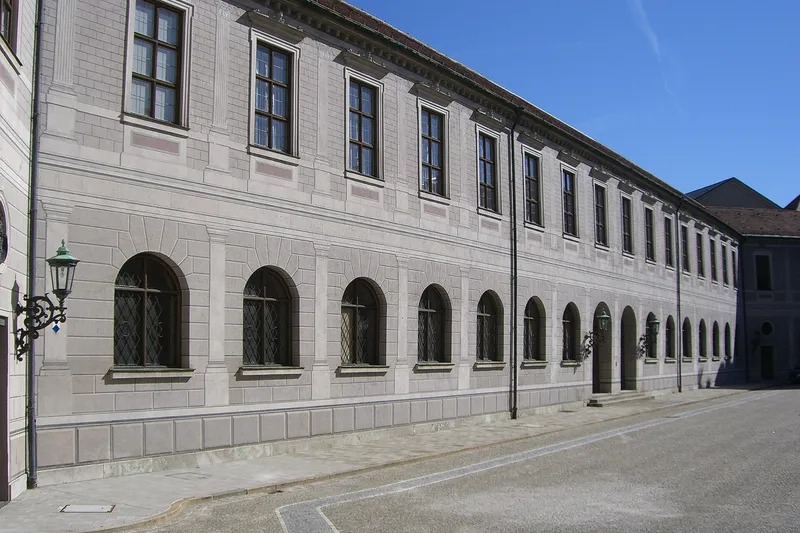
Two more Old Town stops belong on any first visit. The Asamkirche on Sendlinger Straße is a tiny late-Baroque church built by the Asam brothers as a private chapel, and its dense gold-and-stucco interior is one of the most astonishing small spaces in Germany. And the Residenz, the Wittelsbachs' city palace, hides more than a hundred rooms — a treasury, a rococo theatre, a grotto courtyard — behind a deliberately plain street facade.
- Marienplatz and the Glockenspiel — the unmissable centre; time a visit to the 11:00 show.
- Alter Peter (St. Peter's tower) — the best Old Town rooftop view; stairs only.
- Viktualienmarkt — food stalls, a maypole and a central beer garden, two minutes from the square.
- Frauenkirche — the twin-domed cathedral and the Devil's Footstep legend.
- Asamkirche — a jewel-box Baroque interior on Sendlinger Straße.
- The Residenz — the royal city palace, with the Treasury and Cuvilliés Theatre inside.


Museums and the Kunstareal
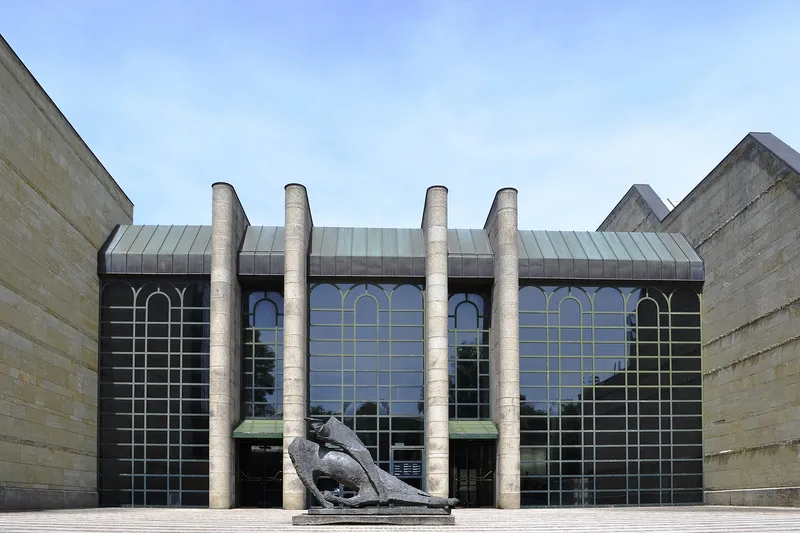
Munich is one of Europe's great museum cities, and it makes its art easy to reach. The Kunstareal, in Maxvorstadt just north-west of the centre, packs an extraordinary density of collections into a few walkable blocks. The Alte Pinakothek holds Old Masters — Dürer, Rubens, Rembrandt, Leonardo's youthful work — while the Pinakothek der Moderne combines modern art, design, architecture and graphics under one vast rotunda, and the neighbouring Museum Brandhorst shows post-war and contemporary art behind a facade of 36,000 coloured ceramic rods. (Note that the Neue Pinakothek, the 19th-century collection, has been closed for a long structural renovation; key works are shown elsewhere in the meantime — verify the current status before planning around it.) The Lenbachhaus, a few minutes away by Königsplatz, is the place to see the Blue Rider painters: the world's finest collection of Kandinsky, Marc and their circle, in a glowing villa.
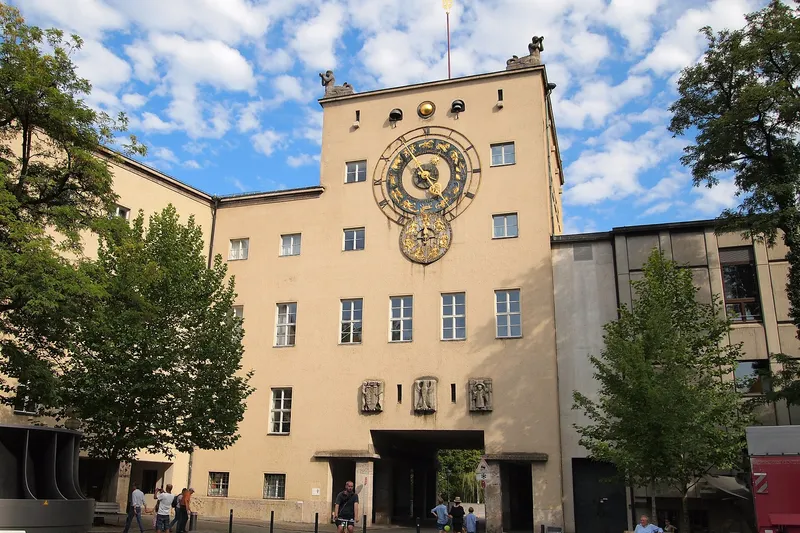
Away from the Kunstareal, the Deutsches Museum on its own island in the Isar is the largest science and technology museum in the world — mines, aircraft, ships and hands-on demonstrations that easily fill a half-day, especially with children. For 20th-century history, the NS-Dokumentationszentrum by Königsplatz tells the difficult story of Munich as the early base of the Nazi movement, with sober clarity. Many of the state collections offer a reduced entry on Sundays — a long-standing Bavarian policy that is worth checking and exploiting if your dates allow.
The trick with Munich's museums is restraint. Pick one or two and give them real time, rather than rushing four in a day and remembering none. If the weather turns, the Kunstareal and the Deutsches Museum are the city's best wet-weather insurance.
Parks, the English Garden and the Isar
Munich treats green space as a civic right, and the English Garden is the proof. Laid out from 1789 and stretching some five kilometres north from the city centre, it is one of the largest urban parks in the world — bigger than London's Hyde Park and New York's Central Park. At its southern tip, where the Eisbach channel rushes under a bridge, river surfers ride a permanent standing wave in wetsuits all year round; it is one of the city's defining sights and completely free to watch. Walk north past lawns and the little Greek-temple Monopteros on its hill to the Chinese Tower (Chinesischer Turm), where the second-largest beer garden in the city sits beneath a wooden pagoda.
The Isar, the fast green river that runs through the city, has been renaturalised into a long ribbon of gravel beaches, weirs and tree-lined paths. In summer locals swim, barbecue and float it on rubber rings; year-round it is a beautiful flat walk or cycle from the centre out towards the Flaucher and the zoo. Further west, the gardens of Schloss Nymphenburg combine a formal French parterre with an English-style landscape park, canals and hidden pavilions — a grand, free morning's stroll.
- English Garden — lawns, the Monopteros viewpoint and the Chinese Tower beer garden.
- Eisbachwelle — the year-round river-surfing wave at the park's southern edge.
- Isar river — beaches, picnics and one of the best flat walks or cycle rides in the city.
- Nymphenburg park — formal gardens, canals and pavilions behind the summer palace.
- Olympiapark — rolling lawns, a lake and the swooping tent roofs of the 1972 Games.

Palaces and royal Munich
Munich was a royal capital for centuries under the Wittelsbach dynasty, and two palaces tell that story. In the centre, the Residenz grew from a moated castle into a sprawling complex of courtyards and state rooms — the Antiquarium, a barrel-vaulted Renaissance hall lined with busts, is reason enough to visit, while the Treasury (Schatzkammer) holds a thousand years of crowns and reliquaries, and the Cuvilliés Theatre is a perfect rococo jewel. On the city's western edge, Schloss Nymphenburg was the summer palace: a long baroque frontage strung along a central canal, with a Hall of Mirrors, the Gallery of Beauties commissioned by King Ludwig I, and garden pavilions including the rococo Amalienburg hunting lodge.
If royal Bavaria is what brings you here, the day-trip castles extend the theme: Ludwig II's Neuschwanstein and Linderhof, and the island palace of Herrenchiemsee, all within reach of the city. Inside Munich, though, the Residenz and Nymphenburg are a satisfying pairing — one for a wet afternoon of gilded rooms, one for a fine morning of gardens and canals.

Cars, football and the Olympic north
North of the centre, around the U3 line, Munich gathers its modern icons. The 1972 Olympic Park, with its sweeping tent-like canopy roofs, remains a beautiful piece of architecture and a fine place to walk, with the Olympic Tower for a high view (check current opening before relying on it). Across the road, BMW's home turf is one of the city's most popular paid attractions: the futuristic BMW Welt delivery centre is free to wander, the double-cylinder BMW Museum tells the company's history, and tours of the adjacent plant book out fast.
Football fans head further north still, to the Allianz Arena — the cushioned, colour-shifting home of FC Bayern Munich. On non-match days you can tour the stadium and visit the FC Bayern Museum; on match days the whole U6 line turns red. Between them, this northern arc makes a strong half-day for teenagers, car enthusiasts and anyone who has had their fill of Baroque churches.
- BMW Welt and BMW Museum — free architecture plus a paid museum, side by side.
- Allianz Arena — stadium tours and the FC Bayern Museum on non-match days.
- Olympiapark — Olympic architecture, lake walks and the Olympic Tower view.

Neighbourhoods worth exploring on foot
Some of Munich's best hours aren't spent at any single sight but in wandering its neighbourhoods. Schwabing, north of the centre along the English Garden's edge, was the bohemian quarter of Kandinsky and Thomas Mann and still keeps a literary, café-lined ease. The Glockenbachviertel and Isarvorstadt, south-west of the Old Town towards the river, are the design, bar and nightlife quarters — small boutiques, natural-wine bars and the heart of Munich's LGBTQ+ scene. Across the Isar, Haidhausen feels almost village-like, with quiet squares and the streets of its 'French Quarter'.
Closer in, Maxvorstadt pairs the museum quarter with student cafés and bookshops, and the Lehel, between the Old Town and the river, is a polished, quiet pocket near the English Garden and the museums. You don't need a plan for any of these — just an hour, comfortable shoes and a willingness to follow a good-looking street. They are where you see how Munich actually lives once you step away from the postcard square.


Free, rainy-day and family-friendly options
A great deal of Munich's best is free. The churches, the markets, the English Garden, the Isar paths, the Eisbach surfers, the Nymphenburg gardens and the act of simply watching the Glockenspiel cost nothing. Add the reduced-price Sunday museum admissions and a beer garden where you bring your own food, and the city is far kinder to a budget than its reputation suggests.
When the weather turns — and it does, fast, especially in spring and autumn — Munich is unusually well equipped. The Deutsches Museum and the Kunstareal can each absorb a wet half-day; the beer halls and covered markets keep you dry and fed; and the Residenz is a palace built for indoor wandering. Families are spoiled too: the Deutsches Museum and its transport annexes, the Hellabrunn Zoo on the Isar, the playgrounds of the English Garden, and the football and car attractions in the north all reward younger travellers.

Churches, squares and the architecture of the centre
Even if you are not a church-goer, Munich's churches are among its finest free sights, and each has a distinct character. The Frauenkirche is the city's defining silhouette — two brick towers capped with green copper onion domes, deliberately kept as the tallest structures in the old centre by a long-standing local rule on building heights. Inside, the famous Teufelstritt, the Devil's Footstep, is set into the floor by the entrance, the centre of a centuries-old legend. The Theatinerkirche, a few minutes north on Odeonsplatz, is a different world: a bright lemon-yellow Italian Baroque facade and a white domed interior, built to mark the birth of a long-awaited heir. And the Asamkirche is the show-stopper — a narrow private chapel crammed with gilt, marble and a ceiling fresco, built by two brothers as their personal devotion.
The squares are sights in themselves. Odeonsplatz, with its Italianate Feldherrnhalle loggia, opens onto the grand royal avenue of the Ludwigstraße and is also a place of difficult 20th-century history, marked plainly. Karlsplatz — known to everyone as Stachus — is the western gateway to the pedestrian Old Town, with a fountain that children paddle in during summer and an ice rink in winter. Königsplatz, ringed by neoclassical museum buildings, is beautiful and burdened in equal measure: a Nazi-era parade ground now reclaimed as a cultural space, with the NS-Dokumentationszentrum standing in clear-eyed witness nearby.


Romance, viewpoints and the city at its prettiest
Munich does romance both grandly and quietly. The grand version is Nymphenburg at golden hour, the palace reflected in its long canal, or the Residenz's Hofgarten with its arcaded walks and central pavilion. The quiet version hides in the corners: the little Monopteros temple on its hill in the English Garden, a sunset bench by the Isar, the lamplit lanes of the Old Town after the day-trippers have gone. Couples will find the Glockenbachviertel keeps the candlelit tables and small wine bars for the evening.
For views, Munich rewards the small climb. Alter Peter gives the best Old Town panorama; the Frauenkirche's south tower, when open, offers another; and on a clear day — especially during a Föhn, the warm Alpine wind that scrubs the air clean — you can see the Alps from the higher viewpoints, looking close enough to touch though they sit some ninety kilometres south. The Olympic Tower and the hill in the Olympic Park add wider, more modern panoramas to the north.


How long you need, and how to fit it together
For a first trip, plan on two to three days. One full day handles the Old Town: the Glockenspiel, a tower climb, the Viktualienmarkt, the Asamkirche and the Frauenkirche, finishing in a beer hall or garden. A second day adds depth — a museum or the Residenz in the morning, the English Garden in the afternoon, perhaps the tram out to Nymphenburg. A third day either pushes north to the cars, football and Olympic Park, or escapes the city entirely for a castle, a lake or the Zugspitze.
Whatever you do, leave the schedule a little loose. Build each day around two fixed points — say the Glockenspiel in the morning and a beer garden in the late afternoon — and let the hours in between flex with the weather and your appetite. Munich is at its best when you are not rushing it.


Frequently asked questions about things to do in Munich
What are the must-see things in Munich? For a first visit: Marienplatz and the Glockenspiel, a climb up St. Peter's tower for the rooftop view, the Viktualienmarkt food market, the tiny Baroque Asamkirche and the twin-domed Frauenkirche; the English Garden with its Eisbach river surfers and the Monopteros; at least one of the Kunstareal galleries (the Alte Pinakothek for Old Masters, the Deutsches Museum for hands-on science); and a beer hall or, in season, a beer garden. Add Nymphenburg or the Residenz for royal Munich, and the BMW and football world in the north if those appeal.
How many days do you need in Munich? Two to three days covers the essentials comfortably. One full day handles the Old Town; a second adds a museum or palace and the English Garden; a third either explores the northern cars-and-football district or escapes the city for a castle, a lake or the Zugspitze. Four or more days let you add the local neighbourhoods, more museums or a second day trip without rushing.
Is Munich worth visiting? Very much so. It folds a walkable, beautiful Old Town, world-class museums, the giant English Garden, a deep beer culture, royal palaces, and easy access to the Alps and the lakes into one compact city — and it does all of it with an unhurried, livable charm. Few European cities of its size offer such a complete mix of culture, nature, food and day-trip options.
What can you do in Munich for free? A great deal of the best of it: walk Marienplatz and watch the Glockenspiel, step inside the great churches, wander the whole English Garden and watch the surfers, stroll the Isar's gravel beaches, explore the free park at Nymphenburg, and walk through BMW Welt. A dedicated free-things guide collects the full list — enough to fill several days at no cost.
What is there to do in Munich when it rains? Plenty. The Kunstareal galleries and the Deutsches Museum, the covered Viktualienmarkt, the great churches, a lively beer hall, and the Residenz state rooms all make strong wet-weather plans, and Munich's compact centre keeps walking between them short. The city is unusually well set up for rain, so a grey forecast rarely spoils a day — verify opening hours and prices for anything ticketed before you go.
- Must-sees: Marienplatz and the Glockenspiel, St. Peter's tower, the Viktualienmarkt, the English Garden and a beer hall or garden.
- Plan two to three days for the essentials; four-plus to add neighbourhoods, museums or a second day trip.
- Much of the best of Munich — squares, churches, parks, the surfers — is free.
- The city has excellent rainy-day options; confirm current hours and prices for ticketed sights.
