
Deutsches Museum, Munich
How to visit the world's largest science-and-technology museum on its own Isar island — which halls to prioritise, how long it really takes, and the family timing that keeps a long day fun.
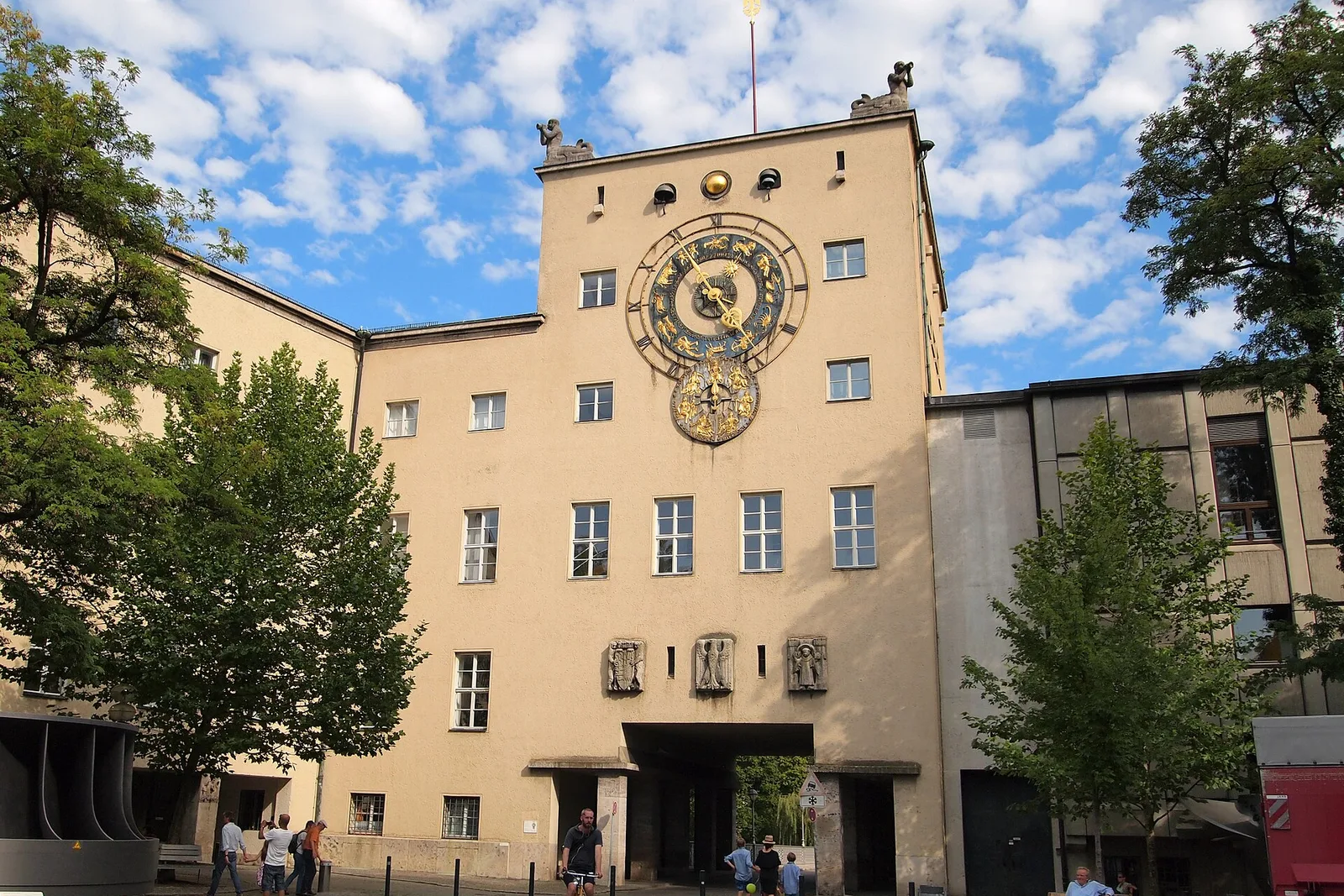
Photo: Tiia Monto / Wikimedia Commons · CC BY-SA 4.0

- ✓Founded in 1903, the Deutsches Museum is the largest museum of science and technology in the world — far too big to see in one visit, so go in with a plan.
- ✓It sits on its own island in the Isar (the Museumsinsel), a ten-minute walk from the old town or one stop on the tram.
- ✓Hands-on by design: working demonstrations, walk-through exhibits and a hugely popular children's area (Kinderreich) make it the city's best rainy-day and family museum.
- ✓It has been mid-way through a long, phased modernisation — sections open and close in waves, so check which halls are accessible before you go.
An island of science on the Isar
Few museums announce themselves like this one. The Deutsches Museum occupies a whole island in the Isar — the Museumsinsel — its long facade and slim meteorological tower rising straight out of the river a short walk south-east of the old town. Founded by the engineer Oskar von Miller in 1903, it set out to show technology and natural science not as glass-cased relics but as things you could understand by watching them work. More than a century on, that founding idea still drives the place: levers to pull, models that run, full-size machines you walk beneath.
It is, by floor area, the largest museum of its kind in the world, and the single most important thing to know before you arrive is that you cannot see it all. The collection runs from mining and metallurgy to aerospace, from historic musical instruments to a planetarium, across more kilometres of galleries than any one day can absorb. Visitors who try to do everything leave footsore and glazed; visitors who pick three or four halls and linger leave delighted. Treat the floor plan as a menu, not a checklist.
The setting helps. Because it stands on its own island, the museum is wrapped in river on both sides — an easy, scenic add-on to a walk along the Isar, and a genuinely good place to be when Munich's weather turns. On a wet afternoon it is the city's finest indoor day out.
A founder's idea: science you operate, not just observe
It helps to understand what the Deutsches Museum was trying to be, because that intention still shapes how you should visit. Oskar von Miller, the electrical engineer who founded it in 1903, didn't want a cabinet of curiosities; he wanted ordinary people to grasp how the machinery of the modern world actually worked, by operating it themselves. So from the start the museum filled its halls with cutaway engines, working models, buttons and cranks and replicas you were meant to touch — at a time when most museums forbade it. That philosophy of learning-by-doing was radical then and is utterly familiar now, copied by science centres the world over. You are, in a real sense, standing in the original.
The scale followed the ambition. The collection grew to span almost every field of science and technology — mining, metallurgy, energy, transport, communications, astronomy, chemistry, physics, even historic musical instruments — across a building so large that the founders added a planetarium and an observatory on the roof and an Ehrensaal (hall of honour) to its great figures. Generations of Münchner schoolchildren have had their first encounter with a coal seam, a U-boat or a lightning bolt here. That mixture of deep collection and hands-on delivery is what makes it unlike any art museum in the city: you don't contemplate it, you work it.
Knowing this changes your route. Don't drift past the demonstrations and interactive stations to reach the next room — they are the museum, not a sideshow. The best moments here are the ones where a member of staff fires up a machine, or you turn a wheel and watch a mechanism move, and a century-old idea about how learning should feel quietly proves itself right.
What to prioritise: pick three or four halls
Everyone's ideal route differs, but a few sections are perennial favourites and reward the time. Note that the museum's long-running modernisation moves galleries around, so treat the list below as evergreen highlights and confirm what's open on the day.
- Aerospace and aviation — historic aircraft hung overhead and engines you can study up close; one of the collection's signature spaces and a guaranteed hit with children.
- Marine navigation and shipping — full-size and sectioned vessels, including a walk-through that shows how ships are built and sailed.
- Astronomy and the planetarium — a domed planetarium runs scheduled shows (often ticketed separately and sometimes in German — verify language and times); pair it with the astronomy gallery.
- Energy, electrical power and the high-voltage demonstration — the crowd-pulling artificial-lightning show, when scheduled, is a genuine spectacle; check the day's demonstration timetable on arrival.
- Historic musical instruments and the chemistry/physics halls — quieter, beautifully presented galleries that adults often rate highest.
- Kinderreich (children's area) — a dedicated hands-on zone for younger children, hugely popular and worth timing your visit around if you have under-eights.
How long it takes — and how to pace it with kids
Plan for at least half a day, and a full day if you're thorough or travelling with children who want to touch everything. The trap is fatigue: the building is large, the galleries are dense, and a four-hour forced march turns wonder into whining. The fix is rhythm. Do one or two big halls, break for the café or a sit-down, then do one or two more. Don't try to cover floors in numerical order — head straight to your top pick while energy is high.
With children, anchor the day on the demonstrations and the Kinderreich. The scheduled live shows — high-voltage, and others depending on the day — are the moments kids remember, so build the visit around the demonstration timetable you'll find posted at the entrance. Bring a refillable water bottle and a snack; budget for a mid-visit pause rather than pushing through. Strollers are manageable but the place is vast, so a baby carrier can be easier in the busier halls.
A useful trick: arrive when it opens. The first hour is the calmest, the demonstration slots are easier to catch, and you bank your best concentration before the lunchtime crowds and the school groups arrive.
It works for couples and solo visitors too, not just families — there's a genuine romance to wandering a quiet upper gallery of historic instruments or standing under a hanging aircraft together, and the museum's sheer scale means you can always find a calm corner away from the crowds. If you're travelling as a pair and one of you is lukewarm on machinery, split up for an hour: agree a café meeting time, let each follow their own halls, and compare notes over coffee. The building is big enough to reward exactly that kind of independent wandering.
Tickets, getting there and weather
Buy tickets at the door or online in advance; advance booking is worth it on rainy weekends, in school holidays and over Oktoberfest, when the museum is one of the busiest indoor sights in the city. The planetarium and some special exhibitions can carry separate charges — check when you book. Prices and opening hours change, so confirm the current figures on the official site rather than trusting a guidebook number. (The museum has a sister site for transport, the Verkehrszentrum near the Theresienwiese, and another for aviation at Schleissheim — both separate visits, not part of the island ticket.)
Getting there is easy. From Marienplatz it's a flat ten-to-fifteen-minute walk south-east across the Isar; trams stop close by (the Deutsches Museum / Isartor area), and the nearest S-Bahn is Isartor, a few minutes on foot. There's no need for a car, and parking on the island is limited.
Because it's so substantial and entirely indoors, the Deutsches Museum is the obvious move when Munich's sky closes in. Pair a museum morning with a beer hall lunch, or with the riverside walk along the Isar when the weather clears — the island sits right on the water, so the transition is a single bridge.
A few small logistics smooth the visit. There's a cloakroom for coats and large bags, which you'll want, because the galleries are warm and the building rewards walking light. The on-site café and restaurant are convenient for a mid-visit break, though many families bring snacks and use the picnic-friendly riverside outside on a fine day. Accessibility is generally good across the modernised sections, with lifts between floors, but some older or in-progress areas can be harder going — check ahead if step-free routing matters to you. And give yourself a clear endpoint: the museum is large enough that 'just one more hall' can stretch a visit past everyone's patience, so decide in advance roughly when you'll leave and let the riverside walk be the reward.
One last framing. The Deutsches Museum is not a polished, every-label-perfect experience in the way a small art gallery can be — it's vast, busy, partly under renovation, and gloriously unpretentious. Go in expecting a sprawling, hands-on, slightly overwhelming place rather than a curated jewel box, choose your halls, catch a demonstration or two, and you'll understand why it has been one of Munich's best-loved days out for over a century.

At a glance
Location — Museumsinsel 1, on its own island in the Isar; about a 10–15 minute walk south-east of Marienplatz (nearest S-Bahn Isartor; trams nearby).
Type — science and technology museum, hands-on and family-friendly; the largest of its kind in the world.
Time needed — half a day minimum; a full day with children or for thorough visitors.
Don't miss — aerospace, shipping, the high-voltage demonstration (check the timetable), the planetarium and the Kinderreich for younger kids.
Good to know — sections open and close during ongoing modernisation; check what's accessible. Best for rainy days. Verify hours, prices and any separate planetarium charge before you go.
Best Museums in Munich
Choose the right Munich museum for you — by interest, by how much time you have, by which day of the week, and by how useful it is on a rainy day.
Read guide
Munich With Kids
Family-tested things to do in Munich — the great hands-on science museum, the riverside zoo, parks and a permanent river wave, plus football, towers and weather-proof plans for every age.
Read guide
Rainy Day Munich
Museums, palaces, beer halls, cafés and covered markets — a warm, weather-proof plan for when the Munich sky closes in.
Read guideMore in Things to Do
6
Allianz Arena, Munich
How to visit Munich's glowing football stadium — the self-guided Erlebnistour, the FC Bayern Museum, match-day logistics, and the easy U6 ride out to Fröttmaning.
Read guide
Alte Pinakothek, Munich
How to visit Munich's Old Masters gallery in the Kunstareal — the Dürers and Rubenses worth crossing town for, the Sunday-ticket angle, and how to build a wider museum-quarter day around it.
Read guide
Asamkirche, Munich
How to visit Munich's astonishing late-Baroque Asamkirche on Sendlinger Straße — the church two brothers built next to their own house — without overplanning it.
Read guide
Best Munich Tours
When a guided tour earns its place in a Munich trip — and which kind to pick. Old Town walks, food and beer crawls, football and BMW, the Third Reich history walk, and the big castle and Dachau day trips, weighed by time, cost and effort.
Read guide
Best Photography Spots in Munich
Rooftops, squares, churches, parks and palaces — the most photogenic places in Munich, with the light and timing notes to shoot each one well.
Read guide
Best Things to Do in Munich
A ranked first-trip shortlist — from Marienplatz and the Residenz to the beer gardens, the great museums and the English Garden.
Read guide