
Best Munich Tours
When a guided tour earns its place in a Munich trip — and which kind to pick. Old Town walks, food and beer crawls, football and BMW, the Third Reich history walk, and the big castle and Dachau day trips, weighed by time, cost and effort.

Photo: Jonathan Gamburg / Unsplash

- ✓Munich is small, flat and well-signed, so you can see the Old Town perfectly well on your own — a tour earns its keep when you want the stories, the logistics handled, or access you can't easily get alone.
- ✓The clearest wins are the day trips: a Neuschwanstein or Dachau tour folds train changes, timed entries and a guide into one booking, which is where a tour saves the most stress.
- ✓Food and beer tours are the social sweet spot — a few hours, a knowledgeable local, and you taste things you'd never order from a German-only menu.
- ✓For anything volatile — prices, departure points, durations, what's included — check the operator's current listing before you book; the categories below are evergreen, the details are not.
Do you actually need a tour in Munich?
Munich makes a strong case for going it alone. The Altstadt is compact and flat, the sights cluster within a fifteen-minute walk of Marienplatz, the MVV transit network is fast and legible, and English is widely spoken. You can stitch the headline sights into a self-guided loop without spending a euro on a guide, and our Old Town walk does exactly that. So the honest first question isn't 'which tour?' but 'do I want one at all?'
A tour earns its place in three situations. The first is stories: a good guide turns a pretty square into a layered history you'd never read off a plaque, and Munich's past — royal, revolutionary, and very dark in the 1920s–40s — rewards that context. The second is logistics: when a destination involves train changes, timed-entry tickets and tight connections, handing that to an operator buys back a stressful morning. The third is access or social warmth — a brewery you can't easily tour solo, or a small-group food crawl that's simply more fun with company. If none of those apply, keep your money and walk.
- Going solo works brilliantly for: the Old Town, the English Garden, the museums, the markets.
- A tour pays off for: castle and Dachau day trips, history walks, food and beer crawls.
- Group size matters more than price — a 'small group' can mean 8 or 40, so check the cap.
- Free walking tours run on tips; budget a fair gratuity (commonly €10–15 per person) and treat them as paid.


Old Town and history walking tours
The classic Munich tour is a two-to-three-hour Old Town walk: Marienplatz and the Glockenspiel, the Frauenkirche, the Residenz exterior, the Hofbräuhaus, the markets and the city gates, tied together with anecdote. These run constantly — both paid small-group versions and tip-based 'free' walks that gather near Marienplatz. They're a good first-morning orientation, especially if history isn't your strong suit and you'd rather absorb it than read it.
The more specialised — and, for many visitors, more valuable — option is a Third Reich history walk. Munich was the birthplace of the Nazi movement, and a focused two-to-three-hour walk traces the beer-hall putsch route, Königsplatz, the Feldherrnhalle and the sites around it with the care the subject demands. Choose a reputable operator with proper historians; this is one tour where the guide's quality is the whole point. For the museum side of that story, pair it with the NS Documentation Centre.
- Old Town walk: ~2–3 hrs, best as a first-morning orientation, no booking needed for tip-based walks.
- Third Reich history walk: ~2.5 hrs, choose a historian-led operator, deeply worthwhile and sobering.
- Both start in or near Marienplatz; confirm the exact meeting point when you book.

Food and beer tours
Food and beer tours are where Munich's guided scene is at its most enjoyable. A typical food crawl spends three or four hours moving between the Viktualienmarkt stalls and a couple of taverns, working through Weißwurst (eaten before noon, peeled not cut), Leberkäs, Obatzda, fresh Brezn and the things you'd never decode from a German menu on your own. The guide does the ordering and the explaining; you do the eating. It's the most reliable way to fast-track an understanding of Bavarian food in an afternoon.
Beer tours range from a gentle beer-hall introduction — learning the difference between Helles, Weißbier and Dunkles and how a Maß and a beer garden actually work — to the rare brewery visit. Munich's beer is poured by six big breweries (Augustiner, Paulaner, Hacker-Pschorr, Hofbräu, Löwenbräu and Spaten), and a tour can get you behind the scenes in a way that's hard to arrange alone. If you'd rather skip the guide, the beer-garden etiquette is simple enough to learn from our food hub and do yourself.
- Food tour: ~3–4 hrs, Viktualienmarkt plus taverns, go hungry and check dietary options ahead.
- Beer-hall intro: a low-effort way to learn the styles and the etiquette before you go solo.
- Brewery tour: the genuine 'access' case — book ahead, as slots are limited and often seasonal.

Football, cars and Olympic Park
Some of Munich's best 'tours' aren't tours at all — they're guided experiences at a single site. The Allianz Arena stadium tour walks you through the home of FC Bayern, the players' tunnel and the dressing rooms, usually bundled with the FC Bayern Museum; it's the obvious pick for football fans and a sure thing with teenagers. On non-match days it runs to a regular schedule, but availability vanishes around home games, so check the fixture list and book ahead.
On the car side, BMW Welt is free to wander, while the adjacent BMW Museum and the factory and Olympic Park area reward a guided visit if you want the depth. They sit on the same northern transit corridor, so a half-day combining BMW Welt, the museum and a climb up the Olympic Tower for the skyline is an easy, self-directed 'tour' you can assemble yourself.
- Allianz Arena tour: book around the fixture list; pairs naturally with the FC Bayern Museum.
- BMW Welt is free; the BMW Museum and a guided factory visit are the paid, deeper options.
- All three sit on Munich's northern U-Bahn corridor — easy to chain into one half-day.

Day-trip tours: castles, the Alps and Dachau
This is the category where a tour saves the most and stresses the least. A Neuschwanstein day trip from Munich involves a train or coach to the Allgäu, a shuttle or steep walk up to the castle, and a timed entry slot you must hit precisely — a sequence that goes wrong easily when you're improvising. A guided tour folds all of it into one booking and one early start, often adding Linderhof or Hohenschwangau, and that convenience is the whole value proposition. If you'd rather do it independently, you can — but reserve the castle's timed ticket well ahead, because they sell out.
Dachau Concentration Camp Memorial Site sits apart from the leisure list. It's a place of memory twenty-odd minutes from the centre on the S2 plus a short bus, and entry to the memorial is free. A guided tour adds essential historical context and handles the simple transport, which many visitors find worthwhile for somewhere this serious; going independently with the on-site materials is equally valid. Either way, go with a free morning and an unhurried mindset — this is not an outing to rush. Salzburg and the Zugspitze round out the popular guided day trips for those wanting a bigger Alpine or cross-border day.
- Neuschwanstein: a guided tour is the low-stress choice; independent visitors must pre-book the timed castle entry.
- Dachau: the memorial is free; a guide adds context and handles the S2-plus-bus transport. Go unhurried.
- Bigger Alpine days — the Zugspitze, or Salzburg across the border — also run as full-day guided trips.
- Verify departure points, durations and what's included with the operator before booking — these change.
Tours at a glance
If you want the whole landscape in one view, here's how the main tour types stack up on the things that actually decide a booking — time, effort saved and whether the value is in the storytelling, the logistics or the access. Treat the durations as typical rather than fixed, and the verdicts as a starting point for matching a tour to your trip.
- Old Town walk — ~2–3 hrs · low effort · value = orientation and stories · skip if you're confident solo.
- Third Reich history walk — ~2.5 hrs · low effort · value = a historian's context · highly worthwhile.
- Food tour — ~3–4 hrs · low effort · value = tasting and social warmth · the most enjoyable category.
- Beer / brewery tour — varies · low effort · value = etiquette and access · brewery slots need booking.
- Stadium / BMW visit — ~1.5–3 hrs · low effort · value = access · book around fixtures and events.
- Neuschwanstein day trip — full day · high effort if solo · value = logistics handled · the biggest stress-saver.
- Dachau — half to full day · low–moderate effort · value = context and transport · go unhurried, the memorial is free.

How to choose — and book — without regret
A few rules keep a Munich tour from disappointing. Match the tour to your gap: if you're confident with maps and history bores you in summary form, skip the Old Town walk and take a food or castle tour instead. Read the group cap, not just the word 'small' — a guide with eight people is a different experience from one with forty. Check the language of delivery, the meeting point (Munich's are usually a named spot on or near Marienplatz), and exactly what the price includes, because castle and museum entries are often extra.
On money: tip-based 'free' walks are an excellent budget option, but treat the tip as the real price and bring cash. For day trips, compare the all-in tour cost against doing it yourself with a regional ticket — sometimes the convenience is clearly worth it, sometimes the savings are real. And because prices, schedules and inclusions shift with the season, confirm every volatile detail on the operator's current page before you commit. The categories on this page won't go out of date; the specifics will.


Best Walking Tours in Munich
Munich is made for walking — small, flat and dense with stories. Here's how to choose between a free tip-based walk, a paid small-group Old Town tour, a focused Third Reich history walk, a beer-and-food crawl on foot, and simply doing it yourself.
Read guide
Munich Food and Beer Tours
How to choose a Munich food, market, beer or history tour without duplicating the itinerary you'd walk anyway — what each type covers, who it suits, and when a guided tasting earns its price.
Read guide
Neuschwanstein from Munich: How to Visit
The fairy-tale castle is the most popular day trip from Munich — and the one that most rewards planning. Here is the honest guide to trains versus tours, the timed-ticket system, and a realistic day-plan that doesn't end in a missed connection.
Read guideMore in Things to Do
6
Allianz Arena, Munich
How to visit Munich's glowing football stadium — the self-guided Erlebnistour, the FC Bayern Museum, match-day logistics, and the easy U6 ride out to Fröttmaning.
Read guide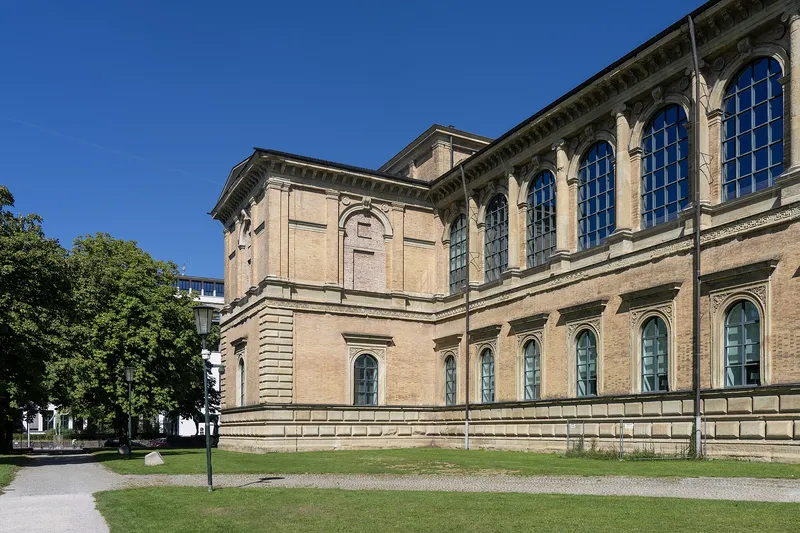
Alte Pinakothek, Munich
How to visit Munich's Old Masters gallery in the Kunstareal — the Dürers and Rubenses worth crossing town for, the Sunday-ticket angle, and how to build a wider museum-quarter day around it.
Read guide
Asamkirche, Munich
How to visit Munich's astonishing late-Baroque Asamkirche on Sendlinger Straße — the church two brothers built next to their own house — without overplanning it.
Read guide
Best Museums in Munich
Choose the right Munich museum for you — by interest, by how much time you have, by which day of the week, and by how useful it is on a rainy day.
Read guide
Best Photography Spots in Munich
Rooftops, squares, churches, parks and palaces — the most photogenic places in Munich, with the light and timing notes to shoot each one well.
Read guide
Best Things to Do in Munich
A ranked first-trip shortlist — from Marienplatz and the Residenz to the beer gardens, the great museums and the English Garden.
Read guide