
Dachau Memorial from Munich: A Respectful Guide
The Dachau Concentration Camp Memorial Site is about twenty minutes from central Munich and among the most important things you can do in Bavaria. This is a guide to reaching and approaching it respectfully — as a day of remembrance, not a sightseeing stop.

Photo: John Patterson / Unsplash

- ✓Dachau was the first Nazi concentration camp, opened in 1933, and became the model for the entire camp system that followed — the memorial on its grounds today is a place of profound importance and unflinching honesty.
- ✓It is about twenty minutes from central Munich by S-Bahn plus a short bus, but proximity is the only easy thing about it: give it a full, unhurried day of its own.
- ✓Entry to the memorial site has historically been free; a guided tour or audio guide gives a visit shape and context and is well worth considering. Confirm current arrangements on the official site.
- ✓This is learning and remembrance, not leisure. Prepare yourself, prepare any older children you bring, and don't tack it onto an afternoon of other sights.
What Dachau is, and why to go
The Dachau Concentration Camp Memorial Site (KZ-Gedenkstätte Dachau) stands on the grounds of the camp the Nazi regime opened in March 1933, within weeks of taking power — the first of its concentration camps, and the one that set the template for all the others. Over twelve years more than 200,000 people from across Europe were imprisoned here; tens of thousands died. The site was a 'school of violence' for the SS and a place of forced labour, medical experiments and mass suffering. After liberation in 1945 it passed through several uses before survivors campaigned for it to become what it is now: a memorial and place of learning.
Visiting is not pleasant, and it isn't meant to be. It is, for very many travellers, the most important and most sobering thing they do in Bavaria — a confrontation with history at the place it happened, in the spirit of 'never again' that the survivors who built the memorial intended. Coming to it in Munich makes particular sense: the city was the cradle of the Nazi movement, and Dachau is the unfiltered consequence of the ideology that grew up there. If you have any space in your trip for it, make the space.
Approaching the visit — before anything practical
How you go matters as much as how you get there. Treat this as a day of its own. Do not schedule it between a beer garden lunch and an evening at the opera; go with the morning free and nowhere to rush to afterwards. Wear what you'd wear to a place of mourning — there's no formal dress code, but the place asks for a quiet, considered presence. Move calmly, keep your voice low, and photograph with restraint and respect, never posing for pictures on the grounds.
Prepare anyone you bring. The memorial gives sober guidance on age, and the material is harrowing; younger children are generally not suited to it, and teenagers should be told beforehand what they're going to see. Many adults find parts of the visit deeply affecting, and that is the point — but it's worth knowing in advance so you can give yourself, and your group, the room to feel it. There is no 'doing Dachau' quickly. Allow several hours, and let the day be only this.
Getting there by S-Bahn and bus
The independent route is straightforward. From central Munich, take the S2 S-Bahn line to Dachau station — around twenty minutes from the Hauptbahnhof. From the station forecourt, a city bus (the line that runs to the memorial, well signposted and timed to the trains) covers the short distance to the KZ-Gedenkstätte in a few minutes. The whole door-to-door journey is well under an hour.
Because Dachau lies within the Munich transport association's zones, a standard MVV day ticket covering the relevant zones generally takes you all the way there and back, S-Bahn and bus included — check the current zone map and fare so you buy the right ticket. Validate where required, and keep an eye on the return bus and train times so you're not left waiting at the end of an emotionally heavy day. Our transport guide explains the MVV ticket choices.

Guided tour, audio guide, or independent
There are three ways to engage on site, and all are valid. A guided tour — whether the memorial's own English-language tours or a reputable guided day tour from Munich — gives the visit structure and a knowledgeable voice to carry you through the grounds, which many find steadying as well as informative. An audio guide, available to rent at the visitor centre, lets you go at your own pace with expert narration. Or you can visit independently, reading the permanent exhibition and the on-site information yourself.
If you choose a guided day tour from Munich, choose the operator with care. The best treat the subject with seriousness and lead with the victims; avoid anything that markets the site as a thrill or a tick-box. The memorial itself and Munich's serious history operators are reliable starting points. Whichever way you go, give real time to the permanent exhibition in the former maintenance building — it's the spine of the visit and explains everything the grounds then make tangible.


How much time to give it, and a sample shape for the day
Plan for a half to a full day on the memorial itself, and don't compress it. A focused independent visit — the exhibition, the grounds and the memorials — takes most people three to four hours, and a guided tour or audio guide tends to add rather than save time because it draws you deeper. Add the travel each way and any pause you need afterwards, and the visit comfortably fills a day, which is exactly how it should be treated.
A workable shape: take a late-morning S-Bahn out so you arrive with the day ahead of you, begin in the visitor centre to orient yourself and pick up an audio guide or join a tour, work through the permanent exhibition first to build the context, then walk the grounds — the roll-call square, the reconstructed barracks, the memorials and the crematorium area — at an unhurried pace. Leave the heaviest part toward the end, sit with it, and then make your way back to the city with no further plans for the day. Resist the urge to 'fill' the afternoon; the visit asks for space around it, not a second activity stacked on top.
On the grounds: what you'll see
The memorial preserves and reconstructs the camp's essential features. You enter through the gatehouse with its notorious wrought-iron inscription, into the vast roll-call square where prisoners were forced to stand for hours. The former maintenance building houses the main exhibition, tracing the camp's history through documents, photographs and survivor testimony. Beyond it stretch the long lines of the barracks foundations — two have been reconstructed to show the conditions of confinement — and at the far end stand the religious memorials and the crematorium area, the most difficult part of the site.
Move through it slowly. There is no fixed route you must take, but the exhibition first, then the grounds, then the memorials, is a natural and humane order. Allow pauses; sit on a bench if you need to. The memorial is large and the experience is cumulative, and rushing it both shortchanges the history and tires you in a way that makes it harder to take in. Several hours is a realistic minimum.
A little history, so the place makes sense
It helps to arrive with some context, because the grounds alone don't tell the whole story. Dachau opened in March 1933, just weeks after Hitler came to power, on the site of a disused munitions factory. It was conceived to hold political prisoners — communists, social democrats, trade unionists and others the regime deemed opponents — and over the following years its remit widened to encompass Jews, Sinti and Roma, clergy, homosexual men, Jehovah's Witnesses and many others. It was not primarily a death camp in the way the extermination camps in occupied Poland were, but tens of thousands died here from the brutal conditions, forced labour, disease, medical experiments and outright murder.
Crucially, Dachau was the prototype. Its organisation, its regime of terror and the SS personnel trained here became the model exported across the camp system, which is why understanding it illuminates so much else. The camp was liberated by American forces in April 1945; in the decades after, survivors fought for the site to be preserved as a place of remembrance rather than redeveloped or forgotten. The memorial you visit today exists because of that effort — and engaging with it seriously honours both the victims and the survivors' insistence that it never be repeated.
Who should go, and bringing children
This is a difficult question asked in good faith, and worth thinking through before you travel. For adults and older teenagers, the memorial is, for many, among the most meaningful things they do in Germany — a confrontation with history that no book or film quite matches. The memorial gives sober guidance on suitability and generally advises against bringing young children, whose experience of the place can be distressing rather than educational, and who can also affect the contemplative atmosphere for others.
If you're bringing teenagers, prepare them. Talk beforehand about what they'll see and why you're going, so the visit lands as understanding rather than shock. Within a family trip, it can be worth pairing the day with Munich's NS-Dokumentationszentrum, which builds the broader historical framework through documents and exhibitions in a more structured indoor setting — many find that doing the documentation centre first and Dachau after gives the memorial its full weight. Whatever you decide, go because you want to engage with the history seriously, not to tick a box; the place rewards that seriousness and quietly resists anything less.
Practical notes
A few logistics, offered plainly. The memorial has long opened daily, with the grounds closing only on a single day a year (December 24), and standard opening hours through the day — confirm these and any tour times on the official site before you go, as a wasted journey to a closed site is the one avoidable disappointment here. Entry to the grounds and exhibition has historically been free, reflecting the memorial's educational mission; the audio guide and some guided tours carry a small fee. Verify the current arrangement.
Dress for the weather and for time outdoors — much of the visit is in the open, across exposed ground, so bring layers, rain protection and comfortable shoes. There is a café/bookshop area at the visitor centre, but eat your main meal before or after rather than treating the site as a day out with a lunch break. Photography is generally permitted but should be quiet and respectful; never pose, and never photograph in a way you'd be uncomfortable explaining. And leave time and emotional space for afterwards — many visitors want a quiet hour back in the city to absorb what they've seen rather than diving straight into the next thing.
The town of Dachau, and combining the day
It surprises many people, but Dachau is also an ordinary, attractive Bavarian town — one with a long history that predates and outlasts the camp, a Renaissance palace and gardens (the Schloss Dachau) on a hill, a pretty old town and a one-time artists' colony. We mention this not to lighten the memorial, which deserves your full and sober attention, but because some visitors choose to spend a little time in the town as well, and there's no disrespect in acknowledging that the place has a life beyond its darkest chapter. If you do, keep the two clearly separate in your own mind and your day: the memorial first, in full, and the town only afterward if you have the energy.
For most travellers, though, the memorial alone is the day. Don't try to fold Dachau into a busy sightseeing itinerary or pair it with something cheerful on the same afternoon — the emotional gear-change rarely works. If you want to deepen the context rather than dilute it, the natural companion is Munich's own NS-Dokumentationszentrum, ideally on a different day, which sets the camp within the city's central role in the rise of the Nazi movement. Learning indoors and remembering on site, in that order, is how the history lands most fully.
At a glance
A short planning reference, offered plainly. Confirm the volatile details — opening hours, the closed day, free entry and tour times — on the official site before you travel.
- Where: Dachau, about 20 minutes from central Munich by S-Bahn (S2) plus a short connecting bus.
- Ticket: a standard MVV day ticket for the relevant zones generally covers the whole trip — check the zone map.
- Entry: the memorial site has historically been free; audio guides and some tours carry a fee — verify current arrangements.
- Time needed: several hours minimum; give it a full, unhurried day of its own.
- How to engage: a guided tour or audio guide gives the visit structure — choose serious, remembrance-focused options.
- Approach: this is learning and remembrance, not sightseeing — prepare yourself and any older children, and don't rush.

The Best Day Trips from Munich
Munich is one of Europe's great launch pads — castles, Alpine peaks, turquoise lakes, half-timbered towns and even another country are all an easy train ride away. Here is how to choose between them and plan a day that works.
Read guide
Munich's Third Reich History Sites
A careful, source-led guide to Munich's Nazi-era history — why the city was so central to it, the surviving sites and what they mean now, and how to engage with this history responsibly.
Read guide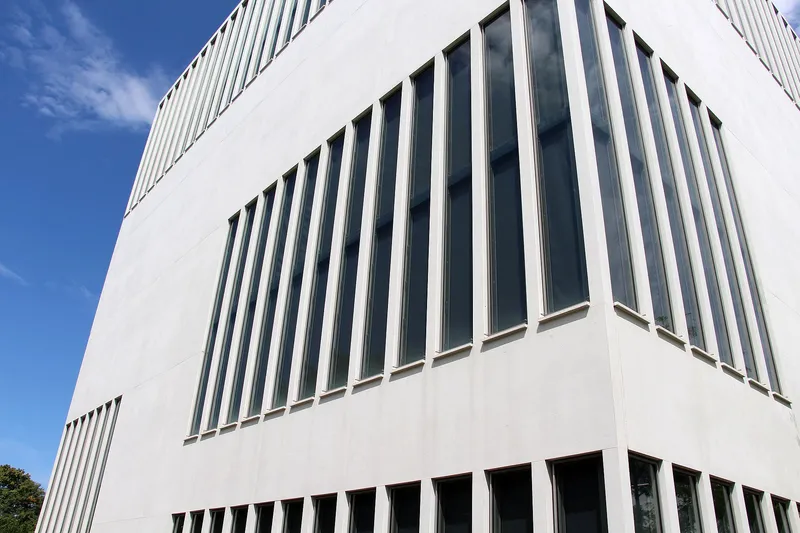
NS-Dokumentationszentrum, Munich
A respectful guide to Munich's NS-Dokumentationszentrum — the Documentation Centre for the History of National Socialism — on the site of the former Nazi party headquarters: what it covers, how to visit, and the nearby sites.
Read guideMore in Day Trips
6
Ammersee from Munich
How to do Ammersee as a relaxed day trip from Munich — the direct S-Bahn, lake boats and swimming, a hilltop monastery brewery at Andechs, and a fully car-free plan.
Read guide
Andechs Monastery from Munich: The Pilgrimage-and-Beer Day
The Holy Mountain of Andechs pairs a Baroque pilgrimage church with one of Bavaria's most famous monastery breweries, half an hour's drive south-west of Munich above the Ammersee. Here is how to reach it by transit or car, and how to turn it into one of the loveliest easy days out from the city.
Read guide
Augsburg from Munich
How to do Augsburg as a day trip from Munich — the short, frequent train hop, a one-day walk through the Renaissance Old Town, the Fuggerei almshouse, the UNESCO water-management heritage, and where to eat.
Read guide
Bavarian Alps Day Trips from Munich: Which One to Pick
Munich sits an hour or two from the Bavarian Alps, and on a clear day you can see them from the city. This is the compare-and-choose guide to the best Alpine day trips — Germany's highest peak, the Olympic town, the jewel lakes, the Eagle's Nest and castle country — so you can match the mountains to your day.
Read guide
Berchtesgaden and Eagle's Nest
How to reach the Eagle's Nest and the Berchtesgaden valley from Munich — the seasonal road, the Königssee, the dark history, and whether to go independently or by guided tour.
Read guide
Chiemsee and Herrenchiemsee
How to do the Chiemsee and Ludwig II's island palace of Herrenchiemsee from Munich — chaining the train, the lake boat and the palace timing into one graceful day.
Read guide