
Munich's Third Reich History Sites
A careful, source-led guide to Munich's Nazi-era history — why the city was so central to it, the surviving sites and what they mean now, and how to engage with this history responsibly.

Photo: Mohammad Rebati / Unsplash

- ✓Munich was the birthplace and power base of the Nazi party, the city the regime styled the 'Capital of the Movement' — which is exactly why understanding its history matters here.
- ✓This is a subject for learning and remembrance, not sightseeing. Approach it with seriousness, give it real time, and lead with the documentation centres rather than hunting for ruins.
- ✓The NS-Dokumentationszentrum near Königsplatz is the essential starting point: a rigorous, document-led account on the site of the former Nazi party headquarters.
- ✓Dachau, the concentration-camp memorial about twenty minutes out by train, deserves a separate, unhurried day and the same care as everything on this page.
Why this history belongs to Munich
Plenty of visitors arrive in Munich for beer gardens, palaces and the Alps and are surprised to learn how central the city is to the darkest chapter of the twentieth century. It should not be a surprise. The Nazi party was founded and grew up here; it was in Munich that Hitler attempted his 1923 putsch, in Munich that the movement built its bureaucracy and its mythology, and Munich that the regime later anointed 'Hauptstadt der Bewegung' — Capital of the Movement. To understand how this happened, the city is not a footnote but the centre of the story.
That makes engaging with this history in Munich worthwhile in a way it rarely is elsewhere — but it also asks something of you. This is not a themed trail to tick off between lighter sights. It is a subject of remembrance, of victims and of warning, and the city itself approaches it that way: there is no triumphal museum of the period, no glorification, only careful documentation and quiet memorials. Come to it in that spirit. The most respectful and the most rewarding way to engage is to lead with the places built to teach and to remember, and to let them give you the context before anything else.
Start at the NS-Dokumentationszentrum
If you do one thing, make it this. The NS-Dokumentationszentrum — the Munich Documentation Centre for the History of National Socialism — opened in 2015 as a place of learning and remembrance, and it is the single best way to make sense of everything else. It stands, deliberately, on the exact site of the 'Braunes Haus', the Nazi party's national headquarters, beside Königsplatz in Maxvorstadt. Its blunt white cube is a conscious rejection of the monumental architecture the regime favoured.
Inside, the permanent exhibition is document-driven rather than object-driven: photographs, texts and media you read and absorb your way through, ascending the building floor by floor through the years that gave rise to the movement, the regime in power and its crimes, and the long, difficult reckoning afterwards. It keeps the focus local and specific — why Munich became the cradle of all this — while connecting to the wider catastrophe. Admission to the permanent exhibition has been free in the past, reflecting its public-education mission, but verify the current arrangement and the opening hours before you go.
Give it ninety minutes to two hours at least, and go when you have the emotional space rather than squeezing it between lighter stops. For the full visitor detail, see our dedicated guide.
Königsplatz and the buildings that survive
The square the documentation centre stands beside is itself part of the history. Königsplatz, a grand neoclassical ensemble laid out in the nineteenth century, was paved over and used by the regime as a parade and rally ground; two 'temples of honour' once stood at its eastern edge, their bases still visible. After the war the square was returned, in time, to grass and to its museums, and that act of un-paving is part of how Munich chose to remember. Several Nazi-era administrative buildings nearby survive in reused, civilian form today — among them a music and theatre academy — a quiet lesson in how a city absorbs and repurposes a poisoned inheritance rather than erasing it.
Walk this area with the context the documentation centre gives you and it reads completely differently. Without that context it is simply a handsome square; with it, the layers become legible. That is the argument for doing the learning first and the walking second.
Memorials and traces in the old town
Beyond Maxvorstadt, the city carries smaller, quieter markers. At the Feldherrnhalle on Odeonsplatz — the loggia where the 1923 putsch was stopped — there is a memorial on the small lane behind it, the Viscardigasse, sometimes called the 'Drückebergergasse' (Dodgers' Alley), where a line of brass set into the cobbles marks the route Münchners took to avoid giving the obligatory salute the regime demanded at the Feldherrnhalle. It is a modest, moving detail: ordinary refusal, recorded in the pavement.
Across the city you may also notice small brass 'Stolpersteine' — 'stumbling stones' — set into the footways outside houses, each engraved with the name and fate of a Jewish or otherwise persecuted resident deported from that address. They are not a single site but a dispersed memorial you encounter by chance, and pausing to read one is its own kind of remembrance. Munich also has a White Rose memorial at the university, honouring the student resistance circle around Sophie and Hans Scholl, executed in 1943 — a reminder that the story includes courage as well as complicity.

Dachau: a separate, essential day
The Dachau Concentration Camp Memorial Site sits apart from everything above, and it should be treated that way. It was the first Nazi concentration camp, established in 1933, and it became the model for the system that followed; the memorial on the site today is a place of profound importance and unflinching honesty. It is about twenty minutes from central Munich by S-Bahn and bus, but proximity is the only easy thing about it. Give it a full, unhurried day of its own. Do not tack it onto an afternoon of sightseeing, and do not rush.
Entry to the memorial site has historically been free, and guided tours and audio guides help structure a visit and are well worth considering; confirm current arrangements, tour times and opening hours on the official site before you travel. Prepare yourself, and prepare any older children or teenagers you bring — the material is harrowing, and that is exactly the point. Many visitors describe it as the most important and most sobering thing they did in Bavaria.
Choosing a guided tour — responsibly
A good guided walk can make this history vivid and connect the scattered sites into a coherent narrative, and for many visitors a 'Third Reich' walking tour of the old town and Königsplatz area is the right way in. The key word is 'good'. Choose a guide or operator with a serious, scholarly approach and a clear ethic of remembrance rather than sensation; the best treat the subject with care, foreground the victims, and avoid the gawping tone that the worst can slip into. Reputable Munich operators and the documentation centre's own programmes are reliable starting points.
Be wary of anything that turns the period into spectacle or trivia. If a tour's marketing leans on shock value or treats the sites as a thrill, it has misunderstood what they are. When in doubt, lead with the institutions built for this — the NS-Dokumentationszentrum and the Dachau memorial both run or recommend responsible programmes — and use a private walk to add the on-the-ground context around them.
One practical note on sequencing: do the learning before the walking. A two-hour tour of squares and facades means far more once the documentation centre has given you the framework of names, dates and causes; without it, you're looking at handsome buildings with a guide's commentary laid over the top. The most rewarding day, for many visitors, is the documentation centre in the morning and a thoughtful guided walk in the afternoon — the indoor account and the outdoor context, in that order.

At a glance
A short planning reference, offered plainly. Confirm the volatile details — opening hours, admission and tour times — on each official site before you go, as these can change.
- Start here: the NS-Dokumentationszentrum near Königsplatz — the essential, document-led overview.
- Walk with context: Königsplatz, the Feldherrnhalle and Viscardigasse memorial, the White Rose memorial at the university, and Stolpersteine you'll encounter across the city.
- Make a separate day for Dachau — about 20 minutes out by S-Bahn and bus; allow a full, unhurried visit.
- Admission: the documentation centre's permanent exhibition and the Dachau memorial have both been free in the past — verify current arrangements.
- Tours: choose serious, remembrance-focused operators; avoid anything that treats the period as spectacle.
- Approach: this is learning and remembrance, not sightseeing — give it your full attention and the time it deserves.
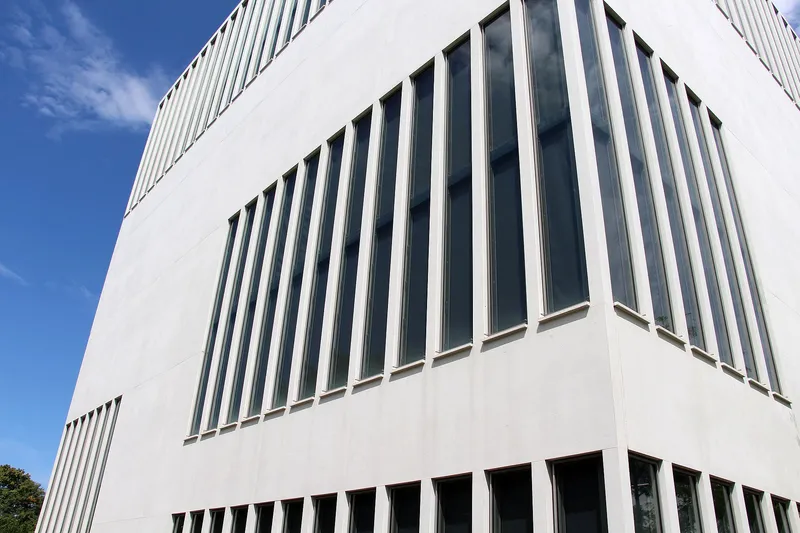
NS-Dokumentationszentrum, Munich
A respectful guide to Munich's NS-Dokumentationszentrum — the Documentation Centre for the History of National Socialism — on the site of the former Nazi party headquarters: what it covers, how to visit, and the nearby sites.
Read guide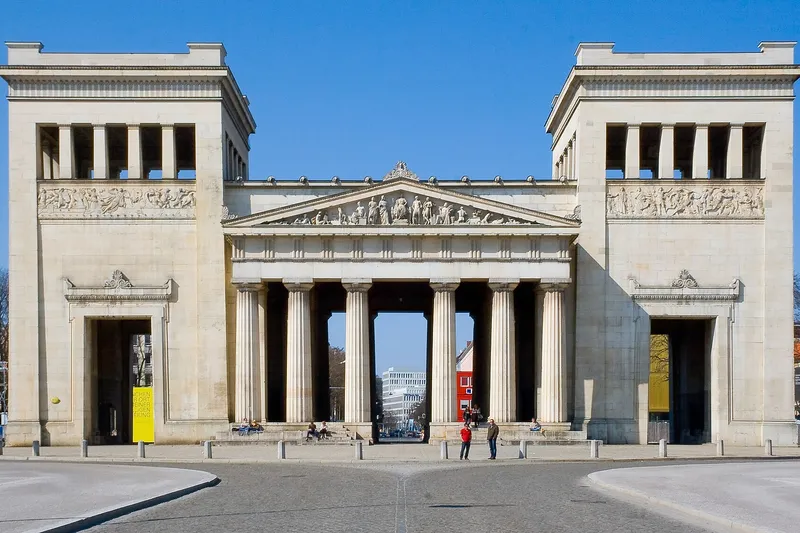
Königsplatz, Munich
A guide to Königsplatz — Munich's grand neoclassical square, its three temple-like museum buildings, the difficult Nazi-era history written into its stones, and how it anchors the Kunstareal.
Read guide
Dachau Memorial from Munich: A Respectful Guide
The Dachau Concentration Camp Memorial Site is about twenty minutes from central Munich and among the most important things you can do in Bavaria. This is a guide to reaching and approaching it respectfully — as a day of remembrance, not a sightseeing stop.
Read guideMore in Things to Do
6
Allianz Arena, Munich
How to visit Munich's glowing football stadium — the self-guided Erlebnistour, the FC Bayern Museum, match-day logistics, and the easy U6 ride out to Fröttmaning.
Read guide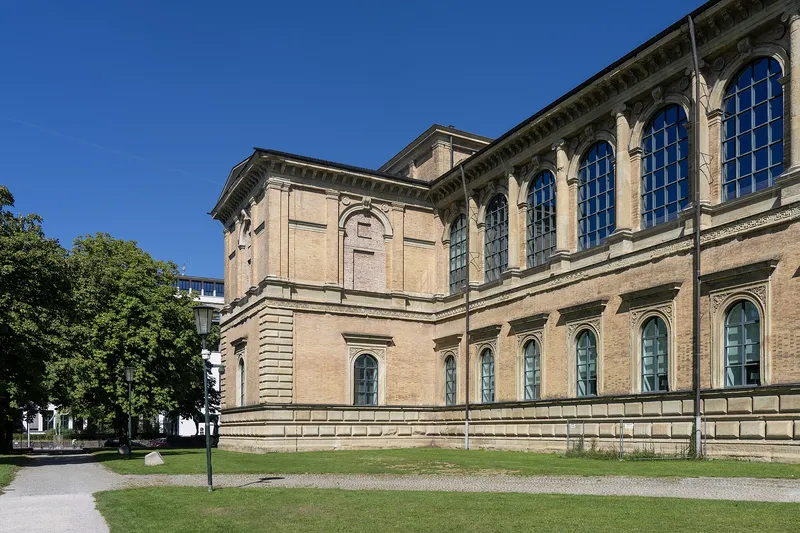
Alte Pinakothek, Munich
How to visit Munich's Old Masters gallery in the Kunstareal — the Dürers and Rubenses worth crossing town for, the Sunday-ticket angle, and how to build a wider museum-quarter day around it.
Read guide
Asamkirche, Munich
How to visit Munich's astonishing late-Baroque Asamkirche on Sendlinger Straße — the church two brothers built next to their own house — without overplanning it.
Read guide
Best Munich Tours
When a guided tour earns its place in a Munich trip — and which kind to pick. Old Town walks, food and beer crawls, football and BMW, the Third Reich history walk, and the big castle and Dachau day trips, weighed by time, cost and effort.
Read guide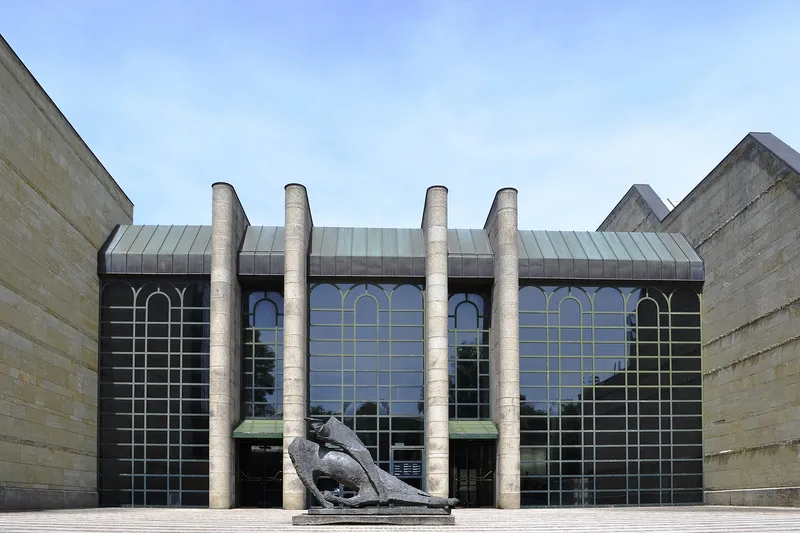
Best Museums in Munich
Choose the right Munich museum for you — by interest, by how much time you have, by which day of the week, and by how useful it is on a rainy day.
Read guide
Best Photography Spots in Munich
Rooftops, squares, churches, parks and palaces — the most photogenic places in Munich, with the light and timing notes to shoot each one well.
Read guide