
Munich Food and Beer Tours
How to choose a Munich food, market, beer or history tour without duplicating the itinerary you'd walk anyway — what each type covers, who it suits, and when a guided tasting earns its price.

Photo: hvid kanin / Unsplash

- ✓A good food tour earns its price two ways: it feeds you a curated spread of things you might not order alone, and it explains the customs — Weißwurst before noon, the bring-your-own beer-garden rule, the six breweries — that make Munich's food culture click.
- ✓Match the tour to the gap in your trip: a market-and-tastings walk for first-timers, a beer or brewery tour for drinkers, a Viktualienmarkt-focused tasting for foodies, and a history-led walk if you want context with your lunch.
- ✓Tours overlap heavily with the Old Town you'll already walk — the Viktualienmarkt, the beer halls, Marienplatz — so the value is the tastings and the storytelling, not the route. Don't book one for ground you'll cover anyway on day one.
- ✓Operators, exact stops, prices and schedules change constantly and many tours need booking ahead; treat any specifics as starting points and verify the current offering, dietary options and meeting point before you pay.
When a food tour is worth it in Munich
Munich is an easy city to eat in without a guide — the Viktualienmarkt is a two-minute walk from Marienplatz, the beer halls are obvious, and the classics are not hard to find. So the honest question is what a food tour adds. The answer, when it's a good one, is two things. First, a curated tasting spread: a string of small portions across several stops — sausages, cheeses, breads, sweets, a beer or two — that lets you try far more, and more confidently, than you would ordering blind. Second, the context: a guide who explains why Weißwurst is eaten before noon, what the six breweries are and how they divide the city, how the beer-garden bring-your-own rule works, and which traditions are real versus performed for visitors.
That combination is most valuable early in a trip, when you're still finding your feet, and for travellers who want to understand the food culture rather than just consume it. It's less valuable if you're a confident, independent eater who'd rather graze the market at your own pace — in which case the self-guided market lunch is cheaper and just as good. The trick is to book a tour for the gap in your trip, not for ground you'd cover anyway, and the tour types below are sorted by which gap they fill.

The main types of Munich food and drink tour
Most Munich food-and-drink tours fall into a few recognisable types, and naming the type is the quickest way to pick. They differ in pace, how much they lean on drinking versus eating, and how much history comes with the food. Read them as a menu of approaches rather than fixed products — the same operator may run several, and the details shift season to season.
- Market & tastings walk — the all-rounder: a guided graze through the Viktualienmarkt and the Old Town, sampling Bavarian classics with commentary on customs. Best for first-timers who want a confident overview in a couple of hours.
- Beer & beer-hall tour — drink-led: the six breweries, beer-hall culture and the difference between Helles, Weißbier and the rest, usually with stops at a hall or two. Best for travellers whose main interest is the beer.
- Brewery or beer-garden tour — deeper on production and the garden tradition; some include a brewery visit or a beer-garden Brotzeit. Best for enthusiasts who want the why behind the Maß.
- Foodie / market-deep-dive — slower and tasting-focused, often centred on the Viktualienmarkt's stalls and a wider spread of producers. Best for keen eaters over casual sightseers.
- History-led food walk — folds Munich's story (and sometimes its harder 20th-century history) into the eating; context with your lunch. Best for travellers who want substance alongside the snacks.

Avoiding overlap with the rest of your itinerary
The biggest mistake is booking a food tour that retraces the day you'd have anyway. Almost every Munich food walk passes through the Viktualienmarkt and the Old Town around Marienplatz, because that's where the food is — which means if you've already spent a morning grazing the market and climbing Alter Peter, a market tour will feel repetitive. The fix is sequencing: if you want a tour, do it early, before you've explored the same ground independently, so the tastings land on fresh territory and the guide's context shapes how you see everything afterwards.
It's also worth checking what a tour actually adds beyond the route. A Viktualienmarkt walk you could replicate alone is mostly worth paying for if the tastings are generous and the guide is genuinely knowledgeable; a beer or brewery tour is harder to self-organise and so tends to offer better value, since it gets you access and explanation you can't easily arrange yourself. Cross-reference your tour against your other plans — your beer-hall night, your market lunch, your Old Town walk — and book the one that covers something the rest of the trip doesn't.

How to choose and book a good one
Once you've settled on a type, a few checks separate a good tour from a forgettable one. Look at the group size first: small groups (a dozen or fewer) mean more attention, more interaction with stallholders, and a better chance of questions getting answered; big bus-style groups feed you efficiently but explain less. Read recent reviews for substance — do guests mention the guide's knowledge and the quality of the tastings, or just that it was 'fun'? — and confirm how much food and drink is actually included, since some tours are light on tastings and heavy on walking.
Then handle the practicalities. Most worthwhile tours need booking ahead, especially in summer and over Oktoberfest, when the city fills. Confirm the meeting point and start time, how long it runs, whether the price includes the food and beer or just the guiding, and — importantly — whether vegetarian, vegan or other dietary needs can be accommodated, as a sausage-heavy tour won't suit everyone. Because operators, stops, prices and schedules change so often, treat any specific name or figure you read as a starting point and verify the current details directly before you pay.

The self-guided alternative
If you'd rather not pay for a guide, Munich is unusually easy to tour yourself. The Viktualienmarkt puts a dozen tastings within a few steps — a fish roll, a Leberkässemmel, cheese, soup, sweets — and the market's beer garden lets you bring stall food to the self-service benches with a beer from the maypole tap. From there it's minutes to the beer halls, and a short walk to the gardens. Read up on the customs first — why Weißwurst is a morning dish, how the bring-your-own rule works, what to order — and you've built your own food tour for the price of the food.
The case for paying a guide remains the curation and the context: someone choosing the best of each stall, telling you the stories, and getting you behind a brewery door you couldn't open alone. For many travellers the sweet spot is one short, well-reviewed tour early in the trip, then self-guided grazing for the rest — the tour teaches you how to eat in Munich, and you spend the following days doing it your own way.
At a glance
Worth it for — first-timers and travellers who want the food culture explained; the value is the curated tastings and the context, not the route.
Types — market & tastings walk (all-rounder), beer / beer-hall tour (drink-led), brewery or beer-garden tour (enthusiasts), foodie market deep-dive, history-led food walk.
Avoid overlap — almost all pass through the Viktualienmarkt and Old Town; do a tour early, before you cover the same ground alone, and book the one that fills a gap.
Choosing — favour small groups; check what food and drink is actually included; read reviews for the guide's knowledge; confirm vegetarian/vegan options.
Booking — most need reserving ahead, more so in summer and over Oktoberfest; verify operator, meeting point, price and inclusions directly, as details change often.
Or DIY — the Viktualienmarkt plus the beer halls and gardens make an easy self-guided food tour; many do one short tour early, then graze independently after.
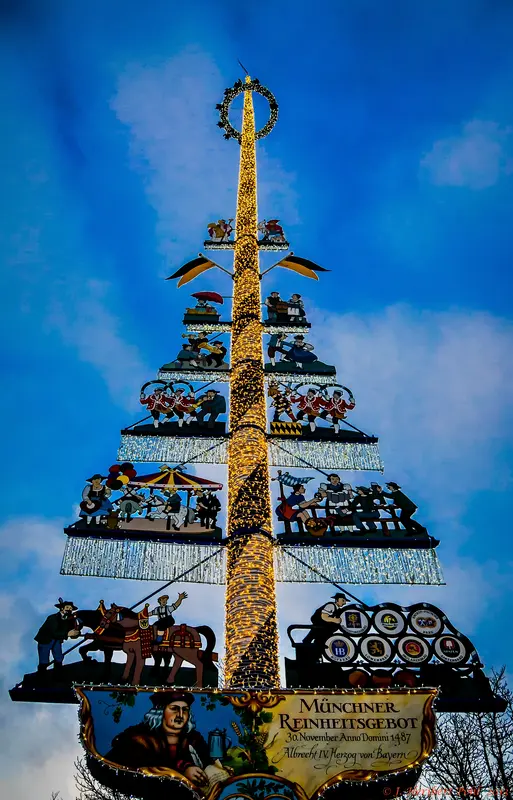
Viktualienmarkt Food Guide
What to eat at Munich's famous Viktualienmarkt, when to go, and how to use it for a fast, characterful lunch a minute from Marienplatz — stalls, snacks and a picnic to carry out.
Read guide
Best Munich Tours
When a guided tour earns its place in a Munich trip — and which kind to pick. Old Town walks, food and beer crawls, football and BMW, the Third Reich history walk, and the big castle and Dachau day trips, weighed by time, cost and effort.
Read guide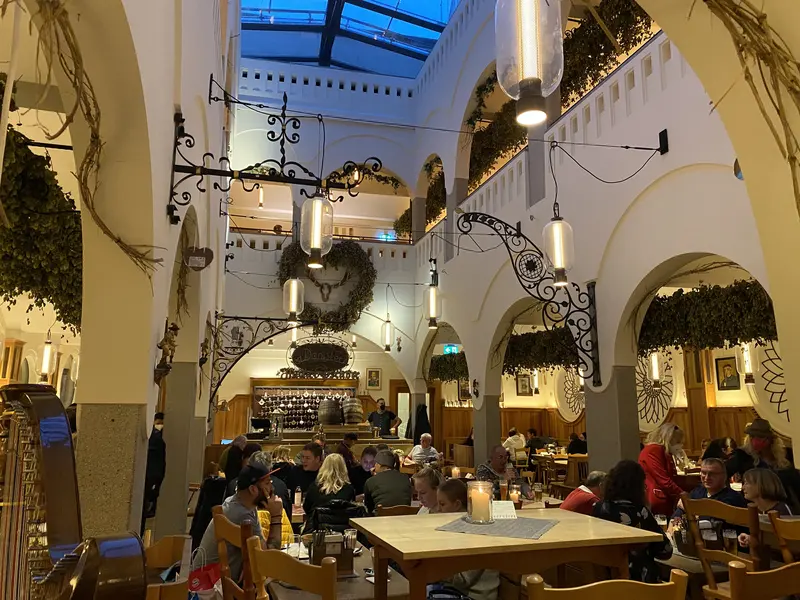
Best Beer Halls in Munich
How to choose among Munich's great beer halls — the Hofbräuhaus, the Augustiner and Löwenbräu houses, Paulaner and more — compared by atmosphere, food, noise and first-time ease.
Read guideMore in Food & Drink
6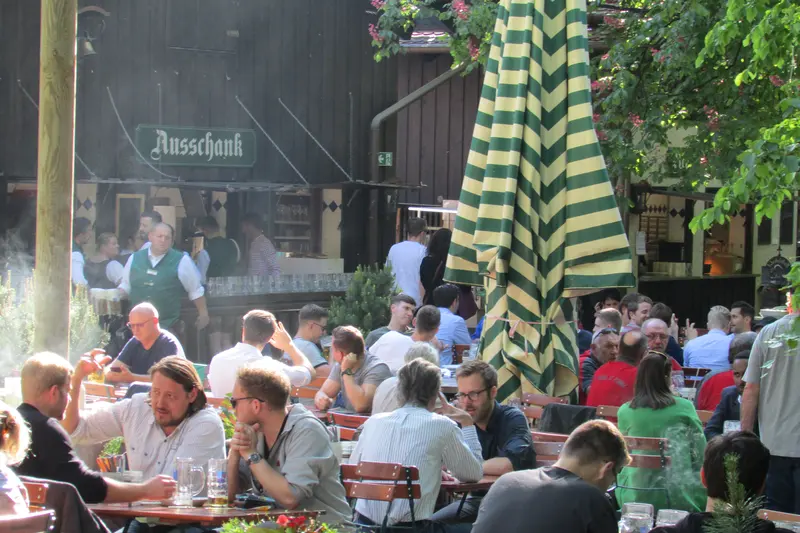
Augustiner-Keller, Munich
The beer garden, the cellar restaurant, reservations and what to order at the Augustiner-Keller near the Hauptbahnhof — the locals' choice for the city's most-loved beer.
Read guide
Bavarian Food to Try in Munich
What to order in Munich — Weißwurst, roast pork and pork knuckle, pretzels and dumplings, Obatzda and radi, the cakes and the beers — and the little rules that make each one make sense.
Read guide
Best Beer Gardens in Munich
A seasonal guide to Munich's classic beer gardens — the chestnut-shaded benches, the bring-your-own rule, what to order, and which gardens suit families, dates or a quiet pint.
Read guide
Best Cocktail Bars in Munich
Where to drink well in a beer city — Munich's craft cocktail bars, hotel bars and late-night spots, picked by neighbourhood and vibe for date nights, a refined nightcap or somewhere open into the small hours.
Read guide
Best Coffee and Cafés in Munich
Where to find good coffee in Munich — specialty third-wave roasters, classic Kaffeehaus institutions and konditoreien — sorted by neighbourhood and by whether you want to work, linger romantically or grab a quick cup.
Read guide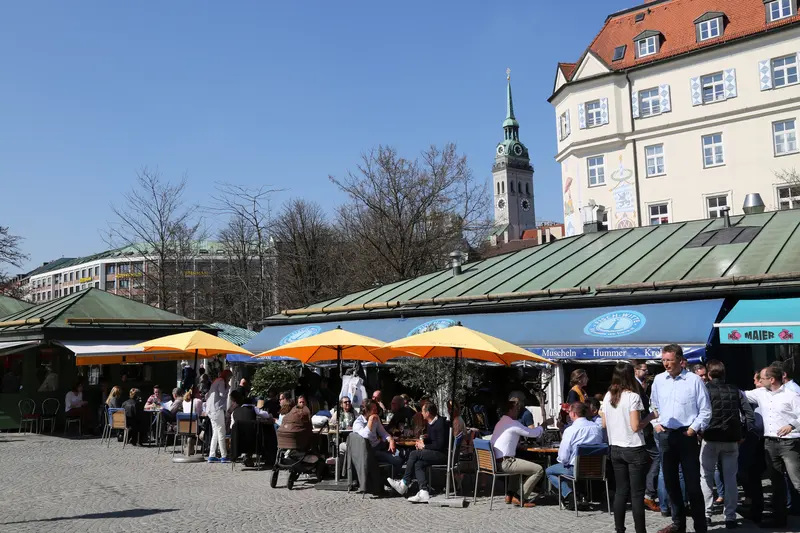
Best Food Markets in Munich
Beyond the famous Viktualienmarkt — the neighbourhood and seasonal markets where Munich actually shops, for snacks, gifts, picnic supplies and a feel for the city's daily rhythm.
Read guide