
Best Beer Halls in Munich
How to choose among Munich's great beer halls — the Hofbräuhaus, the Augustiner and Löwenbräu houses, Paulaner and more — compared by atmosphere, food, noise and first-time ease.
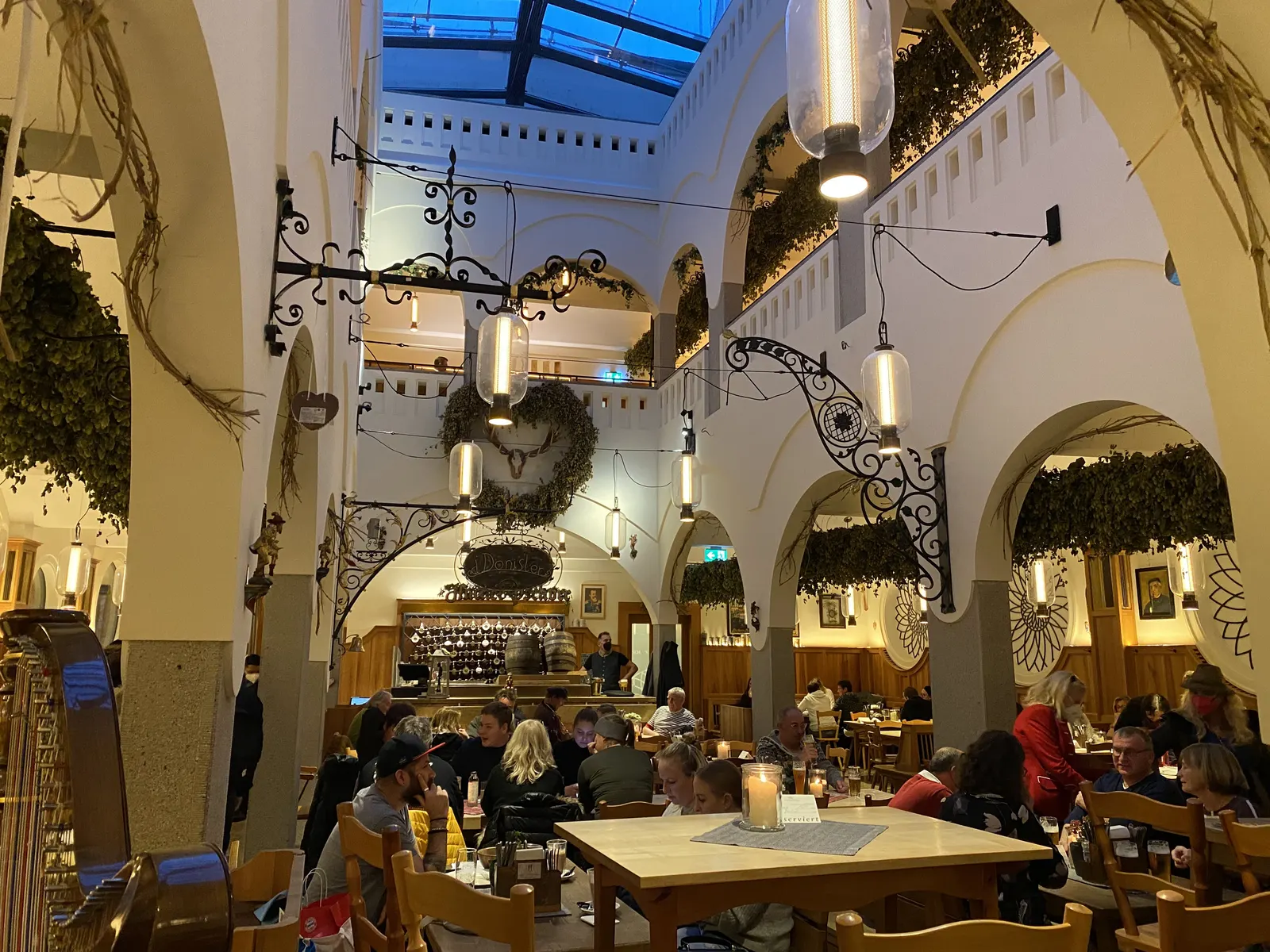
Photo: -wuppertaler / Wikimedia Commons · CC BY-SA 4.0

- ✓A beer hall (Bierhalle or Wirtshaus) is the indoor, year-round cousin of the beer garden — long communal tables, a single brewery's beer, hearty Bavarian food and often a brass band.
- ✓Munich's beer is poured by six breweries — Augustiner, Paulaner, Hacker-Pschorr, Hofbräu, Löwenbräu and Spaten — and most big halls are tied to one of them, which sets the beer you'll drink.
- ✓The Hofbräuhaus is the world-famous one and worth seeing once; locals more often head to Augustiner's houses for the beer they rate highest.
- ✓Halls are built for crowds and walk-ins, but you'll usually share a table — sit only at the unreserved benches (look for a 'Stammtisch' sign and avoid it), and a nod to your bench-mates is good manners.
What a Munich beer hall actually is
A Munich beer hall is the indoor heart of the city's beer culture — the place the beer garden becomes when the weather turns. Picture a big, warm, vaulted room with long communal tables, a single brewery's beer on tap, waitresses carrying improbable fistfuls of litre Maß glasses, and a kitchen turning out roast pork, pork knuckle, sausages and pretzels. Many add a Blaskapelle, a brass band in lederhosen, on busy evenings. It is loud, convivial and gloriously unpretentious.
The crucial thing to understand is that nearly every great hall is tied to one of Munich's six breweries, and that tie defines the experience. A Hofbräu hall pours Hofbräu; an Augustiner Wirtshaus pours Augustiner. So choosing a beer hall is partly choosing a beer. The other variables are atmosphere (tourist spectacle versus local everyday), noise (band or no band), and food (full Wirtshaus menu versus drinks-led). The halls below are sorted so you can pick by the evening you want.
One etiquette note up front, because it saves confusion: in a beer hall you generally seat yourself at any open spot on the communal benches — except tables marked Stammtisch (reserved for regulars) or with a reservation card. You order from the waitress, you tip modestly by rounding up, and you'll likely share with strangers. That sharing is the point; it's how a Munich hall turns a drink into an evening.

The Hofbräuhaus — the famous one, for the spectacle
If you visit one beer hall on a first trip, it will probably be the Hofbräuhaus am Platzl, just east of Marienplatz — the most famous beer hall on earth. Founded as the royal Bavarian court brewery in 1589, it's a vast, vaulted, painted hall (with a beer garden courtyard and an upstairs ballroom) where a brass band plays, the tables run long, and the whole world seems to be drinking Hofbräu by the litre. It is unapologetically a spectacle, and busy with tourists — but it is also the real thing, and an evening here is part of the Munich script for a reason.
Go in with the right expectations: you're paying partly for the room and the band, it can be crowded and noisy, and service is brisk rather than tender. Come earlier in the evening for a seat, eat the Bavarian classics, drink a Maß, and enjoy it for what it is. Our dedicated guide covers seating, timing and what to order in detail.
Augustiner — the locals' choice
Ask a Münchner where they actually drink and the answer is often Augustiner — the city's oldest independent brewery (founded 1328) and the beer many locals rate above all the others. Augustiner runs several beautiful houses across the centre. The Augustiner-Großgaststätte on Neuhauser Straße in the pedestrian zone is a grand, atmospheric hall a short walk from Marienplatz, with elaborate rooms and a more local feel than the Hofbräuhaus. The Augustiner-Keller near the Hauptbahnhof pairs an enormous chestnut-shaded beer garden with a proper Wirtshaus indoors, pouring beer from wooden barrels in season.
The Augustiner experience is quieter and more grown-up than the Hofbräuhaus — fewer tour groups, less band, more the rhythm of a city eating and drinking after work. It's the move if you want the hall atmosphere without the full tourist circus, and the beer is, by wide local consensus, superb.
Löwenbräu, Paulaner and the other big houses
Beyond Hofbräu and Augustiner, each of the remaining breweries anchors halls worth knowing. The Löwenbräukeller on Stiglmaierplatz is a landmark hall and beer garden, grand and a little less touristed, and the traditional home of the Starkbierfest strong-beer season each spring. Paulaner — the brewery behind the famous Salvator strong beer — has its historic Nockherberg in the Au, where the Starkbierfest tapping is a Munich institution, plus a network of Wirtshäuser across town. Hacker-Pschorr and Spaten round out the six, with their own taverns and a presence at Oktoberfest.
For most travellers the choice comes down to location and mood rather than brewery loyalty: pick the hall nearest where you are, or the one whose atmosphere suits the night. Our breweries guide explains who pours what and where to taste each beer outside the Oktoberfest tents.
- Löwenbräukeller (Stiglmaierplatz) — a grand landmark hall and garden, home of the spring Starkbierfest; less touristy, very Munich.
- Paulaner am Nockherberg (Au) — the historic strong-beer house, famous for its Salvator tapping and the satirical Starkbierfest each spring.
- Augustiner-Großgaststätte (Neuhauser Straße) — an ornate central hall a few minutes from Marienplatz, with a local feel and Augustiner on tap.
- Spatenhaus and Hacker-Pschorr taverns — the remaining two of the six breweries, with central Wirtshäuser worth a meal if you're passing.

Beer hall or beer garden — which to choose
Visitors often use the terms interchangeably, but the difference is real and worth getting right, because it shapes your whole afternoon. A beer hall is indoors and open year-round: a roofed, often vaulted room with table service, a kitchen, frequently a band, and no bring-your-own. A beer garden is the open-air, warm-season counterpart — gravel and benches under shade trees, with a self-service section where you may bring your own food and buy only the beer. Many of Munich's institutions, the Augustiner-Keller and the Löwenbräukeller among them, are both, with an indoor hall and an outdoor garden sharing one address.
The practical upshot: choose a hall when the weather is poor, when you want a guaranteed seat and a band, or when you want a proper sit-down Bavarian dinner with service. Choose a garden when the sun is out, when you'd rather picnic cheaply under the trees, and when you want the more relaxed, local version of the same beer. On a fine evening you can have both — start with a Maß in the garden and move inside as it cools. If your trip falls in the colder months, the hall is your only option, which is one reason the great indoor halls matter so much to the city's winter life.
A first-timer's plan
If beer halls are new to you, here's the low-stress way to do it. Go earlier rather than later — arriving by around 18:00 to 19:00 gives you a far better shot at a seat than turning up at peak. Walk in, scan the communal benches for an open stretch that isn't marked Stammtisch or reserved, and sit; you don't wait to be seated and you don't queue at a bar. When the waitress comes, order a Helles or a Weißbier (a Halbe is fine if a full Maß feels like a lot) and a Bavarian dish to anchor the evening.
Don't be thrown by sharing a table with strangers — it's the norm and usually the best part, and a friendly 'Prost' breaks any ice. Keep some cash for the bill and the tip, watch your pace (a litre of strong-ish lager creeps up), and you're set. One hall on a first trip is plenty to taste the tradition; if you have a second night, follow the Hofbräuhaus spectacle with a quieter Augustiner house to feel the difference between the tourist version and the local one. That contrast, more than any single hall, is what teaches you how Munich actually drinks.

Beer-hall etiquette and ordering
A little local knowledge makes a hall far more enjoyable. Seat yourself at any free spot on the open communal benches, but never at a table marked Stammtisch (the regulars' table) or one carrying a reservation card — these are off-limits even when empty. Order from the waitress when she passes; the default beer is a Helles (pale lager) or a Weißbier (wheat beer), and the default size is the Maß, a full litre, though a Halbe (half) is perfectly acceptable.
Tipping is modest: round up to the next euro or add roughly five to ten per cent, told to the server as you pay rather than left on the table. Many halls still prefer cash, so carry some. And if you're hungry, the food is a real part of the experience — order the Schweinsbraten, the Haxn or a Brotzeit board, and a pretzel to start. When you raise your glass to toast, look your bench-mates in the eye and say 'Prost'; it's small, but it's the moment a beer hall stops being a sight and becomes an evening.
At a glance
For the spectacle, once — the Hofbräuhaus, central, famous, with a brass band; busy and touristy, but genuinely Bavarian.
For the locals' beer — Augustiner's houses (the central Großgaststätte and the Keller near the station); quieter, grown-up, superb beer.
For grand-but-less-touristed — the Löwenbräukeller at Stiglmaierplatz; a landmark hall and the spring Starkbierfest home.
How seating works — sit at any open communal bench except a Stammtisch or a reserved table; you'll share with strangers.
Good to know — order a Maß (litre) or a Halbe; tip about 5–10% told to the server; carry cash; hours and bands vary — verify.
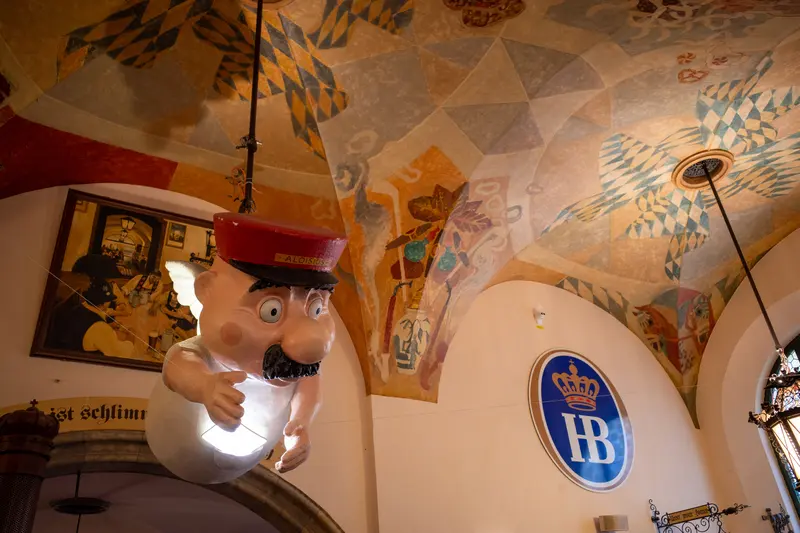
Hofbräuhaus, Munich
What to expect at Munich's most famous beer hall — how the seating works, what to order, when to go to dodge the worst crowds, and whether it's worth it.
Read guide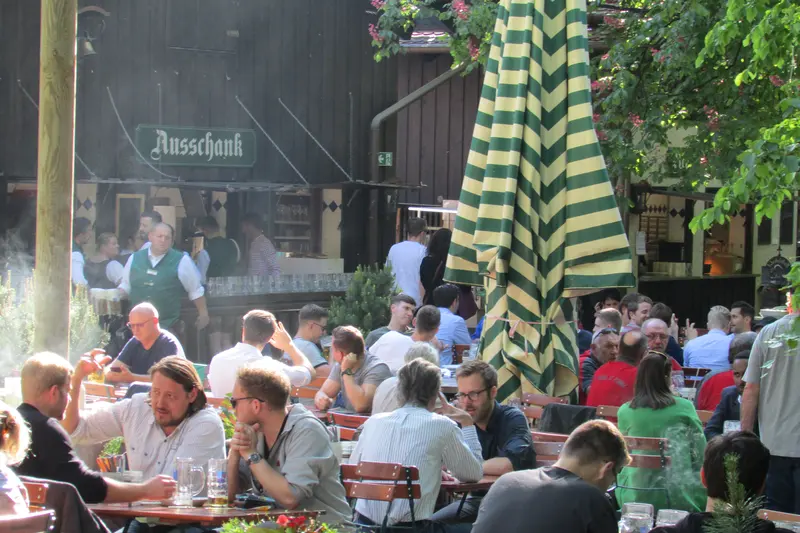
Augustiner-Keller, Munich
The beer garden, the cellar restaurant, reservations and what to order at the Augustiner-Keller near the Hauptbahnhof — the locals' choice for the city's most-loved beer.
Read guide
Munich Beer Garden Etiquette
How a Munich beer garden actually works — the self-service vs served split, the bring-your-own rule, table sharing, reservations, tipping, toasting and clearing your own glass.
Read guideMore in Food & Drink
6
Bavarian Food to Try in Munich
What to order in Munich — Weißwurst, roast pork and pork knuckle, pretzels and dumplings, Obatzda and radi, the cakes and the beers — and the little rules that make each one make sense.
Read guide
Best Beer Gardens in Munich
A seasonal guide to Munich's classic beer gardens — the chestnut-shaded benches, the bring-your-own rule, what to order, and which gardens suit families, dates or a quiet pint.
Read guide
Best Cocktail Bars in Munich
Where to drink well in a beer city — Munich's craft cocktail bars, hotel bars and late-night spots, picked by neighbourhood and vibe for date nights, a refined nightcap or somewhere open into the small hours.
Read guide
Best Coffee and Cafés in Munich
Where to find good coffee in Munich — specialty third-wave roasters, classic Kaffeehaus institutions and konditoreien — sorted by neighbourhood and by whether you want to work, linger romantically or grab a quick cup.
Read guide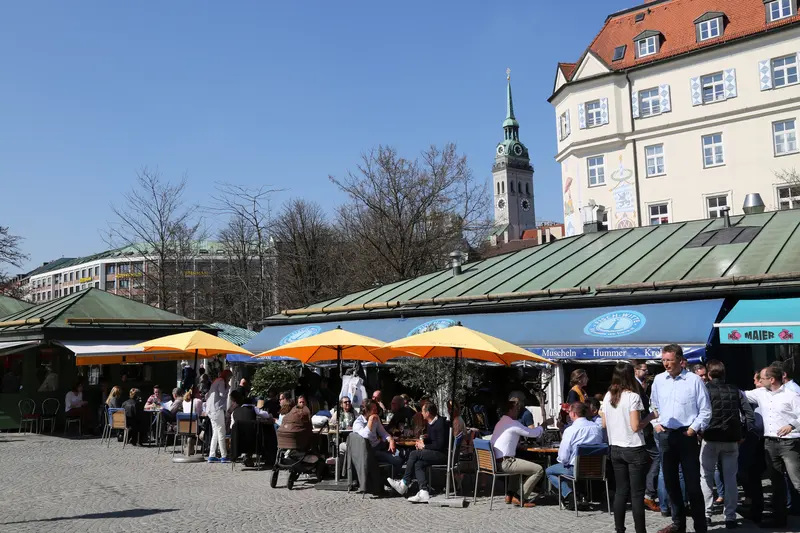
Best Food Markets in Munich
Beyond the famous Viktualienmarkt — the neighbourhood and seasonal markets where Munich actually shops, for snacks, gifts, picnic supplies and a feel for the city's daily rhythm.
Read guide
Best Restaurants in Munich
A traveller-ready shortlist of where to eat in Munich — sorted by neighbourhood, mood, budget and how far ahead you need to book — from beer-hall roasts to candlelit Glockenbach tables.
Read guide