
Best Restaurants in Munich
A traveller-ready shortlist of where to eat in Munich — sorted by neighbourhood, mood, budget and how far ahead you need to book — from beer-hall roasts to candlelit Glockenbach tables.


- ✓Munich eats earlier than southern Europe: kitchens often open for lunch around midday and dinner from about 18:00, and the best tables fill from 19:00 — book ahead for anything special.
- ✓The city's range is wider than its reputation: classic Wirtshäuser and beer halls for Bavarian roasts, but also serious Italian, Levantine, Vietnamese and a strong fine-dining scene.
- ✓Neighbourhood is the quickest filter — the Glockenbachviertel and Isarvorstadt for stylish and date-night dinners, Haidhausen for village-feel locals, the Altstadt for tradition (and tourist mark-ups).
- ✓Sundays and public holidays thin the options and many kitchens close one weekday (Ruhetag); always check before you walk over, and reserve where you can.
How to choose where to eat in Munich
Munich is a better eating city than its lederhosen-and-pork-knuckle image suggests, but it rewards a little strategy. The fastest way to a good dinner is to decide two things first: what kind of evening you want, and which neighbourhood you'll be near. Bavarian tradition clusters in the Altstadt and the old Wirtshäuser; the more contemporary, design-conscious cooking lives a few minutes south and west, in the Glockenbachviertel, Isarvorstadt and Westend; the village-feel locals are over the river in Haidhausen and Au.
The second rule is to book. Munich is an affluent city with a lot of business diners, and the good mid-range and special-occasion tables fill fast from Thursday to Saturday. For anything with a reputation, reserve a few days ahead — and for the handful of starred kitchens, often weeks. Walk-ins work better at beer halls, market stalls and the big traditional taverns, which are built to swallow crowds.
Finally, mind the rhythm of the week. Munich kitchens keep earlier hours than Madrid or Rome — lunch from around midday, dinner from roughly 18:00 — and many places take a Ruhetag, a fixed closing day, usually early in the week. Sundays and Bavarian public holidays (of which there are many) close a lot of doors, though beer halls and hotel restaurants stay open. The lists below are organised so you can match a place to your evening rather than wade through rankings.

Bavarian classics and the great traditional taverns
Start with what Munich does best. A proper Wirtshaus or beer hall is not a tourist trap by definition — it is where Münchners actually eat Schweinsbraten (roast pork with dark gravy and a dumpling), Schweinshaxe (a roasted, crackling-skinned pork knuckle), Obatzda (a paprika-spiked cheese spread) and Weißwurst with sweet mustard before noon. The trick is to eat the classics in places that take them seriously rather than the most photographed address on the square.
The famous halls — the Hofbräuhaus above all — are an experience worth having once, with the caveat that you're paying partly for the room and the brass band. For everyday Bavarian cooking, the city's mid-sized taverns and the brewery-run Keller restaurants are better value and more relaxed. The Viktualienmarkt's stalls and beer garden put a grazing lunch a minute from Marienplatz, and the Augustiner-Keller near the Hauptbahnhof pairs a vast chestnut-shaded garden with a proper Wirtshaus kitchen indoors.
- For the spectacle, once — the Hofbräuhaus, Munich's most famous beer hall, for the room, the band and a Maß. Touristy and busy, but genuinely Bavarian; go with the right expectations.
- For a Keller dinner — the Augustiner-Keller serves Bavarian classics indoors and out near the main station, pouring Augustiner from wooden barrels in the garden in season.
- For a market lunch — graze the Viktualienmarkt stalls and sit in its rotating-brewery beer garden under the maypole, a minute south of Marienplatz.
- For a quieter Wirtshaus — look beyond the centre, in Haidhausen, Au or Neuhausen, where neighbourhood taverns cook the same dishes for locals at gentler prices.
Date-night and special-occasion tables
When you want candlelight rather than a beer bench, cross into the Glockenbachviertel and Isarvorstadt — Munich's most reliably romantic eating quarters. The streets between Sendlinger Tor and the Isar are thick with small, well-run restaurants: Italian trattorias that locals trust, modern bistros, wine bars with short serious menus, and a few rooms that turn a birthday into an event. Reserve, dress a notch up, and let the neighbourhood do the work.
For a grand-occasion dinner, Munich has real depth at the top end — several Michelin-starred kitchens and a tier of ambitious modern restaurants just below them — but specific names, chefs and even addresses change, so treat any list as a starting point and verify what's current before you book. Our fine-dining guide tracks the brackets and how far ahead to reserve. The simplest romantic move, though, costs little: a small Glockenbach trattoria, a bottle of Südtirol white, and a slow walk back along the Isar.
International, vegetarian and everyday good value
Munich's everyday eating is more international than first-timers expect. The city has a long, serious Italian tradition — some of the best Italian food in Germany — alongside excellent Vietnamese, Levantine, Turkish, Japanese and Greek kitchens, many of them clustered around the Hauptbahnhof, in the Westend, and through Maxvorstadt's student streets. These are where you eat well without booking or spending much: a bowl of pho, a mezze spread, a wood-fired pizza.
Vegetarians and vegans are well served too — Munich has a growing roster of fully meat-free kitchens and plenty of conventional menus with proper vegetable cooking rather than an afterthought. The Isarvorstadt and Glockenbachviertel are the heart of it. For a quick, cheap, genuinely Munich lunch, though, nothing beats the market: a fish roll at the Viktualienmarkt, a Leberkässemmel from a butcher's counter, or a Brezn and an Obatzda in a beer garden.
- Italian — Munich's default special-occasion-lite cuisine; the Glockenbachviertel, Lehel and Schwabing hide trattorias locals book for.
- Vietnamese, Levantine and Turkish — reliable, affordable and everywhere, with concentrations near the Hauptbahnhof and through the Westend.
- Vegetarian and vegan — a strong, growing scene centred on the Isarvorstadt and Glockenbachviertel; see the dedicated guide below.
- Cheap and quick — market stalls, butcher counters (a Leberkässemmel), Vietnamese soups and the döner-and-falafel rows near the station.
Eat by neighbourhood
If you'd rather pick by where you already are, this is the short version. Each area has a personality, and matching your dinner to your base saves a lot of back-tracking across the ring.
- Altstadt (Old Town) — tradition and convenience: beer halls, the Viktualienmarkt, classic taverns. Atmospheric but the most touristy and priciest; step a street back from Marienplatz for better value.
- Glockenbachviertel & Isarvorstadt — the date-night and design-dinner heartland: bistros, trattorias, wine bars, vegetarian kitchens, late tables.
- Haidhausen & Au — village-feel locals across the Isar, with neighbourhood Wirtshäuser and small international spots at gentler prices.
- Maxvorstadt & Schwabing — student-priced and café-led near the museums and the English Garden; good for a relaxed lunch between sights.
- Westend & around the Hauptbahnhof — strong, affordable international cooking and better-value tables a short hop from the centre.


Eat with the season
Munich's traditional menus shift with the calendar more than most travellers expect, and timing your visit to a specialty is a quiet pleasure. Spring brings Spargelzeit, white-asparagus season, roughly from April to late June, when restaurants across the city build menus around the pale, prized spears served with ham, hollandaise or butter and new potatoes — a genuine local event. Spring also brings the Starkbierzeit, the 'strong beer' weeks around Lent, when breweries pour their potent Doppelbock (Salvator, Maximator and the rest) and the Wirtshäuser lean hearty.
Autumn tips toward game, mushrooms (Pfifferlinge in late summer, then richer wild mushrooms), pumpkin and, of course, the Oktoberfest weeks when half the city decamps to the Theresienwiese. Winter is the season of roast goose around Martinmas and Christmas, Glühwein at the markets, and the warming, dumpling-heavy end of the Bavarian repertoire. Eating what's in season — and asking the waiter what the Tagesempfehlung (recommendation of the day) is — is the easiest way to eat well and locally rather than ordering the same Schweinshaxe in January that you would in July.

Avoiding the tourist traps
Munich has fewer outright tourist traps than many big European cities, but the ones it has cluster in the obvious places: the tables ringing Marienplatz and the most photographed corners of the pedestrian zone, where you pay a premium for the view and rarely eat the city's best. The fix is simple and reliable — walk one or two streets back from the main square or the busiest tourist axis, and both prices and quality improve markedly. A laminated menu in six languages with photographs of the food, touts at the door, and a prime square-side terrace are the usual warning signs.
A few positive tells point the other way: a short menu, ideally with a handwritten or daily-changing element; a Ruhetag (a fixed weekly closing day, a sign the place isn't chasing every euro); a room with as many locals as visitors; and beer from a single named brewery rather than a generic tap. Following Münchners into a neighbourhood Wirtshaus in Haidhausen or the Westend, or trusting the market and the brewery gardens, will almost always serve you better than the first table you trip over by the town hall. None of this means avoiding the centre — just stepping off its busiest few metres.

Practical booking and timing tips
A few habits make eating in Munich smoother. Reserve anything special at least a few days ahead, and earlier for Friday and Saturday nights or any visit during Oktoberfest, when the whole city's tables tighten. Many restaurants take a fixed weekly closing day, often Monday or Tuesday, and a good number close for a summer or winter break — so confirm the day's opening directly rather than trusting a stale listing.
Tipping is modest and customary: round up or add roughly five to ten per cent, told to the server as you pay rather than left on the table. Card payment is now widely accepted, but smaller taverns, market stalls and beer gardens still prefer cash, so carry some. And eat on Munich's clock — arrive by 19:00 to 20:00 for dinner and you'll rarely be turned away; arrive at 22:00 and many kitchens have already closed.
At a glance
Best areas — Glockenbachviertel and Isarvorstadt for date-night and modern dinners; Altstadt for tradition; Haidhausen and Au for local taverns; Westend and the station area for value.
Booking — reserve a few days ahead for anything special, weeks for starred kitchens; beer halls and market stalls take walk-ins.
Hours — lunch from around midday, dinner from roughly 18:00; many places keep a weekly Ruhetag (often Mon/Tue) and close on Sundays and holidays — verify.
Budget — market stalls, butcher counters and international spots for cheap eats; mid-range bistros for everyday dinners; the fine-dining tier for occasions.
Good to know — tip about 5–10% told to the server; carry cash for taverns, stalls and gardens; eat on Munich's earlier clock.

Romantic Restaurants in Munich
How to choose the right romantic table in Munich — the candlelit small room, the grand white-tablecloth occasion, the polished Bavarian evening and the warm-weather beer garden — with the neighbourhoods to look in and the booking habits that make a night for two work.
Read guide
Fine Dining in Munich
Munich's splurge and tasting-menu scene — from starred kitchens and modern Bavarian dining rooms to how far ahead to book, what to wear, and where to stay nearby for a special night.
Read guide
Vegetarian and Vegan Munich
How to eat well as a plant-based traveller in a meat-and-beer city — Munich's fully vegetarian and vegan kitchens, the veg-friendly classics, market and bakery options, and how to order in a Bavarian beer hall.
Read guideMore in Food & Drink
6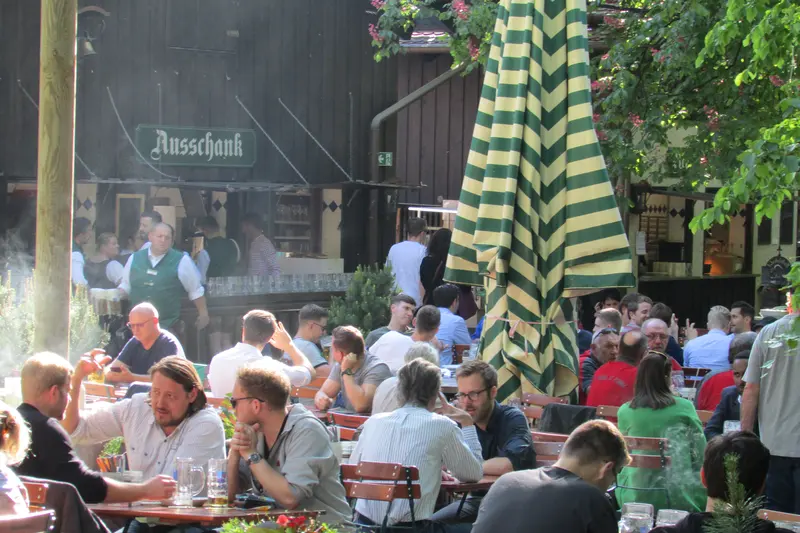
Augustiner-Keller, Munich
The beer garden, the cellar restaurant, reservations and what to order at the Augustiner-Keller near the Hauptbahnhof — the locals' choice for the city's most-loved beer.
Read guide
Bavarian Food to Try in Munich
What to order in Munich — Weißwurst, roast pork and pork knuckle, pretzels and dumplings, Obatzda and radi, the cakes and the beers — and the little rules that make each one make sense.
Read guide
Best Beer Gardens in Munich
A seasonal guide to Munich's classic beer gardens — the chestnut-shaded benches, the bring-your-own rule, what to order, and which gardens suit families, dates or a quiet pint.
Read guide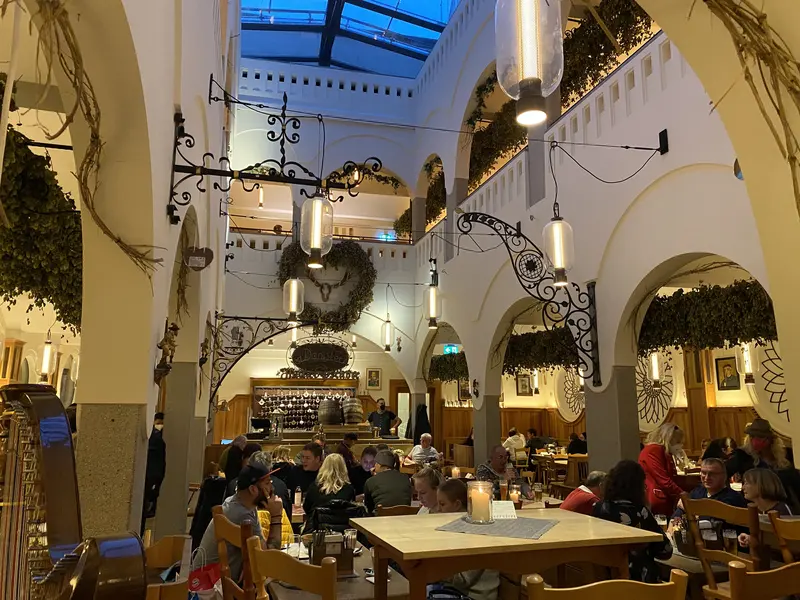
Best Beer Halls in Munich
How to choose among Munich's great beer halls — the Hofbräuhaus, the Augustiner and Löwenbräu houses, Paulaner and more — compared by atmosphere, food, noise and first-time ease.
Read guide
Best Cocktail Bars in Munich
Where to drink well in a beer city — Munich's craft cocktail bars, hotel bars and late-night spots, picked by neighbourhood and vibe for date nights, a refined nightcap or somewhere open into the small hours.
Read guide
Best Coffee and Cafés in Munich
Where to find good coffee in Munich — specialty third-wave roasters, classic Kaffeehaus institutions and konditoreien — sorted by neighbourhood and by whether you want to work, linger romantically or grab a quick cup.
Read guide