
Munich Breweries Guide
The six historic Munich breweries that pour the city's beer and tap at Oktoberfest, the local styles to know, and where to taste each one outside the Wiesn.

Photo: Igor Omilaev / Unsplash

- ✓Six historic breweries are allowed to pour at Oktoberfest and define Munich beer culture: Augustiner, Paulaner, Hacker-Pschorr, Hofbräu, Löwenbräu and Spaten.
- ✓All six brew within the city's tradition and broadly to the Reinheitsgebot, the 1516 Bavarian purity law that limited beer to water, malt, hops and (later) yeast.
- ✓The everyday Munich beer is Helles — a pale, malty, easy-drinking lager — alongside cloudy Weißbier (wheat beer); darker and seasonal styles appear at festival times.
- ✓Each brewery anchors its own halls, gardens and Wiesn tent, so you can taste them at the source across the city rather than only in September.
Why six breweries matter in Munich
Munich's beer culture is unusually concentrated. Where many cities have a scattering of unrelated brewers, Munich's identity runs through six historic houses — and only those six are permitted to serve at Oktoberfest, the rule that has fixed them in the public mind as 'the Munich breweries'. Between them they supply most of the beer in the city's halls and gardens, and the brand on the sign over a beer garden tells you whose beer you'll be drinking.
All six work within the long Bavarian brewing tradition and broadly to the Reinheitsgebot, the famous purity decree of 1516 that restricted beer to water, malt and hops (yeast was understood later). It's less a rigid law today than a point of pride and a marketing badge, but it speaks to why Munich beer tastes the way it does: clean, malt-forward and built for drinking by the litre rather than the thimble. Knowing the six lets you read the city — and order with confidence.
A short note on ownership, kept evergreen because it shifts: several of these brands now sit within larger international groups, even as they keep their own halls, recipes and loyal local followings. Augustiner remains the famous independent holdout and the locals' sentimental favourite. Don't get lost in the corporate family tree — what matters at the table is the beer in front of you and the hall it's poured in.

The six breweries, one by one
Each of the six has a personality, a flagship hall or garden, and a place in the city's affections. Half of them trace their roots to monastic or court brewing — a reminder that beer in Bavaria was for centuries the business of monasteries and dukes rather than entrepreneurs — and all of them have brewed continuously enough to feel like fixtures of the city. Here's how to tell them apart and where to find them.
- Augustiner — Munich's oldest independent brewery, founded by monks and still locally owned; the connoisseur's and locals' favourite, prized for its Helles. Taste it at the Augustiner-Keller beer garden near the Hauptbahnhof and the Augustiner-Bräustuben.
- Paulaner — born from a monastery brewery and famous for Weißbier and for Salvator, the original strong 'Doppelbock' that gave Munich's Starkbierfest its season. Look for the Nockherberg in the Au district.
- Hacker-Pschorr — a romantic, slightly old-fashioned brand (its slogan calls it 'Himmel der Bayern', the heaven of the Bavarians), strong on Helles and wheat beers, with a beloved Oktoberfest tent.
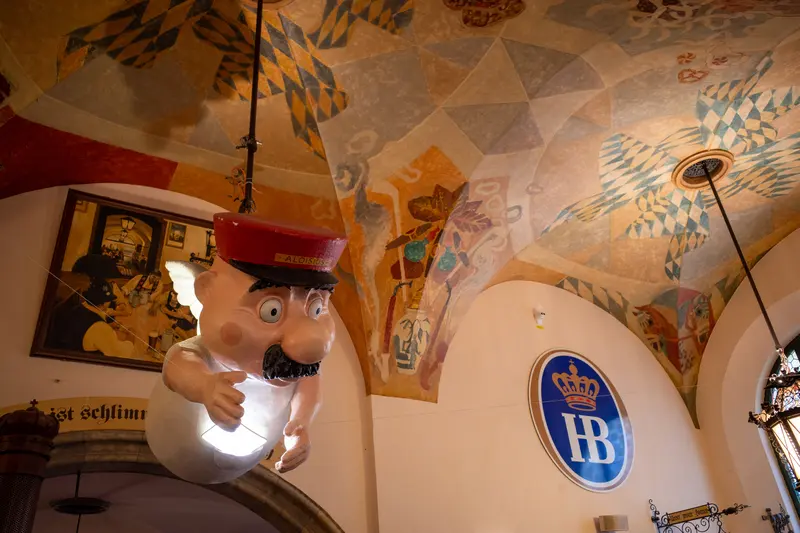
- Hofbräu (HB) — the former royal court brewery, now state-owned, behind the world-famous Hofbräuhaus beer hall in the Altstadt; the most touristed of the six but a genuine institution.
- Löwenbräu — the 'lion's brew', one of the city's big classic names, widely poured and tied to its own Wiesn tent and the Löwenbräukeller near Stiglmaierplatz.
- Spaten — a historically important brewery (often credited in the spread of the Märzen/Oktoberfest style and modern lager brewing) whose lion-and-malt-shovel logo you'll spot across the city.
The beer styles to know
Ordering in Munich is easier once you know a handful of styles. The everyday beer is Helles — a pale, gently malty, low-bitterness lager that's the default 'a beer, please' across the city and the thing most locals drink most of the time. It comes by the half (Halbe) or the litre (Maß), and it's what fills most beer-garden glasses.
Alongside it, Weißbier (also Weizen or Hefeweizen) is the cloudy, refreshing wheat beer, often served in a tall curved glass with notes of banana and clove from the yeast; there's a clearer 'Kristall' version and a dark 'Dunkel' one too. Then come the seasonal and special styles that mark the calendar: the strong, sweetish Bock and Doppelbock beers of the Lenten Starkbierfest in spring (Paulaner's Salvator is the archetype, and the strong beers traditionally end in '-ator'), and the festival beers brewed a touch stronger for Oktoberfest.
Two practical ordering notes. A Radler is Helles cut with lemonade — lighter, lower in alcohol and perfect in summer heat — and it's an entirely respectable, very local order. And 'a beer' with no qualifier in a Munich hall or garden will almost always bring you a Helles; if you want wheat beer, ask for a Weißbier by name.
- Helles — pale, malty, easy-drinking lager; the everyday default. Order by the Halbe or the Maß.
- Weißbier / Weizen — cloudy wheat beer in a tall glass; banana-and-clove yeast notes. Dunkel and Kristall variants exist.
- Dunkles — a darker, maltier lager; less common day to day but still around.
- Bock / Doppelbock — strong seasonal beers, the stars of the spring Starkbierfest; the strong ones often end in '-ator' (Salvator, Maximator).
- Festbier / Wiesn-Märzen — the slightly stronger beer brewed for Oktoberfest.
- Radler — Helles cut with lemonade; light, refreshing and a proper local order in summer.
Where to taste them outside Oktoberfest
You don't need to wait for the Wiesn to drink Munich's beer at the source — in fact, the year-round halls and gardens are where the city actually drinks. Each brewery anchors its own places, and a short tour of two or three of them is one of the best things you can do in Munich. The simplest approach is to pick by neighbourhood and mood rather than chasing all six.
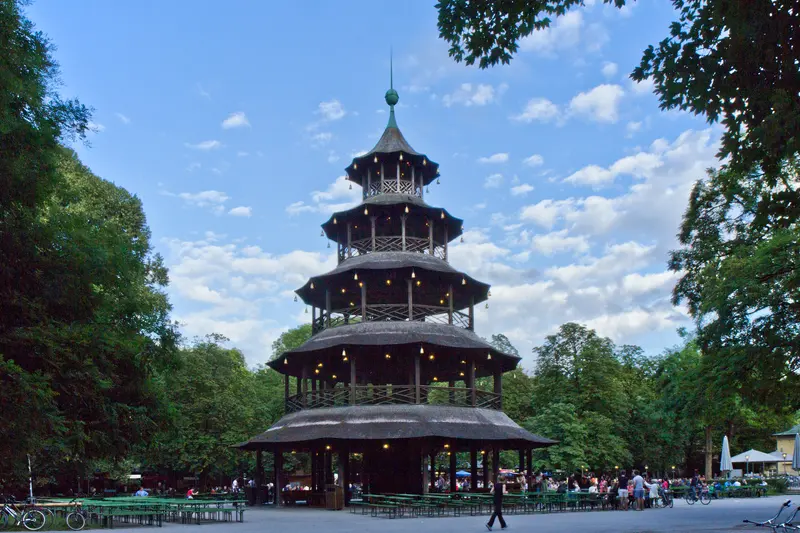
For the locals' beer in a beautiful garden, head to the Augustiner-Keller near the Hauptbahnhof, where Augustiner is poured from wooden barrels under century-old chestnuts in season. For the full tourist-institution beer hall, the Hofbräuhaus in the Altstadt is unavoidable and, taken in the right spirit, genuinely fun. The Löwenbräukeller near Stiglmaierplatz and the Paulaner am Nockherberg in the Au give you two more breweries in their home settings, and the Chinese Tower garden in the English Garden rotates through the family of brands depending on the year.
If you want to make a deliberate tasting of it, a relaxed half-day plan works well: start in a garden like the Augustiner-Keller for the locals' Helles, walk or ride to the Löwenbräukeller for a second brewery, and finish at the Hofbräuhaus in the Altstadt for the spectacle, ordering a Halbe rather than a full Maß at each so you can compare while still standing at the end. You'll notice the differences are real but subtle — these are clean, malt-led lagers built on a shared tradition, not the wildly divergent styles of a craft taproom — and that's precisely the point of Munich beer.
Brewery tours themselves come and go and vary by house, so check current availability if a behind-the-scenes visit is the goal. For most travellers, though, the hall and the garden are the real tasting room — order a Halbe of each brewery's Helles across an afternoon and you'll have a clearer sense of Munich beer than any tour could give you.
- Augustiner — the Augustiner-Keller beer garden and the Bräustuben near the brewery; the locals' pick.
- Hofbräu — the Hofbräuhaus beer hall in the Altstadt; the famous one, busy but iconic.
- Löwenbräu — the Löwenbräukeller near Stiglmaierplatz.
- Paulaner — am Nockherberg in the Au, home of the Salvator and Starkbierfest.
- Hacker-Pschorr & Spaten — widely poured across central halls and gardens; look for their signs.
- English Garden — the Chinese Tower garden, a leafy, central place to drink whatever's on tap.
At a glance
The six — Augustiner, Paulaner, Hacker-Pschorr, Hofbräu, Löwenbräu and Spaten; the only breweries allowed to pour at Oktoberfest.
The tradition — all brew within the Bavarian custom and broadly to the 1516 Reinheitsgebot purity rule.
The everyday beer — Helles, a pale malty lager, by the Halbe or the Maß; Weißbier (wheat beer) is the cloudy alternative; a Radler is Helles with lemonade.
The seasonal beers — strong Bock and Doppelbock at the spring Starkbierfest (names often ending '-ator'); slightly stronger Festbier at Oktoberfest.
Where to taste — Augustiner-Keller, the Hofbräuhaus, the Löwenbräukeller, Paulaner am Nockherberg and the English Garden's Chinese Tower garden — verify hours and tours.
Locals' note — Augustiner is the sentimental favourite and the famous independent; 'a beer' with no qualifier usually means a Helles.

Oktoberfest Beer Tents Guide: Which Tent Is Right for You
Oktoberfest has fourteen big tents and a couple of dozen small ones, and they are not interchangeable — each has its own brewery, band, food and crowd. This is a decision guide: how the tents differ in mood and who they suit, the gentler small tents, the nostalgic Oide Wiesn, the outdoor gardens, and how to pick the right one and get a seat.
Read guide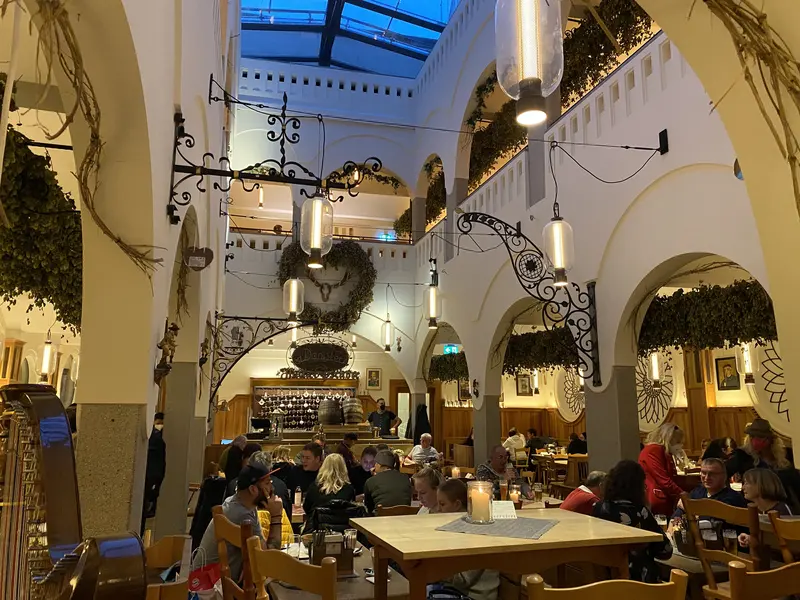
Best Beer Halls in Munich
How to choose among Munich's great beer halls — the Hofbräuhaus, the Augustiner and Löwenbräu houses, Paulaner and more — compared by atmosphere, food, noise and first-time ease.
Read guide
Starkbierfest Munich (Strong-Beer Season)
Munich's Starkbierzeit — the 'fifth season' — is the strong-beer festival held each spring around Lent, centred on the Nockherberg, where Paulaner taps its potent Salvator doppelbock and a comedian roasts the assembled politicians in the famous Derblecken.
Read guideMore in Food & Drink
6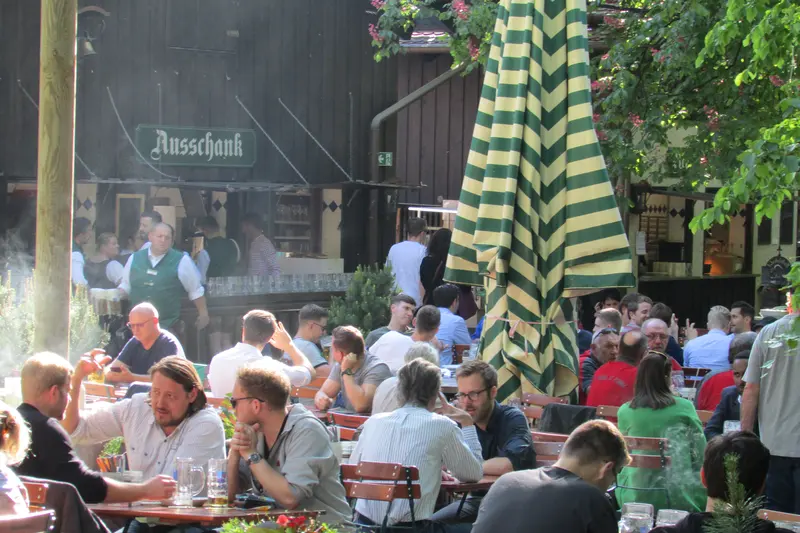
Augustiner-Keller, Munich
The beer garden, the cellar restaurant, reservations and what to order at the Augustiner-Keller near the Hauptbahnhof — the locals' choice for the city's most-loved beer.
Read guide
Bavarian Food to Try in Munich
What to order in Munich — Weißwurst, roast pork and pork knuckle, pretzels and dumplings, Obatzda and radi, the cakes and the beers — and the little rules that make each one make sense.
Read guide
Best Beer Gardens in Munich
A seasonal guide to Munich's classic beer gardens — the chestnut-shaded benches, the bring-your-own rule, what to order, and which gardens suit families, dates or a quiet pint.
Read guide
Best Cocktail Bars in Munich
Where to drink well in a beer city — Munich's craft cocktail bars, hotel bars and late-night spots, picked by neighbourhood and vibe for date nights, a refined nightcap or somewhere open into the small hours.
Read guide
Best Coffee and Cafés in Munich
Where to find good coffee in Munich — specialty third-wave roasters, classic Kaffeehaus institutions and konditoreien — sorted by neighbourhood and by whether you want to work, linger romantically or grab a quick cup.
Read guide
Best Food Markets in Munich
Beyond the famous Viktualienmarkt — the neighbourhood and seasonal markets where Munich actually shops, for snacks, gifts, picnic supplies and a feel for the city's daily rhythm.
Read guide