
Hofbräuhaus, Munich
What to expect at Munich's most famous beer hall — how the seating works, what to order, when to go to dodge the worst crowds, and whether it's worth it.
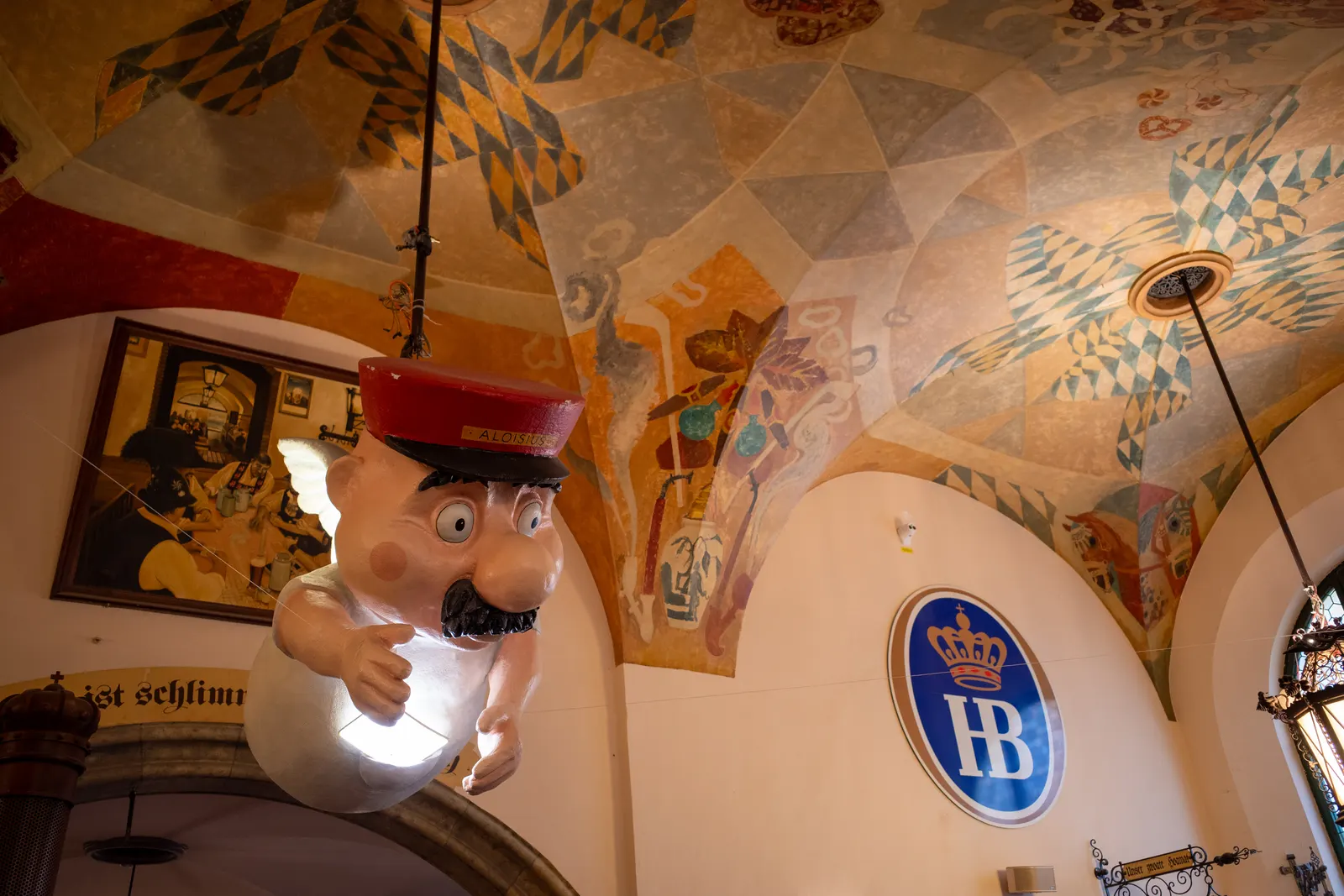
Photo: Nan Palmero / Wikimedia Commons · CC BY 2.0

- ✓The most famous beer hall in the world, on the Platzl just east of Marienplatz — founded in 1589 as the Bavarian dukes' royal court brewery.
- ✓Three main spaces: the vaulted, band-filled ground-floor Schwemme; a quieter inner courtyard beer garden; and the grand first-floor Festsaal ballroom.
- ✓It's a spectacle — busy, loud and very touristy — but a genuine one; go once, with the right expectations, and enjoy the room as much as the beer.
- ✓Self-seat at any open communal bench except a Stammtisch (regulars') or reserved table; it pours Hofbräu by the Maß and serves the full Bavarian menu.
The most famous beer hall in the world
The Hofbräuhaus am Platzl is, simply, the beer hall everyone has heard of — the one whose name has been borrowed by imitations on five continents. It began in 1589 as the Hofbräu, the brewery of the Bavarian dukes' royal court, and only later opened its doors to the public; the present building on the Platzl, a couple of minutes' walk east of Marienplatz, dates largely from the 1890s. Step inside the ground-floor Schwemme and you're in the postcard: a vast, vaulted hall with a riotously painted ceiling, long communal benches, a brass band in lederhosen on a central stand, and waitresses ferrying impossible clusters of litre Maß glasses through the crowd.
It is, without apology, a spectacle — and for once the spectacle is the real thing rather than a recreation of it. Yes, it's packed with visitors; yes, you're paying partly for the room and the band; yes, the service is brisk. But the room itself is genuine, the beer is Hofbräu poured the way it has been for centuries, and an hour here with a Maß and a plate of Schweinsbraten is a part of the Munich story it would be a shame to skip on a first trip. The trick is to come with the right expectations: this is theatre, not a quiet local, and it's all the better for knowing that going in.
There's real history under the noise, too, which makes the visit more than a photo opportunity. The Hofbräu was founded as the court brewery so the Bavarian dukes wouldn't have to import beer from Saxony; for centuries its output was reserved for the royal household and the court. The hall has stood at the centre of the city's life through coronations and crises, was badly damaged in the Second World War and faithfully rebuilt, and remains state-owned to this day. When you sit beneath its vaulted ceiling, you're sitting in a room that has been at the heart of Munich's drinking life, in one form or another, for more than four centuries — a thread the souvenir steins outside don't quite convey.
The three rooms: Schwemme, courtyard and Festsaal
The Hofbräuhaus is bigger than it looks from the Platzl, and knowing its layout helps you pick your evening. The ground floor is the Schwemme, the great vaulted public hall — the loudest, liveliest, most photographed space, with the band and the densest crowds. This is where most visitors land, and where the energy is highest.
Through the building is a covered inner courtyard beer garden, a calmer, leafier spot that's pleasant in warm weather and a little removed from the band's blast. And up the grand staircase is the first-floor Festsaal, a vast historic ballroom used for events and large groups, with its own balcony over the Platzl. If the Schwemme is overwhelming, the courtyard is the easiest escape valve. Wherever you sit, the menu and the beer are the same.
- Schwemme (ground floor) — the famous vaulted hall with the brass band and the biggest crowds; the full spectacle.
- Inner courtyard garden — a covered beer garden, calmer and pleasant in warm weather; a good alternative when the Schwemme is heaving.
- Festsaal (first floor) — a grand historic ballroom for events and big groups, with a balcony over the Platzl.
How seating, ordering and tipping work
The Hofbräuhaus runs on Munich's standard beer-hall code, which is simpler than the crowd makes it look. You seat yourself: find any open spot on the communal benches and sit, except at tables marked Stammtisch (reserved for regulars) or carrying a reservation card — those are off-limits even when empty. You'll share with strangers, and that's normal and friendly. A waitress will come to you; there's no need to queue at a bar.
The default order is a Maß — a full litre — of Hofbräu Helles or a Weißbier, though you can ask for a Halbe (a half). The kitchen does the Bavarian classics: Weißwurst with sweet mustard (traditionally before noon), Schweinsbraten with dumplings, Schweinshaxe, sausages, Obatzda and pretzels. Tip modestly by rounding up or adding roughly five to ten per cent, told to the waitress as you pay. Cards are accepted, but carrying some cash is wise. When you toast, meet your bench-mates' eyes and say 'Prost'.

When to go, and how to fold it into a day
The Hofbräuhaus is busiest in the evenings and right through the dinner hours, when finding a seat in the Schwemme can be a scrum. For a calmer visit and a better chance of a good table, come earlier — a late-afternoon or early-evening arrival beats the peak — or step into the courtyard garden when the main hall is full. It's at its most chaotic during Oktoberfest and on big football nights, which is either the point or the thing to avoid, depending on your taste.
Geographically it could not be easier to slot in: it's a two-minute walk from Marienplatz, so you can catch the Glockenspiel, climb Alter Peter for the rooftops, wander the Viktualienmarkt, and end at the Hofbräuhaus for a beer and a roast — a tidy old-town evening. Exact opening hours can change, so verify before a special visit, but it keeps long daily hours and rarely closes.
A word on getting the most out of it: the Hofbräuhaus rewards treating it as one stop rather than the whole evening. Have your Maß, soak up the room and the band, eat a plate of something Bavarian, and then move on — to a quieter beer garden in summer, a wine bar in the Glockenbachviertel, or just a walk back across the floodlit old town. Used that way, as the loud, joyful opening act of a Munich night out, it earns its place even for travellers who normally avoid anything this famous. The mistake is to expect it to be a hidden local; the pleasure is in letting it be exactly what it is.

Frequently asked questions
Is the Hofbräuhaus worth visiting? — Yes, once, if you take it for what it is: a famous, atmospheric, very touristy spectacle rather than a quiet local. The room and the band are genuine and the beer is good. If you want the locals' version, pair it with an Augustiner house or a beer garden.
Do I need a reservation? — Not for individual drinking in the Schwemme, where you self-seat at open benches. Larger groups and the Festsaal can be reserved, and a reservation card on a table means it's taken. Come earlier in the evening to find space more easily.
How do I get a seat? — Walk in, find any free spot on a communal bench that isn't a Stammtisch or marked reserved, and sit. Sharing with strangers is normal. If the Schwemme is full, try the courtyard garden.
What should I order? — A Maß of Hofbräu Helles or a Weißbier, plus a Bavarian classic: Schweinsbraten, Schweinshaxe, sausages or, before noon, Weißwurst with sweet mustard and a pretzel.
Is it expensive? — Prices are higher than a neighbourhood tavern because of the location and the experience; you're paying partly for the room. It's still a beer hall, not fine dining — verify current prices on the menu.
Is it family-friendly? — Yes. Children are welcome, the menu has plain options that work for young eaters, and the spectacle of the band and the crowds usually goes down well. Aim for earlier in the evening, before the room gets loud and packed.
Can I just have a drink without eating? — Absolutely. You can take a bench for a beer alone, though buying at least a snack is polite when the hall is busy and you're holding a table during the dinner rush.
When is it least crowded? — Earlier in the day and the early evening, and outside Oktoberfest and big match nights. The inner courtyard garden is often calmer than the main Schwemme when the hall is full.
At a glance
Location — am Platzl 9, in the Altstadt, about a two-minute walk east of Marienplatz (U-/S-Bahn Marienplatz).
What it is — Munich's most famous beer hall, the former royal court brewery (1589), pouring Hofbräu; ground-floor Schwemme, courtyard garden and first-floor Festsaal.
Atmosphere — loud, lively, very touristy, often with a brass band; a genuine spectacle best taken once with the right expectations.
Seating — self-seat at open communal benches (not a Stammtisch or reserved table); you'll share with strangers; come earlier to beat the crush.
Good to know — order a Maß or Halbe; tip about 5–10% told to the server; carry some cash; hours and band times can change — verify.
Sources
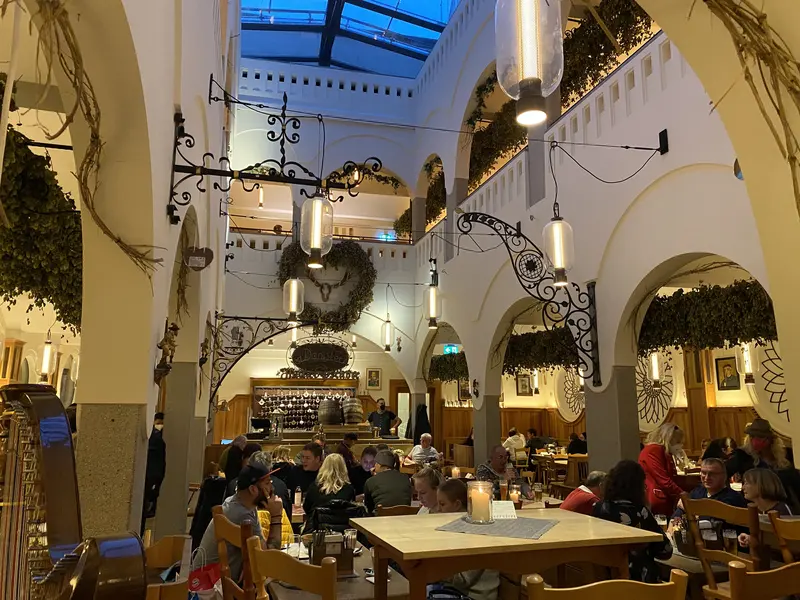
Best Beer Halls in Munich
How to choose among Munich's great beer halls — the Hofbräuhaus, the Augustiner and Löwenbräu houses, Paulaner and more — compared by atmosphere, food, noise and first-time ease.
Read guide
Bavarian Food to Try in Munich
What to order in Munich — Weißwurst, roast pork and pork knuckle, pretzels and dumplings, Obatzda and radi, the cakes and the beers — and the little rules that make each one make sense.
Read guide
Munich Old Town Walk
A self-guided walking route through Munich's Altstadt — linking Marienplatz, the great churches, the Viktualienmarkt, the royal streets, the city gates and the beer halls in one easy loop.
Read guideMore in Food & Drink
6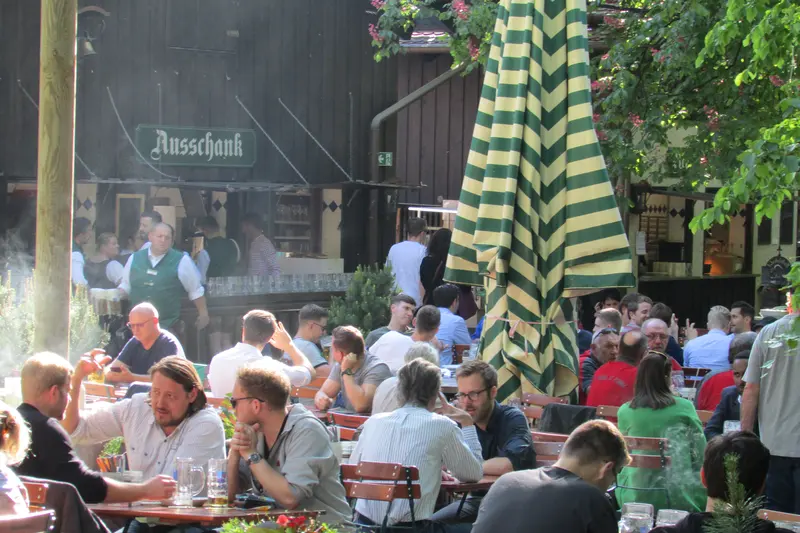
Augustiner-Keller, Munich
The beer garden, the cellar restaurant, reservations and what to order at the Augustiner-Keller near the Hauptbahnhof — the locals' choice for the city's most-loved beer.
Read guide
Best Beer Gardens in Munich
A seasonal guide to Munich's classic beer gardens — the chestnut-shaded benches, the bring-your-own rule, what to order, and which gardens suit families, dates or a quiet pint.
Read guide
Best Cocktail Bars in Munich
Where to drink well in a beer city — Munich's craft cocktail bars, hotel bars and late-night spots, picked by neighbourhood and vibe for date nights, a refined nightcap or somewhere open into the small hours.
Read guide
Best Coffee and Cafés in Munich
Where to find good coffee in Munich — specialty third-wave roasters, classic Kaffeehaus institutions and konditoreien — sorted by neighbourhood and by whether you want to work, linger romantically or grab a quick cup.
Read guide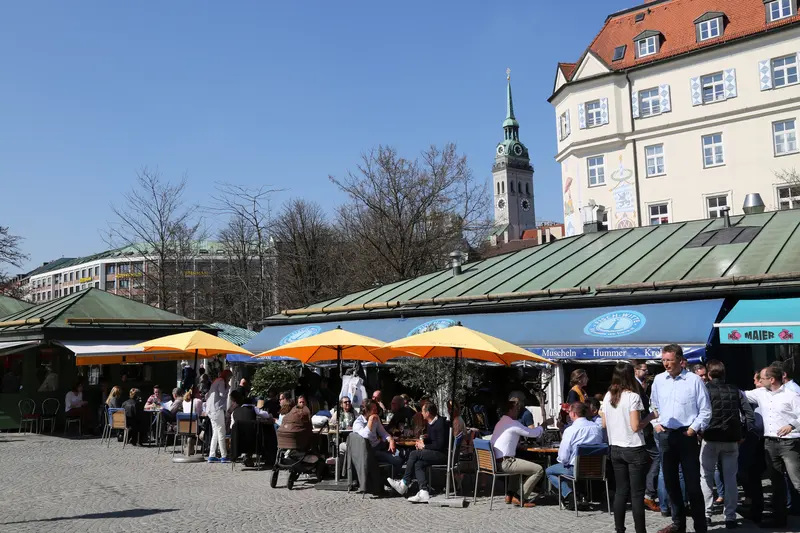
Best Food Markets in Munich
Beyond the famous Viktualienmarkt — the neighbourhood and seasonal markets where Munich actually shops, for snacks, gifts, picnic supplies and a feel for the city's daily rhythm.
Read guide
Best Restaurants in Munich
A traveller-ready shortlist of where to eat in Munich — sorted by neighbourhood, mood, budget and how far ahead you need to book — from beer-hall roasts to candlelit Glockenbach tables.
Read guide