
Munich Residenz
A room-by-room planning guide to the Residence Museum, the Treasury, the Cuvilliés Theatre and the Hofgarten — what to see, what to skip, and how to keep museum fatigue at bay.
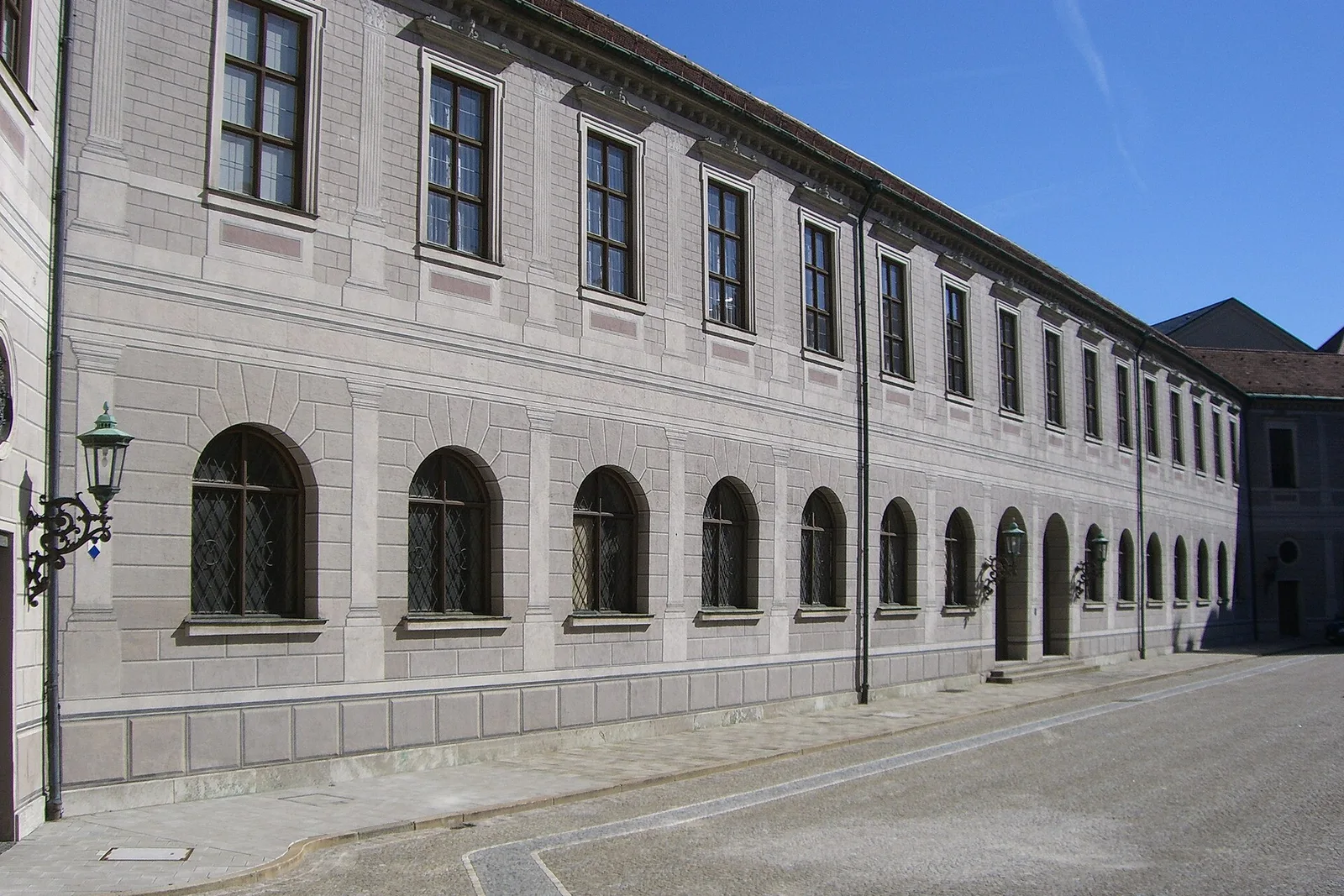
Photo: Maximilian Dörrbecker / Wikimedia Commons · CC BY-SA 3.0

- ✓The Residenz was the seat of Bavaria's Wittelsbach dukes, electors and kings for more than four centuries — it grew from a moated castle in 1385 into one of Europe's largest city palaces.
- ✓It is really four visits under one roof: the Residence Museum (130-odd rooms), the Schatzkammer (Treasury), the rococo Cuvilliés Theatre and the free Hofgarten — each ticketed or accessed separately.
- ✓The single must-see room is the Antiquarium, a 66-metre Renaissance hall of antique busts and grotesque ceiling frescoes — the largest secular Renaissance interior north of the Alps.
- ✓Almost everything you see is a meticulous post-war reconstruction: the Residenz was gutted by Allied bombing in 1944 and rebuilt over decades.
Why the Residenz earns a half-day in the centre
Most visitors meet the Residenz by accident — they cross Max-Joseph-Platz on the way to the opera house, notice the long honey-and-grey façade running up Residenzstraße, and have no idea that behind it sits the grandest interior in the city. This was home to the Wittelsbachs, the dynasty that ruled Bavaria from 1180 until 1918, and the palace they built outward in fits and starts tells that whole story in stone: a Renaissance core, a Baroque chapel, rococo state rooms, and a sober neoclassical wing facing the square.
It is genuinely vast, and the smartest thing you can do before you go in is to accept that you will not see all of it well. The Residence Museum alone runs to roughly 130 rooms across two suggested routes; add the Treasury and the theatre and you are looking at a comfortable half-day. Treat it like an art gallery rather than a checklist — pick the rooms that matter to you, walk through the rest, and save your attention for the showpieces.
The growth of the palace is the growth of Bavaria itself. It began in 1385 as the Neuveste, a moated fortress on what was then the edge of town, built by dukes who no longer felt safe in the old ducal seat near the Alter Hof. Over the next five centuries the family kept building outward and upward — a Renaissance wing under Duke Albrecht V, a vast Baroque expansion, the rococo flourishes of the 18th century, and finally the severe neoclassical Königsbau and Festsaalbau wings raised by King Ludwig I in the 1820s and 30s, the ones that now face Max-Joseph-Platz. Read the façades as you approach and you're reading a timeline.
One thing worth holding in mind as you go: the splendour is hard-won. On the night of city air raids in 1944 the Residenz was largely destroyed, and what you walk through today is one of Germany's great feats of reconstruction — frescoes repainted from photographs, panelling rebuilt from salvaged fragments, whole ceilings re-cast. It makes the gilt feel less like vanity and more like an act of memory. Outside the main portal, two bronze lions stand guard with shields; rubbing their snouts for luck is a long-standing local habit, and the polished noses are proof of how many hands have done it.


The Residence Museum, room by room
The Residence Museum (Residenzmuseum) is the main event — the historic state and private apartments of the dynasty, shown along a one-way route. Audio guides are included with admission and genuinely help, because the rooms are not labelled at length and the sequence jumps centuries. There are two routes, a shorter morning one and a longer afternoon one, depending on conservation closures, so confirm which is running when you arrive.
Don't try to read every room. Walk briskly through the corridors of portraits and slow right down for the set-pieces below.
A word on the Antiquarium, because it deserves it: completed in the 1570s to hold the dukes' collection of antique sculpture, it is a low, immensely long barrel-vaulted hall whose entire ceiling is painted with grotesques and, in the lunettes, with tiny topographical views of Bavarian towns as they looked in the Renaissance. The busts that line it are a mix of genuine antiquity and later copies. It was conceived as a library and a banqueting hall in one, and even today, when the rooms empty out, it has the hush of a place built to impress ambassadors.
- The Antiquarium — the barrel-vaulted Renaissance banqueting hall, lined with antique and Roman busts and crowned by allegorical and city-view frescoes. It is the oldest room in the palace and the single image people remember.
- The Ancestral Gallery (Ahnengalerie) — a gilded corridor hung with around 120 Wittelsbach portraits, designed to argue the family's ancient pedigree.
- The Reiche Zimmer (Rich Rooms) — François Cuvilliés' rococo state apartments, dripping with silver and mirror; the high-water mark of the style in Germany.
- The Hofkapelle and the Rich Chapel (Reiche Kapelle) — the private chapels, the latter a tiny jewel-box of inlaid stone and relics.
- The Court Church of All Saints (Allerheiligen-Hofkirche) — left as bare, scarred brick after the war, now an atmospheric event and concert space.
Add the Treasury and the theatre — or don't
The Schatzkammer (Treasury) and the Cuvilliés Theatre are separate experiences inside the same complex, each on its own ticket or a combination ticket. The Treasury is a darkened series of rooms holding a thousand years of the dynasty's most precious objects — crowns, reliquaries, the famous statuette of St George, and goldsmith's work of almost absurd intricacy. It is compact and dazzling, and it is the easiest add-on if you have an hour and the appetite for it.
The Cuvilliés Theatre is the opposite kind of pleasure: one perfect, tiered rococo auditorium in red and gold, where Mozart premiered an opera in 1781. It takes ten minutes to see and is sometimes closed for rehearsals and performances, so check before you build a visit around it.
Our honest advice on combining: the Residence Museum plus one add-on is a satisfying visit; all three in one go is a lot of indoor grandeur for one day. If you're prone to museum fatigue, do the museum in the morning, break for air in the Hofgarten, and come back for the Treasury or theatre only if you still have the energy.

Courtyards, chapels and the parts people miss
Because the Residenz grew outward over centuries, it's not one building but a warren of wings arranged around ten interior courtyards — and several of these are free to wander into from the street, even without a museum ticket. The Brunnenhof, with its richly figured Wittelsbach Fountain (the Wittelsbacherbrunnen, not to be confused with the bigger fountain of the same name on Lenbachplatz), is the grandest and doubles as a summer concert stage. The Grottenhof next to it is a delight: a Renaissance courtyard whose far wall is an artificial grotto encrusted with shells, tufa and a bronze Perseus, dripping and theatrical.
Inside the paid route, two chapels are easy to walk past and worth slowing for. The Court Chapel (Hofkapelle) is the larger, more public space; the Rich Chapel (Reiche Kapelle) is a tiny private oratory for the ruler, lined in scagliola, bronze and inlaid hardstone, with reliquaries crowding every surface — one of the most concentrated pieces of Baroque luxury in the palace. And don't rush past the Court Church of All Saints (Allerheiligen-Hofkirche): left as scarred, bare brick after the war rather than restored, its raw walls are deliberately moving, and it now serves as a concert and event hall whose atmosphere comes precisely from what wasn't rebuilt.
These quieter corners are where the Residenz stops feeling like a checklist of famous rooms and starts feeling like a place people actually lived and worshipped. If you have the time, they're the difference between seeing the palace and understanding it.

Tickets, timing and the practical bits
The Residenz is run by the Bavarian Palace Administration (Bayerische Schlösserverwaltung). There are separate admissions for the Residence Museum, the Treasury and the Cuvilliés Theatre, plus a combination ticket that covers all three — usually the best value if you intend to see more than one. Prices and opening hours change seasonally and the palace observes the same handful of annual closures as the city's other state museums, so verify the current tariff and hours on the official site before you go rather than trusting any figure here.
Practical notes that don't go out of date: entry is from the Residenzstraße side at the Brunnenhof; large bags go in the cloakroom; the audio guide is included and worth using; and the interiors are warm, so you'll want to shed a coat. The complex is largely step-accessible with lifts, though a few historic rooms have thresholds — the administration publishes accessibility detail, so check ahead if it matters.
Crowd-wise, the Residenz is never as jammed as Marienplatz, but tour groups cluster late morning. Arrive at opening or in the last ninety minutes for the calmest rooms, and avoid the wet-weather rush that funnels everyone indoors on a rainy afternoon. Note that the museum routes can run in two directions depending on conservation work, so the exact order you meet the rooms may differ from any guidebook diagram — follow the floor numbers and the audio-guide stops rather than a memorised sequence.
If you want to slow down rather than rush between sights, the Residenz is one of the best places in central Munich to do it. There's a café in the complex, the Brunnenhof and Grottenhof courtyards give you open air without leaving, and in summer the Brunnenhof occasionally hosts open-air concerts beneath the Wittelsbach fountain. It rewards the unhurried visitor in a way few headline sights do — which is exactly why we'd rather you saw two-thirds of it properly than all of it at a trot.
Building it into a day in the centre
The Residenz sits at the seam between Munich's two halves — the tight medieval Altstadt to the south and the broad 19th-century boulevards to the north — which makes it easy to chain into a walk. The classic route comes up from Marienplatz along Residenzstraße, takes the palace at whatever depth your energy allows, then steps out the north side onto Odeonsplatz and into the Hofgarten for air. From there the English Garden is minutes away, so a single morning can run from gilded state rooms to a beer-garden bench under chestnut trees without a tram ride.
If you're choosing between the Residenz and Nymphenburg and only have time for one, here's the honest split: the Residenz is the urban, layered, history-dense choice, best for a wet morning or a day built around the old town; Nymphenburg is the airy, garden-and-canal palace, better on a fine afternoon with time for the park. Doing both well takes two days. Pair the Residenz instead with the markets, churches and squares on its doorstep and you have a complete, walkable Altstadt day.

At a glance
A quick orientation before you go — confirm anything time-sensitive on the official site.
- What it is: the former city palace of the Bavarian Wittelsbachs — museum, treasury, theatre and garden in one complex.
- Where: Residenzstraße 1, on the north edge of the Altstadt between Max-Joseph-Platz and Odeonsplatz.
- Getting there: a 5-minute walk from Marienplatz; nearest U-Bahn is Odeonsplatz; trams stop on Maximilianstraße.
- Time needed: 1.5–2 hours for the Residence Museum; allow a half-day to add the Treasury and theatre.
- Don't miss: the Antiquarium, the Ancestral Gallery and the Rich Rooms.
- Tickets/hours: combination ticket covers museum + treasury + theatre; prices and hours seasonal — verify on the official site.
Common questions
How long should I budget? Plan ninety minutes to two hours for the Residence Museum alone; a full half-day if you're also doing the Treasury and the Cuvilliés Theatre.
Is one ticket enough for everything? No — the museum, Treasury and theatre are separate admissions, but a combination ticket bundles all three and usually works out cheaper if you'll see more than one. Buy it at the entrance or check the official site for advance options.
Can I see the Residenz and Nymphenburg in one day? You can, but it's a stretch. The Residenz is in the centre and Nymphenburg is a tram ride west; pairing them makes for a palace-heavy, footsore day. Most people split them across two days.
Is it worth it if I've already seen Versailles or Schönbrunn? Yes, for a different reason — the Residenz is less a single grand showpiece and more a layered, rebuilt record of one dynasty across four centuries, and the Antiquarium has no real equivalent elsewhere.
Is it good for a rainy day? Ideal — it's almost entirely indoors and rarely overwhelmed by crowds, which makes it a smart wet-weather plan.
Do I need to book in advance? For the Residence Museum and Treasury you can usually buy on arrival without trouble, though checking the official site for advance tickets does no harm in peak season. The Cuvilliés Theatre is the one to confirm ahead, because it closes for rehearsals and performances and its daytime hours are narrower.
Is it suitable for children? Older children who like history and 'find the dragon' games in the Treasury do well; younger ones tire in the long portrait corridors. The audio guide sometimes offers a family track — and the courtyards give a useful run-around break mid-visit.
How does it compare with the Nymphenburg palace? The Residenz is the central, indoor, layered city palace; Nymphenburg is the suburban summer palace with vast gardens, canals and pavilions. If you want gilded interiors and history, choose the Residenz; if you want a half-day of palace-and-parkland, choose Nymphenburg.
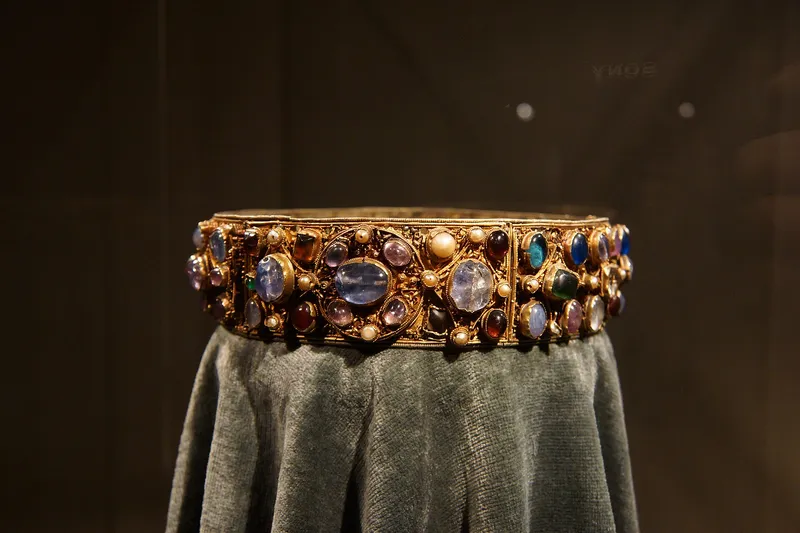
Munich Residenz Treasury
How to add the Schatzkammer to your Residenz visit without museum fatigue — what's inside, how long it takes, and the combination-ticket logic that makes it worth it.
Read guide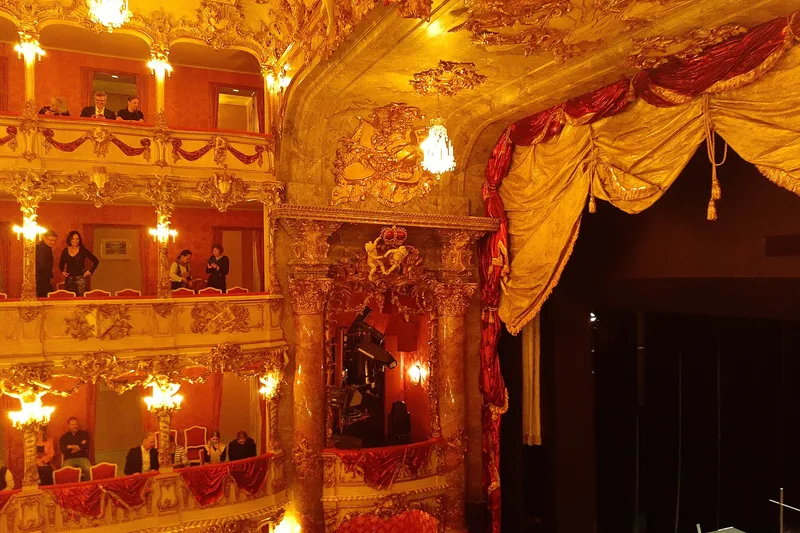
Cuvilliés Theatre
Visit the most beautiful rococo theatre in Germany — tucked inside the Residenz complex, where Mozart premiered Idomeneo in 1781. What to know about tickets, timing and the surprising survival story.
Read guide
Odeonsplatz, Theatinerkirche & Hofgarten
A refined short walk through Odeonsplatz — the Feldherrnhalle, the buttercup-yellow Theatinerkirche, the Hofgarten arcades and the Residenz edge — and the difficult 20th-century history the square also carries.
Read guideMore in Things to Do
6
Allianz Arena, Munich
How to visit Munich's glowing football stadium — the self-guided Erlebnistour, the FC Bayern Museum, match-day logistics, and the easy U6 ride out to Fröttmaning.
Read guide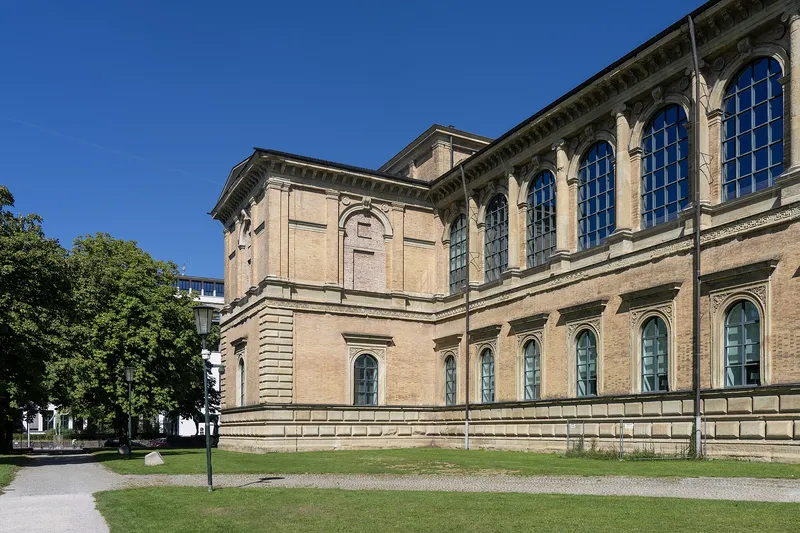
Alte Pinakothek, Munich
How to visit Munich's Old Masters gallery in the Kunstareal — the Dürers and Rubenses worth crossing town for, the Sunday-ticket angle, and how to build a wider museum-quarter day around it.
Read guide
Asamkirche, Munich
How to visit Munich's astonishing late-Baroque Asamkirche on Sendlinger Straße — the church two brothers built next to their own house — without overplanning it.
Read guide
Best Munich Tours
When a guided tour earns its place in a Munich trip — and which kind to pick. Old Town walks, food and beer crawls, football and BMW, the Third Reich history walk, and the big castle and Dachau day trips, weighed by time, cost and effort.
Read guide
Best Museums in Munich
Choose the right Munich museum for you — by interest, by how much time you have, by which day of the week, and by how useful it is on a rainy day.
Read guide
Best Photography Spots in Munich
Rooftops, squares, churches, parks and palaces — the most photogenic places in Munich, with the light and timing notes to shoot each one well.
Read guide