
Cuvilliés Theatre
Visit the most beautiful rococo theatre in Germany — tucked inside the Residenz complex, where Mozart premiered Idomeneo in 1781. What to know about tickets, timing and the surprising survival story.
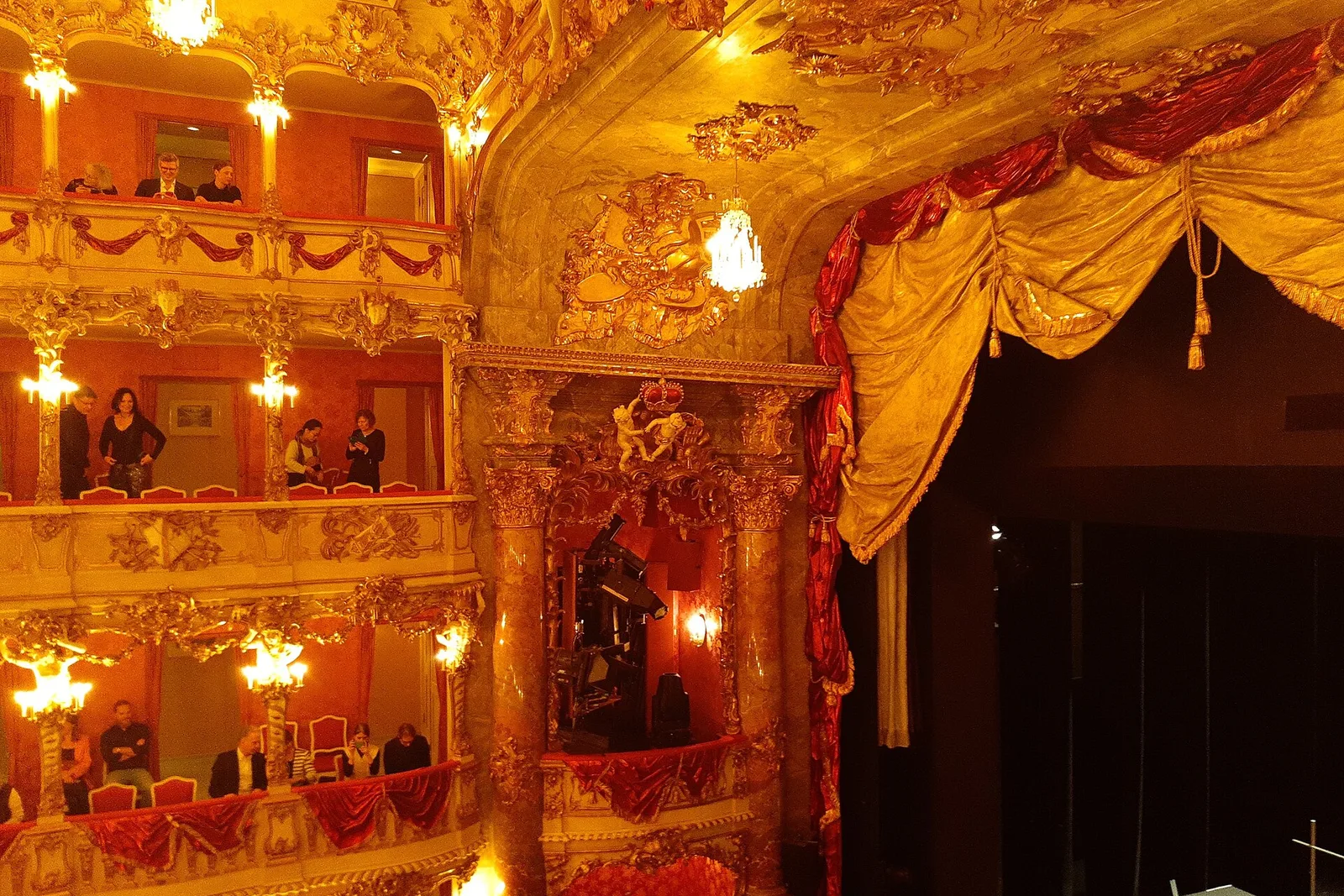
Photo: Gerda Arendt / Wikimedia Commons · CC0

- ✓Designed by court architect François de Cuvilliés the Elder and opened in 1755, it's regarded as the finest rococo theatre in Germany.
- ✓Mozart premiered his opera Idomeneo here in 1781 — the room you stand in is the room that first heard it.
- ✓Its survival is a small miracle: the carved boxes were dismantled and stored away before the wartime bombing destroyed the original hall, then reinstalled in a rebuilt space.
- ✓It's a ten-minute visit as a sightseeing stop — and a genuinely magical place to see a concert or opera when one is on.
The most beautiful little theatre in Germany
Step into the Cuvilliés Theatre and the temperature of your visit changes. After the long state corridors of the Residence Museum, here is one perfect, jewel-bright room: four tiers of boxes in red and gold, every surface carved with cherubs, garlands, instruments and the rococo's restless curling foliage, all rising toward a painted ceiling. It seats only a few hundred, which is the point — this is intimacy made ornate, a court theatre built for a prince and his guests rather than a paying public.
It takes its name from François de Cuvilliés the Elder, the Walloon-born court architect whose career is one of the more improbable in European art. He arrived at the Bavarian court as a young man in a minor role and, his talent for drawing spotted, was sent to Paris to train; he returned to become the defining designer of Bavarian rococo, responsible also for the Amalienburg pavilion at Nymphenburg and the Rich Rooms inside the Residenz. He built this theatre between 1751 and 1755 as the Wittelsbachs' new opera house, and it opened to the dynasty's delight. The carving is by a team of the era's best, and the effect, even empty in daylight, is of a room caught mid-celebration.
Look closely and the decoration has a logic: the boxes climb in a strict social hierarchy, with the electoral box facing the stage as the focal point of the whole room, framed so that the prince was always part of the spectacle as much as the opera was. The carved motifs — masks, musical instruments, putti, cascading vines — are the standard vocabulary of the rococo, but executed here with a lightness and consistency that's rare. It's theatre as total artwork, where the audience and the architecture are part of the show.

Mozart, Idomeneo and the room's real claim to fame
On 29 January 1781, this theatre saw the premiere of Mozart's Idomeneo, commissioned for the Munich carnival season — a turning point in his career and one of the first of his mature operas. He was twenty-four. Standing in the auditorium with that fact in mind is the whole reason to make the stop: the gilt is beautiful, but the resonance of being in the actual room is what people remember.
It's worth being clear about what survived. The theatre you see is not in its original location. Before the bombing of 1944, the precious carved box fronts, doors and balustrades were taken down and stored safely; the original hall was then destroyed. After the war the salvaged rococo carvings were reinstalled in a new room within the Residenz, a few steps from where the first theatre stood. So the carving is genuinely 18th-century and genuinely Cuvilliés — it's the shell around it that's a reconstruction. It's the same story as the Residenz around it: ruin, salvage and patient rebuilding, which is why Munich's grandest interiors feel both ancient and, in a quiet way, recent.
That foresight — dismantling and hiding the carvings before the bombs fell — is the reason this room exists at all, and it's worth a moment's thought as you stand in it. A great deal of what you can see of old Munich is here because people in the early 1940s made deliberate, unglamorous decisions to take things apart and bury them. The theatre is one of the happiest results.
Knowing the survival story also changes how the room reads. What you're looking at is not a museum's careful copy but the actual 18th-century carving — the same gilded wood that framed the audience at Idomeneo's premiere — set into a 20th-century shell and given a new life as a working stage. There's something fitting in that: a theatre, of all buildings, is a place that exists to be used again and again, and this one has simply kept going, interrupted but not ended by the war. It feels less like a relic and more like a survivor.
Seeing it as a sightseeing stop — vs. seeing a performance
There are two ways to experience the theatre, and they're very different. As a daytime sightseeing visit, it's a short, self-contained stop: you walk into the auditorium, take it in from floor level, and you're done in ten or fifteen minutes. That brevity is exactly why it pairs so well with the Residence Museum or the Treasury — it adds a jolt of beauty without adding much time.
The other way is to come back at night. The theatre still functions as a working venue, hosting concerts, chamber opera and occasional staged productions, and watching anything from one of those carved boxes is one of the most atmospheric nights out in Munich. The trade-off is access: when a performance or rehearsal is on, the daytime visit is closed, so the room you came to see may be off-limits on the very day you turn up.
If a performance fits your dates, it's worth choosing over the daytime peek. If not, the sightseeing visit is a small, reliable pleasure — just check it's open before you build a route around it.

How long to give it, and what to look for
As a sightseeing visit the theatre is genuinely brief — ten to fifteen minutes is enough to take it in properly — but those minutes reward a little looking rather than a quick photo and out. Stand at the front, where the stage would be, and look back at the boxes: the whole room is designed to be seen from here, the tiers rising symmetrically with the electoral box dead centre as the visual climax. Then look up at the ceiling, and along the box fronts at the carved cascade of garlands, masks and instruments that gives the rococo its restless, festive energy.
Because it's so short, the theatre is best thought of as one beat within a Residenz visit rather than a destination in itself. Tag it onto the Residence Museum or the Treasury and it adds a jolt of beauty for very little time. The one thing to get right is checking it's open on the day — its dual life as a working venue means it's the least predictable of the Residenz's components, and there's nothing more deflating than walking all the way in to find the doors shut for a rehearsal.

Tickets, timing and the practical bits
The Cuvilliés Theatre is run by the Bavarian Palace Administration and carries a separate daytime admission from the Residence Museum and the Treasury — but it's included in the Residenz combination ticket, which is the sensible buy if you're seeing more than one. Because it doubles as a performance venue, its daytime visiting hours are more limited and more changeable than the museum's, and it closes entirely for rehearsals and shows. Always confirm the day's opening on the official site before you go; prices and hours are seasonal and shouldn't be trusted from any third-party figure, including this one.
Entry is via the Residenz on Residenzstraße — follow signs within the complex rather than looking for a separate street door. For performances, tickets are sold separately through the venue and its partners, not on the museum ticket. The room is reached by stairs within the historic building, so check the administration's accessibility notes if that matters.
If your heart is set on the theatre specifically, a small piece of advice: don't make it the only reason for the trip into the Residenz on a given day. Build it as the cherry on a visit to the Residence Museum or the Treasury, so that if it happens to be closed for a rehearsal you've still had a full morning and lost nothing. Treated as a bonus rather than the headline, it almost never disappoints — and on the days it's open, that first sight of the gold catching the light is a genuine gasp.
Where it fits in a Residenz visit
The theatre is part of a remarkable cluster of things by the same hand, all within a few hundred metres. Cuvilliés designed not only this auditorium but the Rich Rooms inside the Residence Museum and the exquisite Amalienburg hunting lodge out at Nymphenburg — so if his particular brand of feather-light rococo grabs you here, there's a small trail to follow across the city. Inside the Residenz alone you can see the theatre and the Rich Rooms in one visit and effectively tour a single designer's range, from a private state apartment to a public house of entertainment.
Practically, the theatre is the shortest of the Residenz's components, so it slots in anywhere: tag it onto the start or end of the Residence Museum route, or pair it with the Treasury for a brisk hour of pure ornament. With the Hofgarten and Odeonsplatz on the doorstep, the whole Residenz quarter makes an easy half-day that mixes grandeur, gold and green without ever needing transport.


What it's like to see a performance here
If your dates line up with a concert or a staged production, going in the evening is a different order of experience from the daytime peek — and, for many, the better one. The theatre still hosts chamber concerts, recitals, baroque and classical programmes and occasional opera, often as part of the city's festival seasons, and the room was built for exactly this: small enough that there isn't a bad seat, intimate enough that the music feels addressed to you personally. Watching from one of the gilded boxes, with candlelight-warm lighting on all that carving, is as close as a modern visitor gets to the 18th-century court experience.
A few practical pointers if you go this route. Tickets are sold through the venue and its programme partners rather than on the museum admission, so book ahead — popular nights sell out, and the small capacity means there's little margin. Dress is smart but not formal; this is a concert, not a gala. And arrive in good time, because half the pleasure is sitting in the room and taking it in before the music starts. The Residenz and Odeonsplatz around it make for an elegant pre-concert stroll, and Maximilianstraße's restaurants are a short walk for dinner after.

At a glance
Quick orientation — confirm the day's opening on the official site, as performances close it to daytime visits.
- What it is: an 18th-century rococo court theatre, considered Germany's finest — and a working performance venue.
- Where: inside the Residenz complex, entered from Residenzstraße in the Altstadt.
- Time needed: 10–15 minutes as a sightseeing stop; a full evening for a performance.
- Why it matters: Mozart's Idomeneo premiered here in 1781; the rococo carving is original, reinstalled after the war.
- Tickets: separate daytime admission, covered by the Residenz combination ticket; performance tickets sold separately.
- Heads-up: closed to visitors during rehearsals and shows — check before you go.
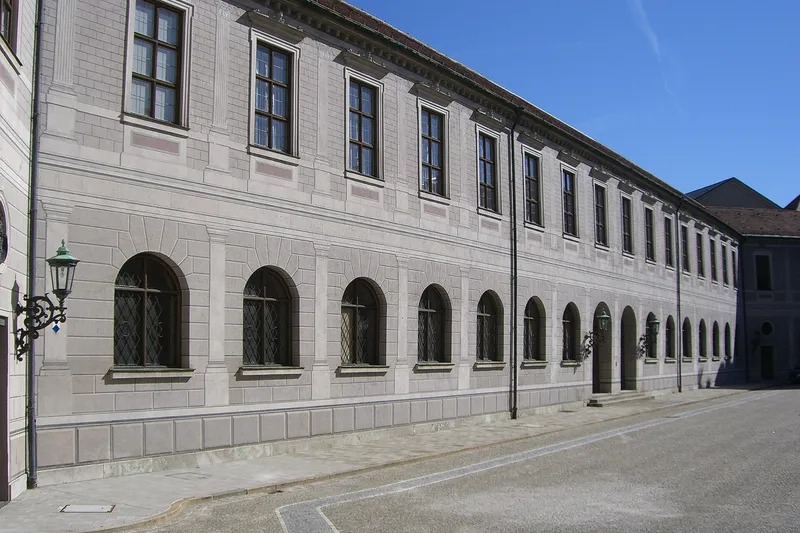
Munich Residenz
A room-by-room planning guide to the Residence Museum, the Treasury, the Cuvilliés Theatre and the Hofgarten — what to see, what to skip, and how to keep museum fatigue at bay.
Read guide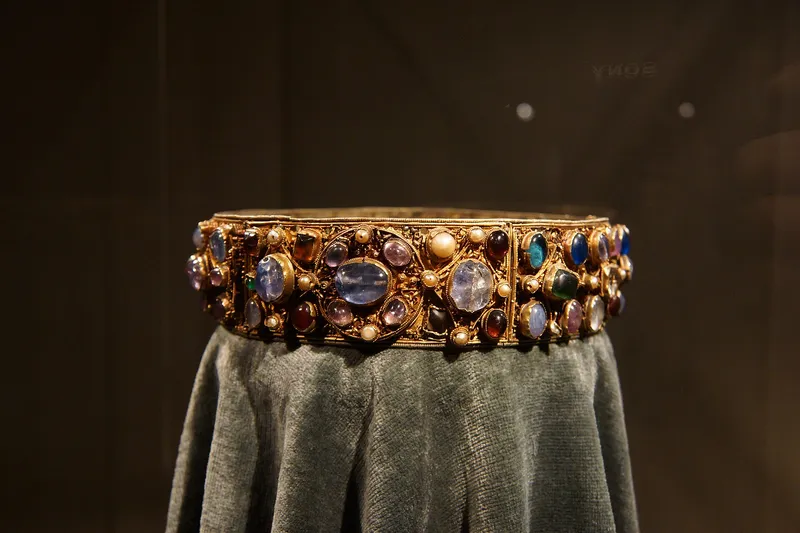
Munich Residenz Treasury
How to add the Schatzkammer to your Residenz visit without museum fatigue — what's inside, how long it takes, and the combination-ticket logic that makes it worth it.
Read guide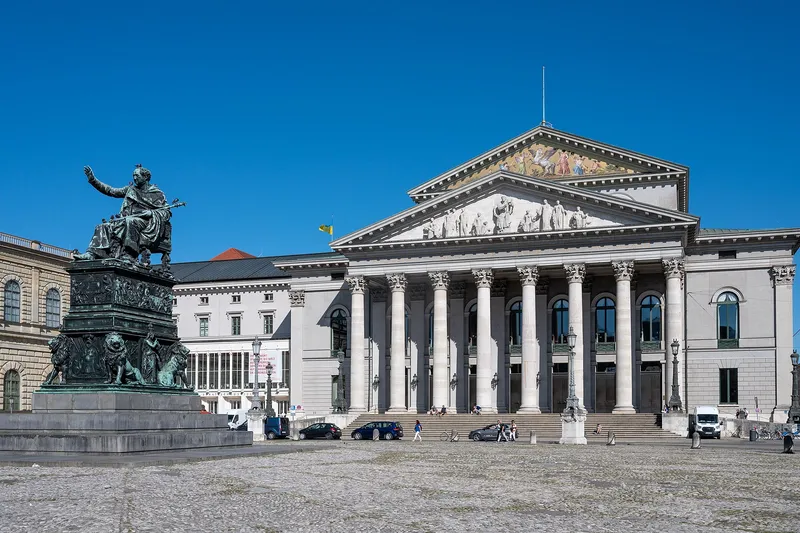
Opera in Munich: A First-Timer's Guide
Where to see opera in Munich, how to book, what to wear, what an evening costs and where to eat nearby — a friendly first-timer's guide to the Bavarian State Opera and the city's other stages.
Read guide