
Maximilianstraße, Munich's Grand Boulevard
Munich's most elegant street — the luxury-shopping boulevard from the opera house to the Maximilianeum, its 'Maximilian style' architecture, cafés and the opera district at its head.

Photo: nika tchokhonelidze / Unsplash

- ✓Maximilianstraße is Munich's grand luxury boulevard, laid out under King Maximilian II in the mid-19th century and lined with international fashion and jewellery houses.
- ✓It's bookended by landmarks: the National Theatre (the opera) and the Residenz at its western end, the river, and the parliament-housing Maximilianeum rising on the hill to the east.
- ✓Even with empty pockets it's worth the stroll — the 'Maximilian style' architecture, the wide planted central reservation, and some of the city's grandest hotels and cafés.
- ✓Shops are closed on Sundays in Germany, so come on a weekday or Saturday if you want to do more than window-shop; specifics like tenants and hours change, so verify.
A royal boulevard with a purpose
Maximilianstraße was not an accident of city growth — it was a deliberate showpiece. In the 1850s King Maximilian II commissioned a grand new avenue running east from the Residenz, across the Isar, to a monumental building crowning the far bank. The result is one of Munich's four great royal avenues, and the one that has become synonymous with elegance and money. It was conceived as a unified architectural statement, and even today it reads as a single composition rather than a street that simply accumulated over time.
The king wanted a distinctive look, and his architects delivered the so-called 'Maximilian style' (Maximilianstil) — an ornate, eclectic blend of Gothic and other historic motifs that you'll see in the arcaded facades along the boulevard. The street's generous width, its planted central strip and its careful sightline to the Maximilianeum on the hill all date from this single, ambitious 19th-century plan. Walking it, you're essentially reading a piece of royal urban design that has aged into Munich's most exclusive address.
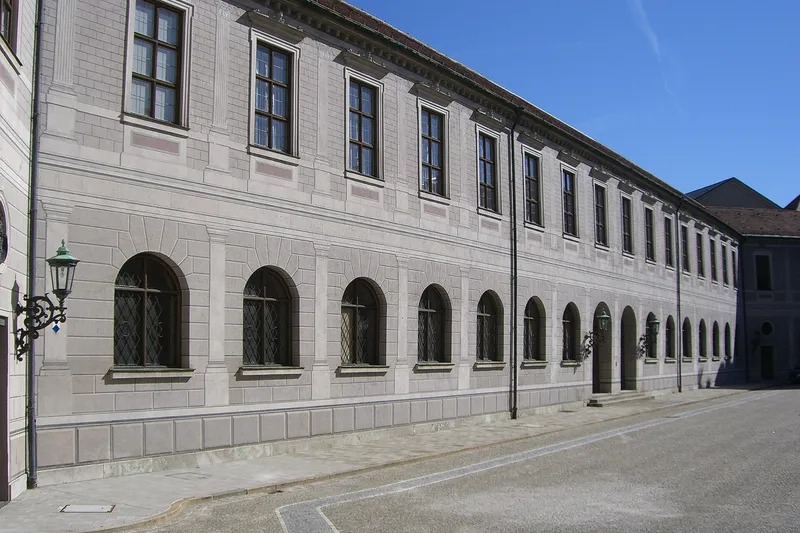

What stands along it, end to end
Start at the western end on Max-Joseph-Platz, where the columned portico of the National Theatre — home of the Bavarian State Opera — faces the Residenz across the square. This is the cultural anchor of the whole district. From here the boulevard runs east as the luxury-shopping stretch: the flagship boutiques of international fashion and jewellery houses, interspersed with grand hotels and the kind of café where a coffee comes with a view of very expensive windows.
Further east the character shifts from shopping to civic grandeur. The street passes the Munich Kammerspiele theatre and a row of stately public buildings, crosses the Isar, and rises to the Maximilianeum — the imposing building that today houses the Bavarian state parliament (Landtag) and is one of the city's signature riverbank sights. The full walk from the opera to the river is short and entirely pleasant; the Maximilianeum itself is best appreciated from across the water or from the bridge, as access inside is restricted.
- Max-Joseph-Platz & the National Theatre (opera) — the boulevard's western anchor, beside the Residenz.
- The luxury-shopping stretch — international fashion and jewellery flagships and grand hotels.
- The Munich Kammerspiele and a parade of stately 'Maximilian style' public buildings.
- The Maximilianeum across the Isar — the Bavarian parliament building, best viewed from the bridge or far bank.
The 'Maximilian style' — what you're actually looking at
It's worth knowing a little about the architecture, because Maximilianstraße was designed to look unlike anything else in Munich. King Maximilian II disliked the strict neoclassicism his father, Ludwig I, had favoured for the city's other grand avenues, and he wanted a fresh, modern Bavarian style for his own. The competition and the buildings that followed produced the Maximilianstil: a romantic, eclectic manner that borrows the pointed arches and tracery of English Gothic and layers them with other historic motifs, all dressed up for a 19th-century capital.
The clearest place to read it is the long arcaded range of public buildings on the eastern, civic stretch of the street — government and institutional facades with their delicate stonework and rhythmic arches. Look up as you walk: the upper storeys carry the ornament, while the ground-floor arcades shelter the pavement. The effect is deliberately unified, so the boulevard feels composed rather than collaged, and the eye is carried east towards the Maximilianeum that closes the view. For an architecture-minded visitor, the street is a single, legible chapter of Munich's royal building history.
Window-shopping, cafés and how to enjoy it without a budget
You don't need to spend a euro to enjoy Maximilianstraße — in fact, window-shopping and people-watching are most of the point for most visitors. The pleasure is in the procession of immaculate shopfronts, the doormen, the parked cars and the sense of being on Munich's catwalk. Give yourself half an hour to stroll the shopping stretch slowly, then settle into one of the cafés or hotel terraces to watch the street go by — an affordable way to enjoy a very expensive address.
If you do want to shop, remember the German Sunday rule: clothing and luxury boutiques close on Sundays and public holidays, so plan a weekday or Saturday for actual buying. The boulevard pairs naturally with the smarter shopping just to the north around Theatinerstraße and the Fünf Höfe, so you can easily build a half-day of upmarket browsing that loops back towards Marienplatz. Tenants and exact addresses change over time, so check before making a special trip for any one shop.
The opera district at the boulevard's head
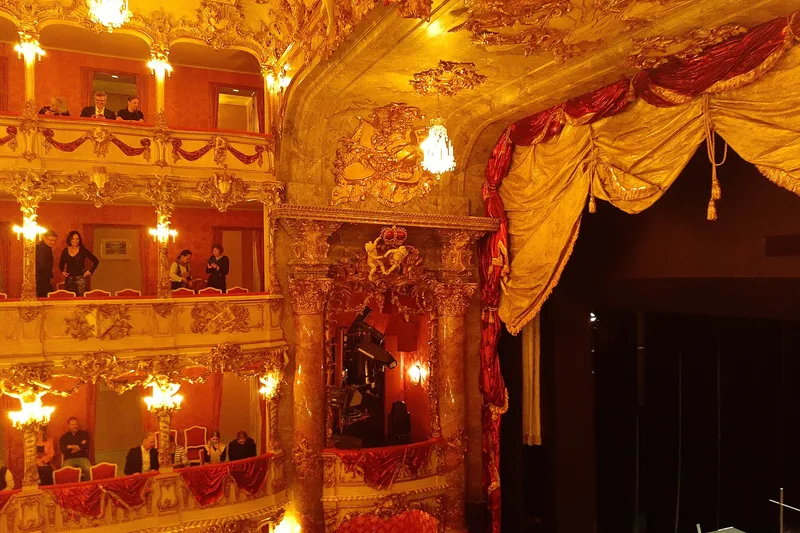
Maximilianstraße and Munich's opera life are inseparable. The National Theatre at the western end is the home of the Bavarian State Opera, and on performance nights the whole top of the boulevard takes on a different energy — formalwear, pre-show drinks in the grand hotels, the hush before the curtain. It's one of the most atmospheric corners of the city after dark, and a reason to walk the street in the evening as well as by day.
The district rewards combining: a daytime stroll and window-shop, a pause in the Hofgarten or at the Residenz, then dinner nearby and an opera or a drink. The proximity of the Residenz means you can pair high culture with royal history in a single, walkable evening, all within a few hundred metres of the boulevard's western end.
If your trip lands in summer, the area is at its liveliest during the Munich Opera Festival, when the National Theatre fills its calendar and the whole top of the boulevard hums on performance nights. In the colder months the grand hotels and their bars take over as the warm heart of the district. Either way, the move is the same: don't treat Maximilianstraße as a single quick photo stop, but as the spine of an evening that gathers shopping, architecture, dinner and a show into one elegant stretch of the city.

At a glance
A quick planning reference. Confirm shop tenants, hours and any hotel or café details on the day, as these change.
- What it is: Munich's grand 19th-century luxury boulevard, opera house to the Maximilianeum.
- Where: runs east from Max-Joseph-Platz / the National Theatre, across the Isar; central Altstadt edge.
- Cost: free to walk and window-shop; shopping and dining run expensive.
- Sundays: luxury shops closed — come on a weekday or Saturday to actually buy.
- Pair with: the Residenz, Odeonsplatz and the Hofgarten, or an evening at the opera.
- Best photo: the boulevard's sweep towards the Maximilianeum, or the opera portico on Max-Joseph-Platz.
Getting there and combining it
Maximilianstraße begins a few minutes' walk east of Marienplatz; the nearest U-/S-Bahn is Marienplatz itself, with Odeonsplatz (U3/U4/U5/U6) close to the opera end and trams running along the boulevard towards the river and the Maximilianeum. On foot, it's an easy continuation of any Old Town walk — from Marienplatz, head up towards the opera and you're at the boulevard's head.
Because it's so central, the boulevard slots into almost any itinerary. Tack it onto a Residenz morning, a shopping afternoon or an opera evening; ride the tram east for the Maximilianeum view and the riverbank; or simply use it as the elegant connector between the Old Town and the Isar. However you reach it, walk at least part of it slowly — the architecture and the atmosphere are the sight here, as much as anything in the windows.
Map pins
Map data © OpenStreetMap contributors · Tiles © OpenFreeMap

Shopping in Munich: The Complete Guide
Where to shop in Munich — the pedestrian high street, the luxury of Maximilianstraße, design boutiques, markets and souvenirs — plus the one rule that catches everyone out: Sundays.
Read guide
Luxury Munich
How to spend a high-end weekend in Munich — the grand-dame hotels and design boutiques, the Michelin tables and beer-hall counterpoint, the opera and Maximilianstraße shopping, and the private touring that turns money into time.
Read guide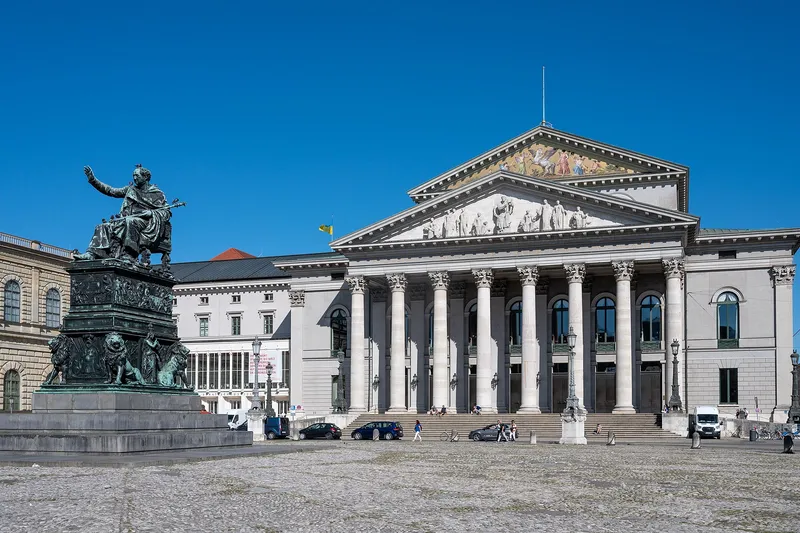
Opera in Munich: A First-Timer's Guide
Where to see opera in Munich, how to book, what to wear, what an evening costs and where to eat nearby — a friendly first-timer's guide to the Bavarian State Opera and the city's other stages.
Read guideMore in Things to Do
6
Allianz Arena, Munich
How to visit Munich's glowing football stadium — the self-guided Erlebnistour, the FC Bayern Museum, match-day logistics, and the easy U6 ride out to Fröttmaning.
Read guide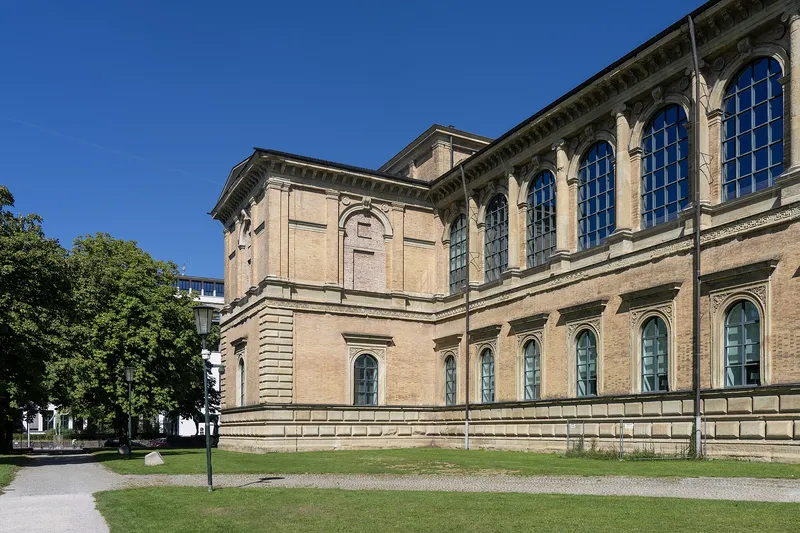
Alte Pinakothek, Munich
How to visit Munich's Old Masters gallery in the Kunstareal — the Dürers and Rubenses worth crossing town for, the Sunday-ticket angle, and how to build a wider museum-quarter day around it.
Read guide
Asamkirche, Munich
How to visit Munich's astonishing late-Baroque Asamkirche on Sendlinger Straße — the church two brothers built next to their own house — without overplanning it.
Read guide
Best Munich Tours
When a guided tour earns its place in a Munich trip — and which kind to pick. Old Town walks, food and beer crawls, football and BMW, the Third Reich history walk, and the big castle and Dachau day trips, weighed by time, cost and effort.
Read guide
Best Museums in Munich
Choose the right Munich museum for you — by interest, by how much time you have, by which day of the week, and by how useful it is on a rainy day.
Read guide
Best Photography Spots in Munich
Rooftops, squares, churches, parks and palaces — the most photogenic places in Munich, with the light and timing notes to shoot each one well.
Read guide