
Luxury Munich
How to spend a high-end weekend in Munich — the grand-dame hotels and design boutiques, the Michelin tables and beer-hall counterpoint, the opera and Maximilianstraße shopping, and the private touring that turns money into time.


- ✓Munich is old-money, not flashy: the luxury here is restraint — impeccable service, serious food, deep history and a walkable centre — rather than rooftop theatrics.
- ✓The grand quarter is small and walkable. Maximilianstraße, the Residenz, the National Theatre and the best hotels sit within a few minutes of each other inside the Altstadt ring.
- ✓Munich runs several Michelin-starred kitchens alongside the city's beer halls — the best high-end weekends use both, the white-tablecloth dinner and the chestnut-shaded Maß.
- ✓Prices swing hard with the calendar: Oktoberfest and the big trade fairs are the year's peaks, so timing is as much a part of the budget as the hotel.
- ✓Specific names, rates and Michelin stars change constantly — treat everything below as a starting point and verify the current detail when you book.
What luxury actually means in Munich
Munich is one of Europe's wealthiest cities, and it wears that wealth with a particular Bavarian restraint. This is a place of old money, serious industry and quiet good taste, and its idea of luxury follows suit: understated grandeur, faultless service, a lot of dark wood and good linen, food that takes regional produce seriously, and very little shouting. If you arrive expecting Dubai-style spectacle you'll be puzzled. If you appreciate the expensive ease of a great Central European city — a perfectly run hotel, an opera house at world standard, a designer boulevard you can walk end to end — Munich delivers it as well as anywhere on the continent.
The single most valuable thing money buys you here is location and time. The historic centre, inside the old ring road, is compact, beautiful and almost entirely walkable, and the closer you sleep and dine to it the more of the city you can do on foot. A luxury weekend in Munich is less about any one extravagant object and more about a frictionless sequence: breakfast in a grand dining room, a morning at the Residenz, lunch on a market terrace, an afternoon in a private museum or a couture fitting, an aperitif, the opera, a late dinner — all of it within a small, elegant radius and none of it requiring a taxi.
This guide is a map of the splurge rather than a fixed list of names, because the names — which hotel, which starred kitchen, which boutique — change year to year while the shape of a great Munich weekend does not. We point you to the right quarters and the right kinds of experience, and to the dedicated guides where each is worth going deeper. Where prices, stars or opening hours are involved, we keep it evergreen and tell you to verify, because at this end of the market the only thing worse than overpaying is being let down.

Where to stay: the four kinds of high-end hotel
Munich's luxury hotels fall into four broad styles, and choosing between them matters more than choosing between any two names. The historic grand-dame palace hotels — gilded staircases, a century of guest books, the concierge who can produce an opera ticket from nowhere — cluster in the Altstadt and along Maximilianstraße, putting you within an easy walk of the Residenz, the opera and the sights. This is the most efficient base for a first big trip, because the address does half the work of the holiday.
The second tier is the design and boutique hotels: smaller, more contemporary, often inside characterful older buildings, with strong in-house restaurants and a more personal feel. They suit travellers who find the grand classics a touch formal, and couples who want intimacy over scale — a forty-room hotel with a candlelit bar makes a far better two-person weekend than a vast lobby full of conference lanyards. Maxvorstadt, the museum quarter, is good hunting ground for stylish boutiques near the Pinakotheken.
Third are the spa-and-wellness hotels, where the point of the trip is the pool, the saunas and a slower pace; Germany takes its spa culture seriously, so the facilities are usually genuinely good rather than a token gesture, and they earn their keep in winter and the grey shoulder seasons. Fourth is the quiet residential luxury of districts like Lehel — handsome nineteenth-century streets, a short walk to the English Garden, calmer and greener while still genuinely central. Match the style to the occasion: sightseeing splurge, romantic anniversary, wellness escape and shopping weekend each point to a different hotel in a different part of town, even at the same price.


High-end dining — and the beer-hall counterpoint
Munich carries a serious fine-dining scene, with several Michelin-starred kitchens running at and around the top of the German guide. The styles range from precise modern German tasting menus to classic French haute cuisine and a handful of internationally minded rooms; some of the best sit inside the grand hotels, others stand alone in the smarter districts. These are small, much-loved rooms, so the booking advice is simple and non-negotiable: reserve well ahead, weeks rather than days for the starred tables, and let a hotel concierge work their relationships if you're staying somewhere grand. Stars, chefs and even whether a restaurant is open move year to year, so confirm the current detail when you book.
What makes a high-end Munich weekend distinctive, though, is the counterpoint. The city's genius is that it does white-tablecloth grandeur and chestnut-shaded informality with equal conviction, often a few streets apart, and the best splurge weekends use both. A starred tasting menu one night and a litre of Augustiner under the trees the next is not a contradiction here — it's the local rhythm, and the beer garden is where even Munich's wealthiest feel most at home. Treat the Maß and the Brezn as part of the luxury, not a step down from it.
For lunch, the elegant move is the market rather than a formal room: the Viktualienmarkt's stalls and its rotating beer garden, or a terrace in the Altstadt, keep the day light and leave appetite for the evening. Our food guides go deeper on both ends of the spectrum — the starred and the celebratory, and the beer halls and gardens that are too good to skip.


Maximilianstraße: shopping and the opera district
Maximilianstraße is Munich's grandest boulevard and the spiritual home of its luxury — a wide, neo-Gothic avenue laid out by King Maximilian II, lined with the flagship stores of the great fashion houses and anchored at one end by the National Theatre and the Residenz. It is the city's address for couture, fine jewellery and watches, and it is genuinely walkable: you can browse the windows, cross to a café, step into the Residenz and be back for an aperitif without ever needing a car. The smaller streets around it — toward the Fünf Höfe and the Altstadt's covered passages — hold the design and homeware boutiques that round out a serious shopping weekend.
One hard logistical truth shapes any Munich shopping trip: almost everything closes on Sundays. German retail law keeps shops shut on Sundays and public holidays with very few exceptions, so a luxury weekend built around the boulevard needs its buying done Friday and Saturday, with Sunday reserved for the things that stay open — museums, churches, parks, cafés and the hotel spa. Plan around it and it's a non-issue; ignore it and you'll spend Sunday looking at locked doors.
Maximilianstraße is also the heart of the city's evening culture. The Bayerische Staatsoper at the National Theatre is one of the world's great opera houses, and a night there is the natural centrepiece of a high-end weekend. Tickets for the headline productions sell fast and dress is smart; a good concierge can sometimes find returns for a sold-out night, which is exactly the sort of thing the splurge is for. Our opera guide covers booking, dress and where to eat before and after.
 MaximilianstraßeThe boulevard in full — the flagship stores, the architecture and the hotel district.
 Munich shopping guideThe wider shopping picture, including the all-important Sunday-closure workarounds.
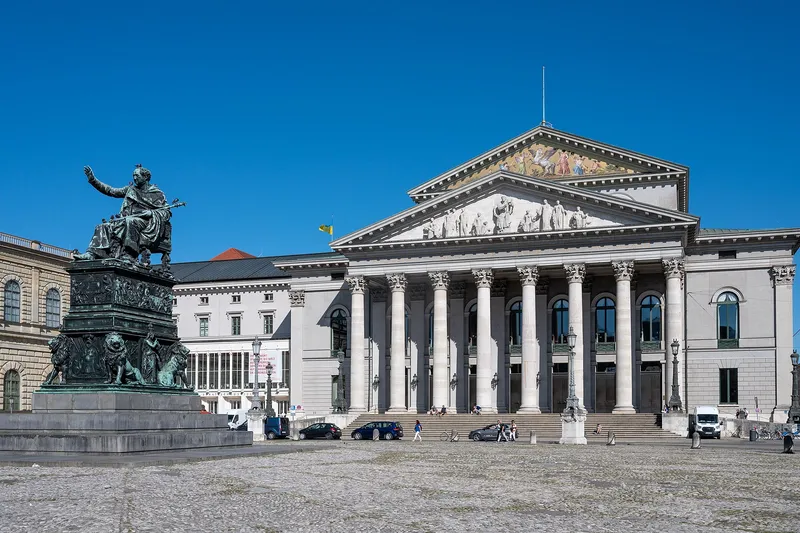 Opera in MunichBooking the National Theatre, what to wear and where to dine around a performance.
Private touring: turning money into time
The most useful thing a luxury budget buys in Munich, after the hotel, is privileged access and saved time. A private guide can open the Residenz, the Pinakotheken or the Nymphenburg state rooms at a pace set by you rather than a tour group, and a knowledgeable one turns a beautiful building into a genuinely memorable morning. For the headline day trips — Neuschwanstein above all, where the timed castle entry and the crowds can sour an unplanned visit — a private driver-guide collects you from the hotel, handles the logistics and gets you there ahead of the coaches. This is precisely the kind of friction money should remove, and it's the difference between a great day and a queued-up one.
Inside the city, the same logic applies to the experiences that reward a fixer: a behind-the-scenes look at a brewery or a private beer-hall table on a festival night, a tasting led by someone who knows the six breweries, a chauffeured evening that strings together the opera and a late dinner. None of this needs to be ostentatious — the best of it is quiet and well-arranged — and almost all of it is easier to set up through a hotel concierge than to chase yourself. When you book a grand hotel, ask specifically what the service desk can arrange; in Munich, that capability is a large part of what you're paying for.
A word of realism: no amount of money buys you out of Munich's weather, its Sunday closures or its festival-week crowds. What it buys is a smoother path through all of them — the private entry instead of the queue, the table that was 'fully booked', the car instead of the platform change — and a great concierge genuinely earns their keep here. If those things are the point of your splurge, weigh the quality of the service more heavily than the thread count when you choose where to stay.


Timing the splurge: seasons, prices and the calendar
Munich hotel and restaurant prices are seasonal and event-driven to an unusual degree, and at the luxury end the swings are dramatic. Oktoberfest — roughly sixteen days from the third Saturday of September into early October — is the single biggest spike of the year: the best hotels sell out months ahead and charge their peak rates, and the city is at its most crowded. The major trade fairs, of which Munich hosts many, cause sharp and sometimes unpredictable jumps too, even well outside the obvious tourist season. If you have date flexibility, sidestepping those windows can roughly halve what you pay for the same room and table.
The quieter, better-value stretches for a luxury weekend tend to be the depths of winter outside the Christmas-market weeks, when a spa hotel earns its keep, and the in-between weeks of spring and autumn when no festival or fair is on. December is its own case: the Christmas markets make the city romantic but busy, and the grand hotels fill — beautiful, but not a value window. Always check exact festival and fair dates against the official sources before committing, because they move year to year.
The standard luxury-booking advice pays off here: book direct or through a programme that earns you something, ask what's included (breakfast and spa access are often the difference between a good and a great rate), request a quiet, high room away from the street, and tell the hotel if you're celebrating — Munich's better hotels respond generously to a quiet word about an anniversary. And because rates, stars and even which places are open all change over time, verify the current specifics rather than relying on any fixed list, this one included.

At a glance
What it covers: how to spend a high-end weekend in Munich across hotels, dining, shopping, opera and private touring.
The local register: restrained, old-money luxury — service, food, history and a walkable centre over flash.
The grand quarter: Maximilianstraße, the Residenz and the National Theatre, all within the walkable Altstadt ring.
The signature move: pair a Michelin table with a beer garden — Munich does both with equal conviction.
Watch the calendar: Oktoberfest and the trade fairs are the price peaks; winter and the shoulder weeks are better value.
Best for: travellers who value location, access and quiet quality, and a concierge who can actually open doors.
- Stay inside the Altstadt ring or in Lehel — location is the luxury that lasts in Munich.
- Book starred restaurants and headline opera nights weeks ahead, or let a concierge work the returns.
- Do your shopping Friday and Saturday — almost everything closes on Sundays here.
- Use a private guide for the Residenz, the palaces and Neuschwanstein to skip the queues.
- Names, rates and stars change — verify the current detail rather than trusting a fixed list.

Luxury Hotels in Munich
How to choose a high-end Munich stay by style and street — the grand-dame palace hotels of the Altstadt and Maximilianstraße, design-led boutiques, spa retreats and the quiet luxury of Lehel — with the practical detail that makes a splurge worth it.
Read guide
Fine Dining in Munich
Munich's splurge and tasting-menu scene — from starred kitchens and modern Bavarian dining rooms to how far ahead to book, what to wear, and where to stay nearby for a special night.
Read guideMaximilianstraße, Munich's Grand Boulevard
Munich's most elegant street — the luxury-shopping boulevard from the opera house to the Maximilianeum, its 'Maximilian style' architecture, cafés and the opera district at its head.
Read guideMore in Romantic Munich
6
Best Sunset Spots in Munich
Where to catch golden hour in Munich — the church towers and park hills for a skyline, the riverbanks and palace canals for something softer, and the one viewpoint that throws in the Alps.
Read guide
Date Night in Munich
A practical, romantic guide to a Munich date night — which quarter to build the evening around, where to drink before and after dinner, and the walks that turn a good night into a memorable one.
Read guide
Munich Couples Itinerary
An unhurried, romantic plan for two — a one-day version for a short break and a three-day long weekend with gardens, galleries, golden-hour views, candlelit dinners and a lakes-or-castles day trip — built to be slowed down, not rushed.
Read guide
Munich Honeymoon Guide
How to build a honeymoon around Munich — a few unhurried city days of palaces, gardens and good dinners, then the easy escape south to fairy-tale castles, Alpine peaks and the lakes.
Read guide
Proposal Spots in Munich
Where to ask the question in Munich — discreet, photogenic settings among palace gardens, riverside paths, church-tower views and winter lights, with the practical notes that make the moment go smoothly.
Read guide
Romantic Christmas in Munich
A cosy couples' guide to a Munich Christmas — the Marienplatz Christkindlmarkt and the quieter markets, the lights and the carols, where to stay for two, and the warm date nights that make the dark season the city's most romantic.
Read guide