
Munich Etiquette Guide
How to behave like a welcome guest in Munich — sharing tables, greetings and the words that matter, tipping, Sunday closures, quiet hours, and the small courtesies that make a Bavarian table and a Munich street work.

Photo: Drew Farwell / Unsplash

- ✓Munich runs on a friendly formality: a greeting on entering a shop, a 'Grüß Gott' or 'Servus' rather than a wave, and 'please' and 'thank you' doing a lot of quiet work.
- ✓You share tables. At a beer hall or a busy Wirtshaus, asking 'Ist hier frei?' and sitting down beside strangers is normal and welcome — the long bench is the whole point.
- ✓Sunday is genuinely closed: shops shut, the city slows, and the day is for parks, gardens, museums and a long lunch — plan groceries for Saturday.
- ✓Quiet hours are real and observed — Sundays, public holidays and roughly 10pm to dawn — so keep noise down in residential streets and hotels at night.
- ✓These are evergreen social norms, not rules with fines attached; a little effort with the greetings and the table manners is repaid warmly.
How formal is Munich, really?
Munich is warmer and more relaxed than its reputation for Prussian precision suggests — this is Bavaria, after all, where the table is long and the afternoon is unhurried — but it does run on a gentle, reliable formality that's easy to honour and easy to miss. The single habit that marks you out as a considerate guest is greeting people. You say hello when you walk into a small shop, a bakery or a café, and goodbye when you leave; you greet the table you're about to share; you acknowledge the person serving you before you order. It costs nothing and it changes how the city meets you.
The other half of the formality is the distinction between the formal 'Sie' and the casual 'du'. As a visitor you'll rarely need to navigate this in German, but the principle is worth knowing: adults who don't know each other use the formal address, and you let the older person or the local lead any switch to first names. Defaulting to politeness is never wrong here. None of this is stiff in practice — Bavarians are sociable and quick to laugh once the small courtesies are in place.
Which German words and greetings should I actually use?
Bavaria has its own warm greetings, and using them is a small delight that locals notice. The traditional hello, used by everyone from a shopkeeper to a stranger on a trail, is 'Grüß Gott' (literally 'greet God', meaning simply 'good day'); the casual, all-purpose 'Servus' works as both hello and goodbye among friends and in relaxed settings. Standard German 'Hallo' and 'Tschüss' are fine too. At a table, 'Mahlzeit' is the friendly thing to say around lunchtime — a nod that means, roughly, 'enjoy your meal'.
Beyond the greeting, a handful of words carries you a long way: 'bitte' (please / you're welcome / here you are), 'danke' (thank you), 'Entschuldigung' (excuse me / sorry), and 'Prost!' (cheers — and you look the other person in the eye as you clink). English is widely spoken in central Munich, in hotels, restaurants and shops, so you won't be stuck. But opening in German, even clumsily, and then asking 'Sprechen Sie Englisch?' is the courteous order of operations, and it's almost always met with a smile.
- 'Grüß Gott' — the traditional Bavarian hello; 'Servus' — casual hello and goodbye.
- 'Bitte' and 'danke' — please/you're-welcome and thank you, used constantly.
- 'Entschuldigung' — excuse me or sorry; 'Mahlzeit' — a mealtime greeting.
- 'Prost!' — cheers, with eye contact as you clink glasses.
- Open in German, then ask 'Sprechen Sie Englisch?' — English is widely spoken centrally.

What are the rules about sharing tables and beer-hall manners?
This is the etiquette point most likely to surprise a first-time visitor, and the one most worth getting right. In a beer hall, a beer garden or a busy traditional tavern, you share tables. Walking up to a long bench where strangers are already sitting, asking 'Ist hier frei?' ('Is this free?'), and sitting down beside them is not an intrusion — it's the entire social design of the place. People will shuffle along, nod, and carry on. One caveat: in beer gardens and some halls, a table marked 'Stammtisch' is reserved for regulars, so look for that little sign and pick another.
Inside that shared world, a few customs make you a good neighbour. You greet the table when you sit and say goodbye when you leave. You toast with 'Prost' and meet people's eyes. In a traditional beer garden you may bring your own food to the self-service benches and buy only your beer — but not in the served, table-service section, and not where a sign says otherwise. And you pay the server directly when they come round, or at the counter in self-service; you don't run a tab in the British sense unless told you can.
- Ask 'Ist hier frei?' and share the long tables — it's expected, not rude.
- Avoid tables marked 'Stammtisch' — those are reserved for regulars.
- Greet the table on sitting; toast with 'Prost' and eye contact.
- Bring-your-own food is fine at self-service garden benches, not at served tables.
How does tipping work, and what about paying?
Tipping in Munich is genuine but light — a thank-you for good service, not a mandatory wage top-up. For table service, rounding up the bill or adding roughly five to ten per cent is normal; for a coffee or a beer, rounding to the next euro or two is plenty. The method is the part visitors get wrong: you don't leave coins on the table and walk away. When the server takes payment, you tell them the total you'd like to pay, including the tip, as you hand over cash or card. 'Stimmt so' means 'keep the change' and settles a round-up neatly.
Two practical habits go with this. First, carry some cash: Munich is more card-friendly than it used to be, but plenty of bakeries, market stalls, small cafés and traditional taverns still prefer or require it. Second, expect to be asked 'Zusammen oder getrennt?' — 'together or separately?' — when a group pays; splitting the bill by who-had-what is completely normal and the server will tot it up without complaint. Exact tipping percentages are a norm, not a rule, so judge by the service and don't feel obliged.
- Round up or add ~5–10% for good table service; round to the next euro for a coffee or beer.
- Tell the server your total as you pay — never leave coins on the table.
- 'Stimmt so' = 'keep the change'.
- Carry cash for smaller and traditional places; splitting the bill is routine.

Why is everything closed on Sunday — and what can I still do?
Germany observes Sunday rest in law and in spirit, and Munich is no exception: supermarkets, most shops and many services close on Sundays and public holidays. This catches visitors out — there's no nipping to a shop for groceries or souvenirs on a Sunday afternoon — so the rule of thumb is simple: do your shopping on Saturday. What stays open is the good part of a Munich Sunday: restaurants, cafés and beer gardens, museums and galleries, churches, parks and the English Garden, plus bakeries that often open for a few morning hours, and shops inside the Hauptbahnhof and the airport that are exempt from the closing law.
Treat Sunday, in other words, as the day Munich does what it does best slowly — a long breakfast, a museum, a walk along the Isar or through Nymphenburg's park, a late lunch in a garden under the chestnut trees. Plan around the closures rather than against them, and the day becomes the most pleasant of the week rather than a logistical snag. The same closures apply on Bavaria's many public holidays, several of them Catholic feast days you might not expect, so it's worth a quick check of the date if shopping is on your list.
- Shops and supermarkets close Sundays and public holidays — buy groceries on Saturday.
- Open anyway: restaurants, cafés, beer gardens, museums, churches and parks.
- Station and airport shops are exempt and stay open; some bakeries open Sunday mornings.
- Bavaria has extra public holidays — check the date if shopping matters that day.

What are the unspoken street and noise rules?
A few quiet conventions govern Munich's public spaces. Quiet hours (Ruhezeit) are observed and, in residential settings, expected: generally overnight from around 10pm, plus all day Sunday and on public holidays. In practice that means keeping voices and music down in residential streets and hotel corridors late at night, and not running noisy appliances on a Sunday — a courtesy your neighbours and the front desk will appreciate. Munich's nightlife districts are lively, of course; it's the residential calm that's protected.
On the street, two habits stand out. Germans generally wait for the green man at pedestrian crossings, even on an empty road, and crossing against a red light in front of others — especially with children nearby — draws disapproving looks. And the cycle lane is sacred: many pavements have a marked bike track running alongside the footpath, often a different colour or surface, and standing or strolling in it will earn you a bell and a glare. Look down, keep to the pedestrian side, and step out of a cyclist's line. Recycling and bin-sorting are taken seriously too, so use the right-coloured bin where you can.
- Quiet hours: overnight from ~10pm, plus all of Sunday and public holidays — keep noise down.
- Wait for the green man at crossings; jaywalking draws disapproval, especially near children.
- Stay out of marked cycle lanes on pavements — they're for bikes, and locals defend them.
- Sort your rubbish into the right bins; recycling is taken seriously.
Frequently asked questions
Do I need to speak German in Munich? No — English is widely spoken in central Munich's hotels, restaurants, shops and attractions, and you'll manage comfortably. A few German greetings and 'bitte / danke' are courteous and warmly received, but you won't be stuck without them.
Is tipping expected? It's customary but modest. Round up or add around 5–10% for good table service, told to the server as you pay; for a quick coffee or beer, rounding up is plenty. It's a thank-you, not an obligation.
Why can't I shop on Sunday? German law keeps most shops and supermarkets closed on Sundays and public holidays. Buy groceries on Saturday; restaurants, cafés, museums, parks and station/airport shops stay open.
Is it rude to sit at a stranger's table? Not at all — in beer halls, gardens and busy taverns it's the norm. Ask 'Ist hier frei?', avoid tables marked 'Stammtisch', greet your neighbours, and sit down.
What's the deal with eye contact when toasting? When you say 'Prost' and clink glasses, you look the other person in the eye. It's a small, fond ritual, and skipping it is the one toasting faux pas locals actually notice.
At a glance
Greetings — say hello on entering and goodbye on leaving; 'Grüß Gott' and 'Servus' are the Bavarian favourites.
Language — English is widely spoken centrally; a few German courtesies go a long way.
Tables — you share long benches in halls and gardens; ask 'Ist hier frei?' and avoid the 'Stammtisch'.
Tipping — round up or add ~5–10% for good service, told to the server as you pay.
Sundays & quiet — shops close Sundays and holidays; observe quiet hours and keep out of bike lanes.

Munich Beer Garden Etiquette
How a Munich beer garden actually works — the self-service vs served split, the bring-your-own rule, table sharing, reservations, tipping, toasting and clearing your own glass.
Read guide
Munich for First-Timers: What to Know Before You Go
The honest first-trip briefing — the mistakes that trip people up, the handful of things genuinely worth booking ahead, how much time to give the city, and what you can happily leave unplanned and discover as you go.
Read guide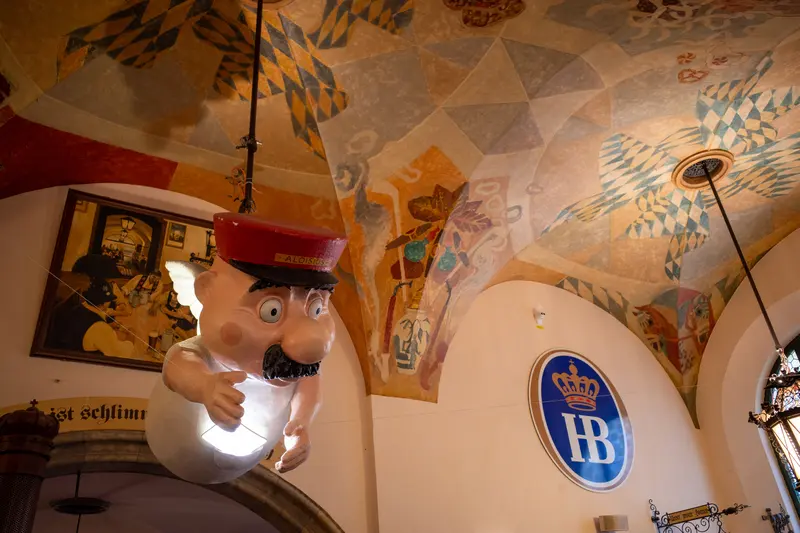
Hofbräuhaus, Munich
What to expect at Munich's most famous beer hall — how the seating works, what to order, when to go to dodge the worst crowds, and whether it's worth it.
Read guideMore in Travel Tips
6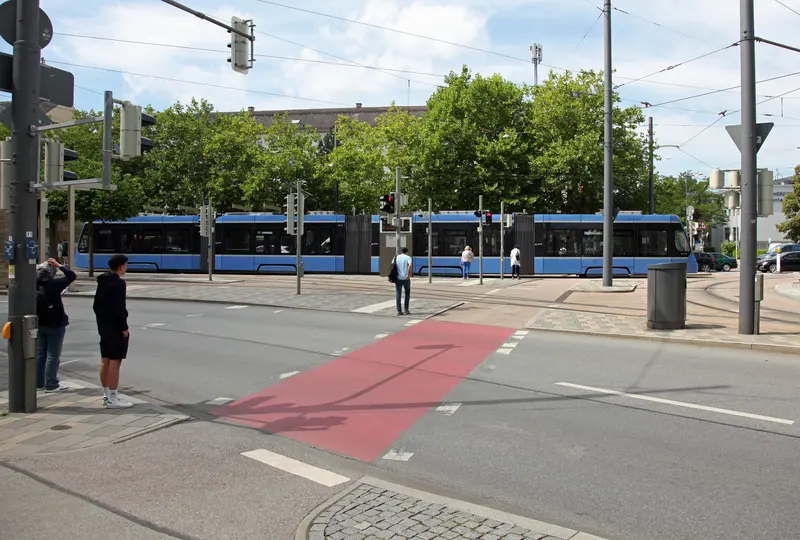
Accessible Munich: A Step-Free Travel Guide
A realistic, planning-led guide to accessible Munich — step-free transport on the U-/S-Bahn and trams, museums and palaces with lift access, the cobbles and surfaces of the Old Town to plan around, and how to reach the city from the airport without stairs.
Read guide
Best Time to Visit Munich
When to come to Munich, season by season and month by month — the tradeoffs of weather, crowds, prices and what's on, from beer-garden summers to the snow-lit Christmas markets.
Read guide
Bike Rental in Munich
How to rent a bike in Munich — rental shops versus the city's public bike-share — where to ride along the Isar and through the English Garden, the lane and traffic rules that keep you safe, and the loveliest easy routes.
Read guide
Driving & Parking in Munich
Whether you need a car in Munich at all, the low-emission Umweltzone rule, parking zones, garages and Park & Ride, and the smarter strategy: ditch the car in the city and rent only for the day trip.
Read guide
Getting Around Munich
The full picture of moving around Munich — why you'll walk more than you expect, when to take the U-Bahn or a tram, how the city's flat streets reward a bike, when a taxi or rideshare earns its keep, and the firm case for leaving the car at home.
Read guide
Is Munich Safe? A Visitor's Safety Guide
An honest, common-sense read on safety in Munich — how safe the city really is, the few situations to keep your wits about (the station area, festival crowds, pickpockets, cycling), the scams to ignore and the emergency numbers worth memorising.
Read guide