
Munich for First-Timers: What to Know Before You Go
The honest first-trip briefing — the mistakes that trip people up, the handful of things genuinely worth booking ahead, how much time to give the city, and what you can happily leave unplanned and discover as you go.

Photo: yeojin yun / Unsplash

- ✓Munich is compact, safe and superbly connected — you can do the headline sights on foot in two or three unhurried days.
- ✓Book ahead only for the few things that sell out: Neuschwanstein timed entry, big-name palace and museum slots in peak season, popular tours and any trip over Oktoberfest.
- ✓Buy a day or group transit ticket rather than singles, carry cash for gardens and markets, and don't over-schedule.
- ✓The classic first-timer mistakes: missing Weißwurst's before-noon rule, trying to drink a Maß like a pint, stepping into a bike lane, and shopping on a Sunday when nearly everything closes.
- ✓Leave the beer gardens, markets and aimless Old Town wandering completely unplanned — that's where the city actually charms you.
Set your expectations: what kind of trip this is
First-time visitors sometimes arrive expecting a sprawling capital and find something gentler: Munich is a wealthy, handsome, walkable city of around 1.5 million that wears its grandeur lightly. The Old Town is small enough to cross in twenty minutes, the great sights cluster close together, and the whole place runs with an orderly Bavarian calm that makes it remarkably stress-free to navigate. This is a city to savour rather than to conquer — the best first trips lean into beer gardens, parks and lazy mornings as much as ticking off landmarks.
It's also a city of two faces: the lederhosen-and-beer-tent cliché is real and joyful, but Munich is equally a place of world-class art museums, royal palaces, leafy parks and serious wealth. Come for the beer and the postcard squares, but leave room for the Pinakotheken, a palace and a slow afternoon by the Isar — the mix is the point, and the first-timers who love it most are the ones who don't rush.

The first-timer mistakes to skip
A handful of avoidable missteps trip up almost every first-time visitor. The most charming one is the Weißwurst rule: the pale veal sausage is traditionally eaten before noon, peeled (not cut with a knife) and with sweet mustard and a Brezn — order it at dinner and a local will quietly clock you as a tourist. The next is the Maß: that litre stein of beer is a marathon, not a sprint, and stronger than the lager you may be used to, so pace it and eat as you drink. And in any beer garden, learn the etiquette — at traditional ones you can bring your own food to the unserved benches and buy only your beer.
Two practical traps catch people out. Shops close on Sundays in Munich (and Germany generally) almost across the board, so plan any real shopping for a weekday and use Sunday for sights, parks and museums instead. And watch for bike lanes: Munich's cyclists move fast in lanes often paved into the pavement and coloured red, so look before you step off a kerb or stop for a photo. Finally, don't try to see everything — the most common first-trip error is over-scheduling a city that rewards an unhurried pace.


What to actually book ahead
Most of Munich needs no advance booking at all — you can walk up to the squares, churches, beer gardens and markets, and many museums, on the day. Save your planning energy for the genuine sell-outs. Neuschwanstein, the fairy-tale castle, runs on timed entry tickets that should be reserved well ahead; the most popular day tours (Neuschwanstein, the Zugspitze, Dachau, food and beer crawls) fill in peak season; and any visit over Oktoberfest — late September into early October — means booking accommodation months out and reserving beer-tent tables if you want a guaranteed seat in a big tent.
For everything else, a light touch works. Reserve a table at popular or romantic restaurants, especially at weekends; consider pre-booking the Residenz Treasury or a busy special exhibition in high season to skip the queue; and if your dates fall over a trade fair, expect hotel prices to spike and book early. Beyond those, the freedom to decide each morning is part of the pleasure — don't over-engineer it.
How much time to give Munich
Be honest about the city's size and you'll budget your days well. One full day covers the Old Town essentials at a brisk pace — Marienplatz and the Glockenspiel, Alter Peter's rooftop view, the Viktualienmarkt, the Frauenkirche and the Residenz from outside, finished in a beer hall. Two days adds the parks, the museums and a palace: an English Garden afternoon, one of the Pinakotheken, a tram out to Nymphenburg. Three days lets you reach beyond the city — a castle, a mountain or a lake — without feeling you've shortchanged the centre.
If you can, give Munich three nights. It's tempting to treat it as a one-day stopover on a wider European trip, and you can — but the city's real charm lives in its slower hours, the unscheduled beer-garden afternoon and the second-morning sense that you've started to know the place. First-timers consistently wish they'd stayed a little longer; almost nobody wishes they'd stayed less.
Getting around and the money basics
Munich's transport (the MVV) is excellent and easy: the U-Bahn, S-Bahn, trams and buses all run on one ticketing system, and for most visitors a day ticket or a group day ticket beats buying singles. From the airport, the S1 and S8 S-Bahn lines reach the centre in roughly forty to forty-five minutes — the simplest, cheapest transfer. Within the centre you'll mostly walk; reach for transit when your feet give out or for the further-flung sights like Nymphenburg, Olympiapark or the Allianz Arena.
On money, two habits save hassle. Munich takes cards widely but remains cash-first in many beer gardens, market stalls and small cafés, so always carry some euros. And tipping is modest and simple — round up or add roughly five to ten per cent for good service, handed to the server rather than left on the table. Tap water is excellent and free to ask for, public toilets often charge a small coin, and the city is safe and walkable enough that you'll spend less on taxis than you'd expect.
What to leave gloriously unplanned
Here's the part first-timers most often over-think: you don't need to schedule the best of Munich. The beer gardens, the Viktualienmarkt, the long drift through the English Garden, the aimless wander through the Old Town's lanes — these are precisely the experiences that suffer from a timetable. Leave generous, unbooked pockets in every day and let the city fill them: a chestnut-shaded bench, a market lunch on your feet, an hour watching the Eisbach surfers, a sunset on the Monopteros steps. That looseness is where a trip turns into a memory.
So plan the few things that need planning, set your rough daily anchors, and then — genuinely — let the rest go. Munich is small, safe and forgiving enough that you can change your mind every afternoon and still see plenty. The first-timers who fall hardest for the city are the ones who treat the itinerary as a suggestion and the beer garden as the plan.
- Give Munich three nights if you can; two if you must; one only as a taster.
- Book ahead: Neuschwanstein entry, popular tours, peak-season slots and anything over Oktoberfest.
- Buy a day/group transit ticket, carry cash, tip modestly by rounding up.
- Eat Weißwurst before noon, pace the Maß, mind the bike lanes, and don't shop on a Sunday.
- Leave the gardens, markets and Old Town wandering unplanned — that's the good stuff.
- Prices, opening hours and event dates change — always verify current details before you book.

One Day in Munich
A tight but realistic plan for one day in Munich — a morning in the Old Town built around the Glockenspiel, a market lunch, the Residenz or a museum in the afternoon, and a beer-hall evening, all on foot and without a wasted step.
Read guide
Where to Stay in Munich
An area-by-area guide to choosing a Munich base — the Altstadt for walkability, Maxvorstadt and Schwabing for museums and cafés, Lehel and the Glockenbachviertel for charm and nights out, the station for value — plus picks for first-timers, Oktoberfest, families, luxury and budget trips.
Read guide
Best Things to Do in Munich
A ranked first-trip shortlist — from Marienplatz and the Residenz to the beer gardens, the great museums and the English Garden.
Read guideMore in Travel Tips
6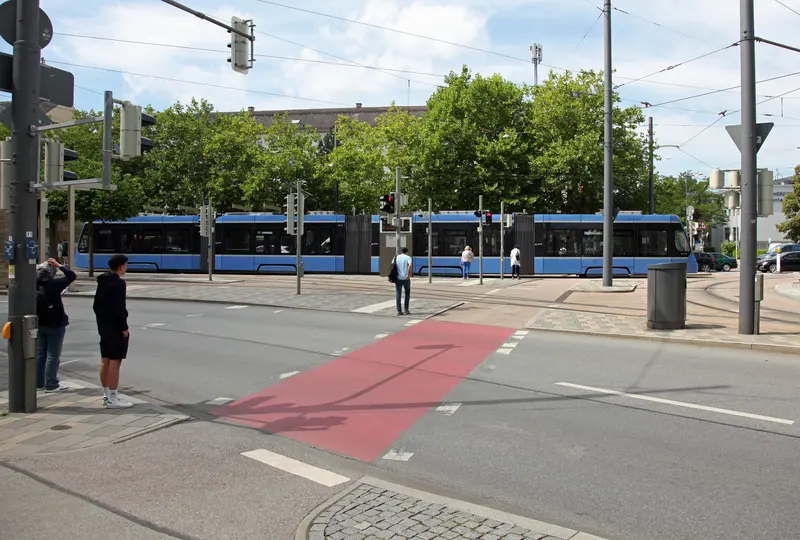
Accessible Munich: A Step-Free Travel Guide
A realistic, planning-led guide to accessible Munich — step-free transport on the U-/S-Bahn and trams, museums and palaces with lift access, the cobbles and surfaces of the Old Town to plan around, and how to reach the city from the airport without stairs.
Read guide
Best Time to Visit Munich
When to come to Munich, season by season and month by month — the tradeoffs of weather, crowds, prices and what's on, from beer-garden summers to the snow-lit Christmas markets.
Read guide
Bike Rental in Munich
How to rent a bike in Munich — rental shops versus the city's public bike-share — where to ride along the Isar and through the English Garden, the lane and traffic rules that keep you safe, and the loveliest easy routes.
Read guide
Driving & Parking in Munich
Whether you need a car in Munich at all, the low-emission Umweltzone rule, parking zones, garages and Park & Ride, and the smarter strategy: ditch the car in the city and rent only for the day trip.
Read guide
Getting Around Munich
The full picture of moving around Munich — why you'll walk more than you expect, when to take the U-Bahn or a tram, how the city's flat streets reward a bike, when a taxi or rideshare earns its keep, and the firm case for leaving the car at home.
Read guide
Is Munich Safe? A Visitor's Safety Guide
An honest, common-sense read on safety in Munich — how safe the city really is, the few situations to keep your wits about (the station area, festival crowds, pickpockets, cycling), the scams to ignore and the emergency numbers worth memorising.
Read guide