
Weißwurst Breakfast in Munich
How to try Munich's classic sausage breakfast like a local — what to order with it, the before-noon tradition, how to peel and eat it, and where it fits in a morning of sightseeing.

Photo: Louis Hansel / Unsplash

- ✓Weißwurst is a pale veal-and-pork sausage flavoured with parsley and lemon — gently simmered, never boiled hard, and lifted from the water just before serving.
- ✓Tradition says it should be eaten before noon: the old rule is that the Weißwurst should not hear the midday bells. Many Wirtshäuser still serve it only until the late morning.
- ✓The full set is simple and fixed — Weißwurst, süßer Senf (sweet mustard), a fresh Brezn (pretzel) and a Weißbier. A Münchner often takes the beer too, even at breakfast.
- ✓You peel it, not slice the skin onto your plate: either 'zuzeln' it straight from the casing or quarter it lengthways and lift the meat out. Sweet mustard on every bite.
What a Weißwurst breakfast actually is
The Weißwurst breakfast is Munich's most beloved morning ritual, and one of the few genuinely local meals a visitor can join without ceremony. A Weißwurst is a soft, pale sausage of finely minced veal and pork back-bacon, seasoned with parsley, mace, onion and a little lemon, stuffed into a natural casing and poached gently in hot — not boiling — water until it floats. It arrives two to a portion in a covered tureen or a bowl of the warm water that keeps it from going cold and rubbery, looking nothing like the browned sausages most visitors expect.
It is not a snack so much as a small, sociable institution. The tradition was born of necessity: before refrigeration, the unsmoked, uncured Weißwurst spoiled quickly, so it was made fresh in the early hours and eaten the same morning. That is the root of the famous rule that the sausage 'should not hear the noon bells' — a charming half-myth that nonetheless still shapes when many traditional kitchens serve it. You'll meet it as 'Weißwurstfrühstück' on menus and as a fixture of any unhurried Bavarian morning.
Order it and you'll get a set, not just the sausage: the two Weißwürste, a generous dab of sweet Bavarian mustard, at least one warm pretzel, and — this is the part that surprises people — usually a wheat beer, even though it's breakfast. None of this is a tourist performance. It's simply how a great many Münchners start a leisurely Saturday.

The before-noon rule — myth, manners and reality
The single thing every visitor hears about Weißwurst is that you must eat it before midday. The saying — that the sausage should not hear the twelve o'clock chimes — comes from the days when it was made fresh each morning and wouldn't keep. Modern hygiene and refrigeration have made the rule technically obsolete, and plenty of places now serve Weißwurst into the afternoon. But it survives as a point of pride and good manners, and it genuinely affects your planning: a number of traditional Wirtshäuser still stop serving it around late morning, so this is one Munich dish you'll want to chase early.
Treat it, then, as a soft deadline rather than a law. If you want the most authentic experience — a quiet Wirtshaus, locals at the next table, the sausage at its freshest — aim to be sitting down by mid-morning. If your day runs late, you can still find Weißwurst served past noon in tourist-facing beer halls and some breweries, just with a little less of the ritual around it. Either way, it makes a lovely, slow start before the Marienplatz crowds build.
- Aim for mid-morning: many traditional kitchens serve Weißwurst only until late morning, in keeping with the 'before the bells' custom.
- It's a marathon, not a sprint — the meal is meant to be lingered over, ideally with a newspaper and a second pretzel.
- If you sleep in, the bigger beer halls and some breweries serve it later; you trade a little authenticity for flexibility.
- Sundays it's especially popular as a post-church or pre-stroll treat, so popular Wirtshäuser fill up — go early or be ready to wait.
How to eat it without giving yourself away
Here is where visitors most often stumble, because you do not eat the casing. There are two accepted methods. The traditional, slightly theatrical one is 'zuzeln': you cut off one tip, dip it in sweet mustard, and suck or slide the meat straight out of the skin, bite by bite. The tidier, more common restaurant method is to cut the sausage in half lengthways with knife and fork, then peel the casing back and lift the meat out in pieces. Both are correct; the cardinal sin is sawing the whole thing into wheels and eating the skin.
From there it's simple. Spread or dip each bite in 'süßer Senf', the sweet, grainy Bavarian mustard that's part of the dish rather than a condiment on the side. Tear the warm Brezn and eat it between bites. And if you've ordered the wheat beer, pour it slowly into the tall glass at an angle to keep the head from running away. None of this is fussy in practice — order, watch a neighbouring table for a second, and you'll have it within a sausage or two.
- Don't eat the skin — peel it, either by 'zuzeln' (sucking the meat out) or by halving the sausage lengthways and lifting the meat free.
- Use the sweet mustard generously; it's integral, not optional. Plain or hot mustard is a giveaway you're not local.
- Eat the sausage warm and don't let it sit — that's why it's served in its hot water.
- Lift it from the tureen with a fork; the water keeps the rest warm while you work through the first.
What to drink — yes, beer at breakfast
The classic accompaniment is a Weißbier — a cloudy, top-fermented wheat beer, lightly banana-and-clove in flavour, that pairs beautifully with the mild sausage and sweet mustard. Ordering one with breakfast raises no eyebrows in Munich; it's the expected pairing, and the gentle, low-bitterness style is forgiving on a morning stomach. If you'd rather not drink beer before lunch, no one will mind: a wheat-beer Radler (with lemonade), an alcohol-free Weißbier — increasingly excellent in Bavaria — or a simple coffee are all perfectly normal.
Whatever you choose, the point of the meal is the unhurried pace. A Weißwurst breakfast is the antithesis of grabbing a pastry on the way to the U-Bahn. Order, settle in, and let it take its time. If you want a proper coffee afterwards, Munich's café scene is a short walk away in most central neighbourhoods.
Where to have it
You don't need a famous address — almost any traditional Wirtshaus, brewery tavern or beer hall in Munich serves a proper Weißwurstfrühstück, and the neighbourhood places are often the most pleasant. As a rule, look for a classic Bavarian tavern rather than a café, and check that 'Weißwurst' or 'Weißwurstfrühstück' appears on the breakfast menu with a morning cut-off. The big central beer halls around Marienplatz and the breweries' own restaurants are the easiest to find and the most reliable for a later sitting, if a touch busier and more touristed.
For a more local feel, head a few streets out — into Haidhausen, the Au, Neuhausen or Schwabing — where the corner Wirtshäuser cook the same dish for regulars. The Viktualienmarkt, a minute south of Marienplatz, is another easy option: its stalls and beer garden put Bavarian breakfast within reach of the Old Town sights. Specific opening times and morning cut-offs vary by venue and season, so confirm directly before you set out — but the meal itself is everywhere, and that's part of its charm.
- Look for a traditional Wirtshaus, brewery tavern or beer hall serving a 'Weißwurstfrühstück' — not a modern café.
- Central and reliable: the big beer halls around the Old Town and the breweries' own restaurants, best for a later sitting.
- More local: corner Wirtshäuser in Haidhausen, the Au, Neuhausen and Schwabing.
- Verify the day's hours and the morning cut-off directly — they vary by venue and season.
Make it part of your morning
A Weißwurst breakfast slots neatly into a first full day in Munich. Have it early near the centre, then walk straight into the Old Town: Marienplatz for the Glockenspiel, Alter Peter for the rooftops, and the Viktualienmarkt to graze the rest of your morning. Because the meal is meant to be slow and the sights are close, you lose no time — you simply start the day the way the city does.
If you only try one 'local' food in Munich, this is a strong candidate: it's genuinely traditional, almost always good, rarely expensive, and it comes with a small ritual that makes the morning feel like more than a meal. Eat it once before noon, peel it properly, lay on the sweet mustard, and you'll have done a very Munich thing right.
At a glance
What it is — two pale veal-and-pork sausages, parsley-and-lemon seasoned, poached and served in warm water.
The set — Weißwurst + sweet mustard (süßer Senf) + a fresh pretzel + (traditionally) a wheat beer.
When — a morning meal; many traditional kitchens serve it only until late morning ('before the noon bells'). Verify each venue's cut-off.
How to eat it — peel, don't eat the skin; 'zuzeln' it or halve it lengthways and lift the meat out; sweet mustard on every bite.
Where — any traditional Wirtshaus, brewery tavern or beer hall; central halls for ease, neighbourhood taverns for atmosphere.
Good to know — beer at breakfast is normal here; non-alcoholic Weißbier and a Radler are fine alternatives.

Bavarian Food to Try in Munich
What to order in Munich — Weißwurst, roast pork and pork knuckle, pretzels and dumplings, Obatzda and radi, the cakes and the beers — and the little rules that make each one make sense.
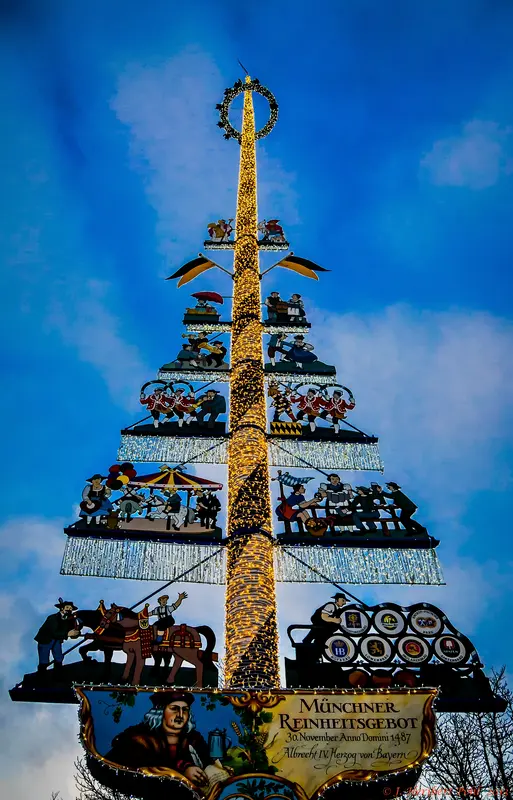
Read guide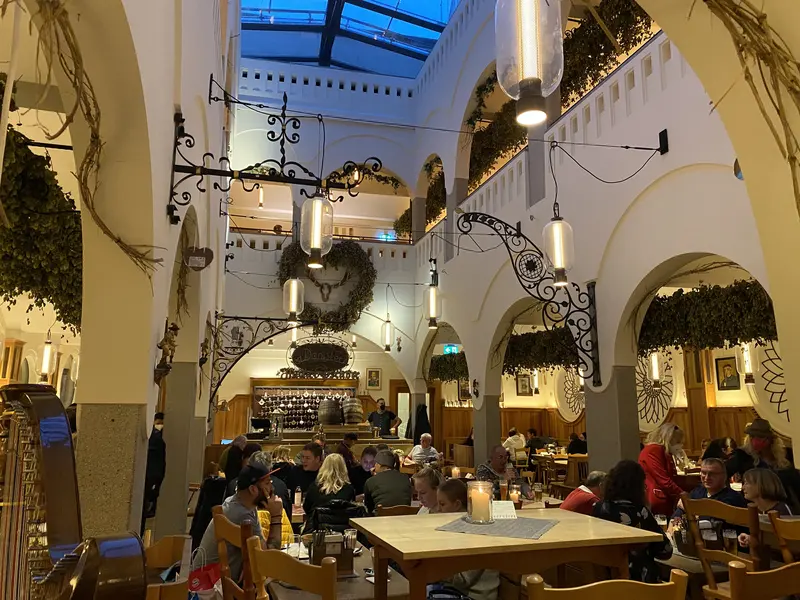
Best Beer Halls in Munich
How to choose among Munich's great beer halls — the Hofbräuhaus, the Augustiner and Löwenbräu houses, Paulaner and more — compared by atmosphere, food, noise and first-time ease.
Read guide
Breakfast and Brunch in Munich
Where to start the day in Munich — bakeries and quick café breakfasts for early sightseeing, leisurely weekend brunch, hotel spreads, market mornings and the Bavarian Weißwurst tradition.
Read guideMore in Food & Drink
6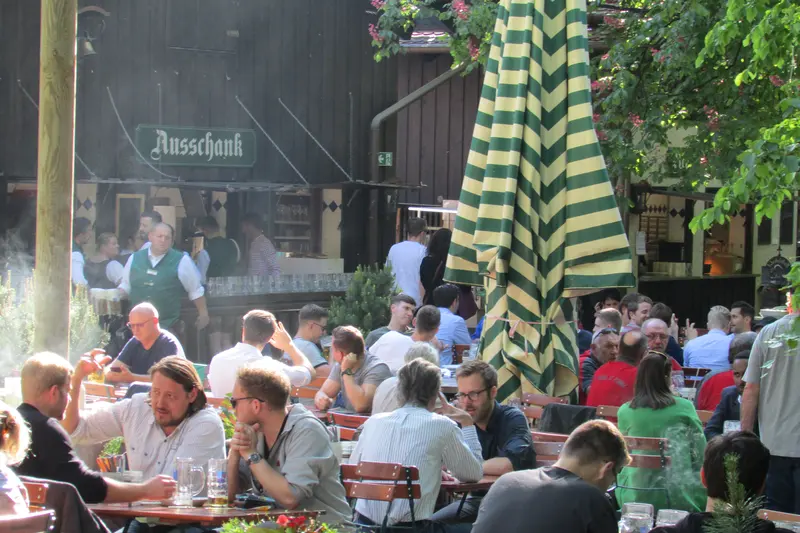
Augustiner-Keller, Munich
The beer garden, the cellar restaurant, reservations and what to order at the Augustiner-Keller near the Hauptbahnhof — the locals' choice for the city's most-loved beer.
Read guide
Best Beer Gardens in Munich
A seasonal guide to Munich's classic beer gardens — the chestnut-shaded benches, the bring-your-own rule, what to order, and which gardens suit families, dates or a quiet pint.
Read guide
Best Cocktail Bars in Munich
Where to drink well in a beer city — Munich's craft cocktail bars, hotel bars and late-night spots, picked by neighbourhood and vibe for date nights, a refined nightcap or somewhere open into the small hours.
Read guide
Best Coffee and Cafés in Munich
Where to find good coffee in Munich — specialty third-wave roasters, classic Kaffeehaus institutions and konditoreien — sorted by neighbourhood and by whether you want to work, linger romantically or grab a quick cup.
Read guide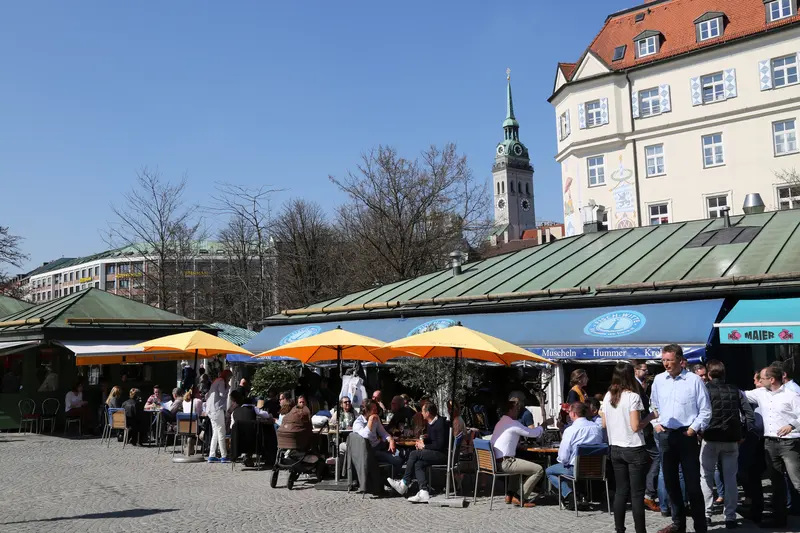
Best Food Markets in Munich
Beyond the famous Viktualienmarkt — the neighbourhood and seasonal markets where Munich actually shops, for snacks, gifts, picnic supplies and a feel for the city's daily rhythm.
Read guide
Best Restaurants in Munich
A traveller-ready shortlist of where to eat in Munich — sorted by neighbourhood, mood, budget and how far ahead you need to book — from beer-hall roasts to candlelit Glockenbach tables.
Read guide