
Sendlinger Tor and Sendlinger Straße, Munich
How to fold Munich's old city gate, the Sendlinger Straße shopping street and the hidden Asamkirche into one easy Old Town route.


- ✓Sendlinger Tor is one of three surviving medieval city gates of Munich — a brick gateway that once pierced the town's defensive wall.
- ✓From the gate, Sendlinger Straße runs straight toward Marienplatz: a pedestrian-friendly shopping street that's the natural spine of a southern Old Town walk.
- ✓Halfway along that street hides the Asamkirche, the city's most dramatic small Baroque church — easy to miss if you don't know to look.
- ✓The gate is also a major transport node: the Sendlinger Tor U-Bahn station is one of Munich's busiest interchanges, so the route works equally well in either direction.
An old gate in the city's defences
Munich was once a walled town, and you entered it through gates. Three of them survive — Isartor, Karlstor and Sendlinger Tor — marking the line of the medieval fortifications that have otherwise vanished under the modern city. Sendlinger Tor guarded the southern road, the way out toward the old village of Sendling, and it has stood in some form since the early fourteenth century.
What you see today is a brick gateway with a wide central arch flanked by two pointed flanking towers — the result of centuries of rebuilding, widening for traffic, and a careful restoration that reopened the gate as a clean, calm landmark rather than a roaring road junction. It is not a grand monument so much as a threshold: a reminder, as you pass under it, that you are crossing from the modern city into the old one.
Treat the gate as a frame rather than a stop. There's little to 'do' here beyond stand in the square, look up at the brick, and let it mark the start of the walk into the Altstadt. Five minutes is plenty.
The story in the name
The gate is named for Sendling, the village it pointed toward, and that name carries one of the more poignant episodes in Bavarian history. During the War of the Spanish Succession, on Christmas night in 1705, a rising of Bavarian peasants and townsfolk against the occupying Austrian forces ended in a massacre at Sendling — remembered as the 'Sendlinger Mordweihnacht', the Sendling Murder-Christmas. The figure of the blacksmith of Kochel, a folk hero of that doomed revolt, became part of local legend.
You don't need any of this to enjoy walking through the gate, but it adds a quiet weight to a structure that's easy to dismiss as just a traffic island with towers. The medieval gates of Munich were thresholds in every sense — between safety and the open road, between the city's people and whatever pressed in from outside. Standing under the brick arch, you're crossing a line that mattered enormously for centuries.
The gate has been rebuilt, widened and restored many times over its 700-odd years, so the brick you touch is a palimpsest rather than a pristine original. That, too, is fitting for Munich, a city that has remade itself repeatedly and wears its layers openly.

The three surviving gates, and how they fit together
Sendlinger Tor makes more sense once you see it as one of a set. Medieval Munich was ringed by a wall pierced by several gates; three of them survive, and together they roughly mark the old town's edge. Sendlinger Tor guards the southern approach, Isartor the eastern one toward the river, and Karlstor the western side toward what is now Karlsplatz (Stachus). Each has been rebuilt and adapted over the centuries, and each now anchors a busy modern square — but lined up in your mind they trace the footprint of the vanished fortifications better than any single one does alone.
For a visitor that's a useful piece of orientation as much as history. The Altstadt is essentially the area those gates enclose, so whichever one you pass through, you know you've crossed into the old core — and the pedestrian streets running inward from each gate all funnel, sooner or later, toward Marienplatz at the centre. If you have a spare half-day and a taste for joining the dots, walking between two or three of the gates is a quietly satisfying way to feel the shape of the medieval town beneath the modern city. Isartor, in particular, makes a natural companion to this route, since it sits a short walk east and houses a small museum.
Walking Sendlinger Straße toward Marienplatz
From the gate, Sendlinger Straße runs north-east straight toward the heart of the city. It is one of central Munich's pleasant, low-key shopping streets — largely pedestrian-friendly, lined with a mix of everyday shops, cafés and a few older façades, and quieter than the wide retail rush of the Kaufingerstraße closer to Marienplatz. It makes the ideal spine for a southern Old Town walk: a flat, easy ten-minute stroll that delivers you to the central square with a couple of surprises along the way.
The biggest of those surprises is the Asamkirche, set into the row of buildings about halfway along. Its façade is modest enough that crowds walk straight past it; the interior is anything but, a tiny late-Baroque jewel box built by two brothers beside their own home. Watch the street numbers, or just look for the doorway that's far too ornate for its neighbours.
Done at an unhurried pace — gate, street, church, then the square — the whole walk is twenty to thirty minutes, and it threads three quite different things together: a medieval threshold, a living shopping street, and a hidden masterpiece. It's one of the most satisfying short routes in the Old Town precisely because it doesn't feel like a route at all.

When to walk it, and how it feels
This is a route for any time of day, but it changes character with the clock. In the morning the street is calm and the shops are opening, which is the easiest time to slip into the Asamkirche before the lunchtime trickle; by late afternoon the pedestrian stretch fills with shoppers and the energy lifts toward the buzz of Marienplatz. Evening is its own pleasure — once the shops close, the walk quietens again, and a turn into the Glockenbachviertel for dinner gives the whole stroll a soft landing.
Because so little of it requires a ticket or a queue, the Sendlinger Tor route is also weatherproof in a way that tower climbs and beer gardens aren't. The street has awnings and arcades to duck under in a shower, the Asamkirche is a dry and astonishing place to wait out rain, and the U-Bahn is right there if the sky truly opens. It's the kind of plan you can keep in reserve and pull out when the day goes sideways.
Above all, treat it as a walk with a couple of surprises rather than a tick-list of sights. The gate is modest, the street is ordinary in the best way, and the church is the jolt in the middle that you'll remember. Done unhurried, with a coffee at one end and a wine bar at the other, it's one of the loveliest gentle afternoons the Old Town offers.

The gate as a transport hub — and a neighbourhood edge
Sendlinger Tor is as much a junction as a monument. Beneath the square sits one of Munich's busiest U-Bahn interchanges, where several lines cross, which makes the gate a handy place to start or finish a walk: arrive by U-Bahn, stroll the street to Marienplatz, and ride home from there — or do it in reverse. Trams and bike lanes meet at the same point, so it's well-connected in every direction.
The gate also sits on the edge of one of Munich's most likeable areas. Just south and west lies the Glockenbachviertel, the city's relaxed, design-minded quarter of small cafés, wine bars and independent shops — a natural extension of the walk if you have an extra hour and want to swap sightseeing for sitting. Step out of the Altstadt here and the pace softens almost immediately.
Because the U-Bahn here connects so directly to the rest of the city, the gate is a sensible hinge for a longer day: surface at Sendlinger Tor, walk into the Old Town along the street, see Marienplatz and the New Town Hall, then ride out to the museums of the Kunstareal or the English Garden without backtracking. Plenty of well-built Munich days quietly pivot on this one station without anyone planning it that way — it's simply where the lines, the street and the Old Town all happen to meet.
Because it's a transport node first, the square around the gate is busy and practical rather than picturesque — don't come expecting a hushed historic corner. Come for what it connects: the Old Town on one side, a great neighbourhood on the other, and a lovely short walk in between.
At a glance
This is a do-it-on-the-way landmark, not a destination of its own — which is exactly why it's worth knowing about. Use the gate as the start or end of a southern Old Town walk and let the street and the church do the work.
- Getting there: U-Bahn to Sendlinger Tor, a major interchange; trams and bike lanes meet here too.
- Cost: free — the gate and street are public space.
- The route: gate → Sendlinger Straße → Asamkirche → Marienplatz, an easy 20–30 minutes at a stroll.
- Don't miss: the Asamkirche, hidden in the row of shops about halfway along the street.
- Extend it: south and west into the Glockenbachviertel for cafés and wine bars.
- Best for: a relaxed Old Town walk that mixes history, shopping and one hidden gem.

Asamkirche, Munich
How to visit Munich's astonishing late-Baroque Asamkirche on Sendlinger Straße — the church two brothers built next to their own house — without overplanning it.
Read guide
Munich Old Town Walk
A self-guided walking route through Munich's Altstadt — linking Marienplatz, the great churches, the Viktualienmarkt, the royal streets, the city gates and the beer halls in one easy loop.
Read guide
Glockenbachviertel, Munich
Munich's liveliest, most stylish quarter just south of the Altstadt — bars and cocktail dens, independent boutiques, the heart of the city's LGBTQ+ scene, the Isar a block away, and where the night happens.
Read guideMore in Things to Do
6
Allianz Arena, Munich
How to visit Munich's glowing football stadium — the self-guided Erlebnistour, the FC Bayern Museum, match-day logistics, and the easy U6 ride out to Fröttmaning.
Read guide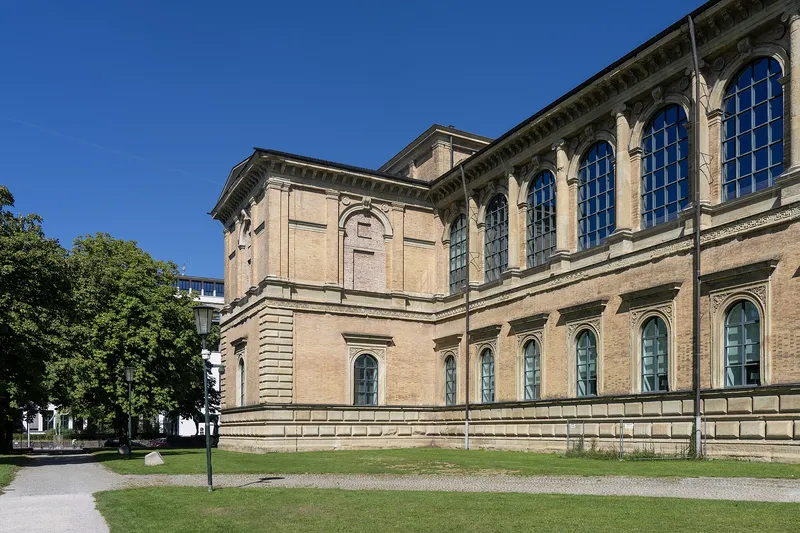
Alte Pinakothek, Munich
How to visit Munich's Old Masters gallery in the Kunstareal — the Dürers and Rubenses worth crossing town for, the Sunday-ticket angle, and how to build a wider museum-quarter day around it.
Read guide
Best Munich Tours
When a guided tour earns its place in a Munich trip — and which kind to pick. Old Town walks, food and beer crawls, football and BMW, the Third Reich history walk, and the big castle and Dachau day trips, weighed by time, cost and effort.
Read guide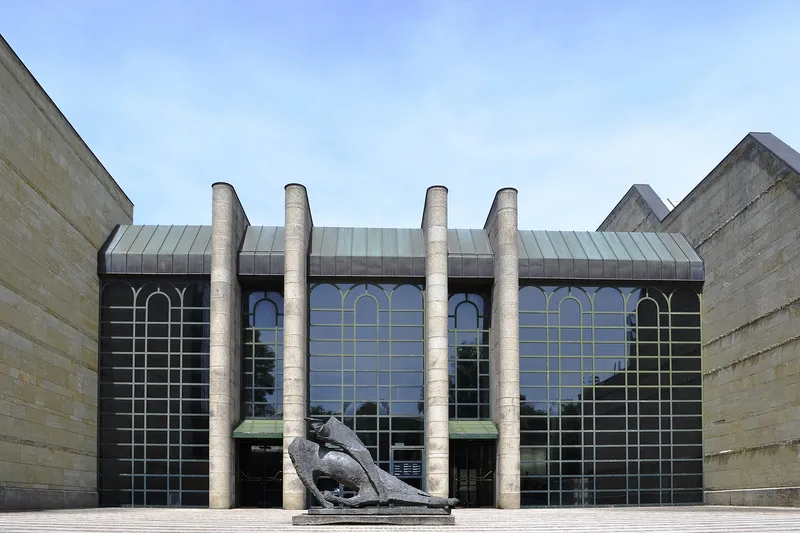
Best Museums in Munich
Choose the right Munich museum for you — by interest, by how much time you have, by which day of the week, and by how useful it is on a rainy day.
Read guide
Best Photography Spots in Munich
Rooftops, squares, churches, parks and palaces — the most photogenic places in Munich, with the light and timing notes to shoot each one well.
Read guide
Best Things to Do in Munich
A ranked first-trip shortlist — from Marienplatz and the Residenz to the beer gardens, the great museums and the English Garden.
Read guide